What is Viparita Karani (Legs Up the Wall Pose)?
Viparita Karani is a simple and relaxing yoga pose, also known as “Legs Up the Wall Pose.” This yoga pose is good for everyone, from beginners to advanced practitioners. While in this pose, one lies down on the back with legs straight up against a wall, which gives a lot of relaxation to the body. Viparita Karani is also known as a “restorative yoga pose” because it helps reduce stress, anxiety, and fatigue.
This yoga pose improves blood circulation, reduces swelling in the legs, and relaxes the nervous system. It is highly beneficial for people who are in the habit of standing for a long time, as well as for people who travel a lot. It improves sleep and keeps the mind calm. If you are looking for a simple yoga pose that relaxes your body as well as your mind, then Viparita Karani should be included in your daily routine.
Benefits of Viparita Karani Pose
- Reduces stress and anxiety.
This asana calms the nervous system, and the heart beats slower.
- Improves blood circulation.
Elevating your legs improves blood flow towards the heart and brain.
- Effective against leg swelling and fatigue.
It is highly beneficial for people who stand for long periods.
- Helps in sleeping.
It relieves people from insomnia and helps in having a sound sleep.
- Provides relief from lower back pain.
The spine gets support, and the back muscles relax.
- Improves digestion.
This pose stimulates the digestive system.
- Helps maintain hormonal balance
It supports the endocrine system by relaxing the body.
- Boosts energy
It relieves fatigue and makes the body feel fresh.
How to Do Legs Up the Wall Pose (Viparita Karani) Step by Step
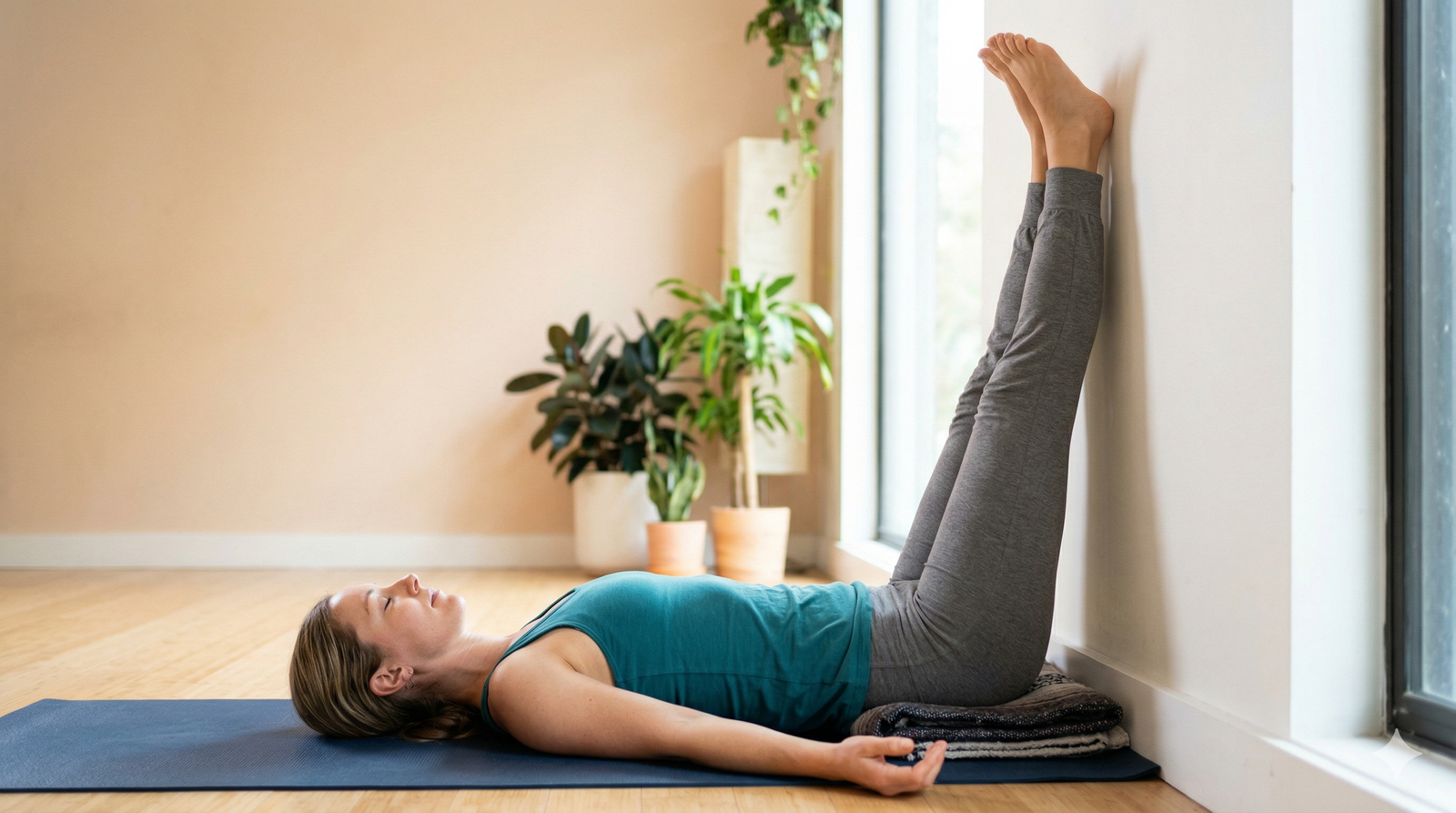
- Lay out a yoga mat near a clean wall where you can lie down comfortably.
- Lie down directly in front of the wall in such a way that your hips touch the wall.
- Now, slowly lying down on your back, raise your legs up against the wall.
- Bring your hips close to the wall and try to keep your legs straight.
- Keep your arms in a relaxed position at your sides, with your palms facing upwards.
- Close your eyes and take deep breaths. Allow your body to relax completely.
- Hold this position for 5–15 minutes, according to your comfort level.
- Gently bend your knees, roll onto your side, and then get up.
Best Time to Practice Viparita Karani
The Legs Up the Wall pose is a relaxing yoga pose, so you can practice it at any time of the day. However, at certain specific times, its effect is even more powerful.
In the evening or at night (Best time)
Performing this pose in the evening or before going to sleep is considered the best way to alleviate the fatigue, stress, and leg tiredness accumulated throughout the day. It eliminates sluggishness and helps induce sound sleep.
At the end of the yoga practice
If you practice yoga, Viparita Karani should be performed at the very end; this helps relax the body and normalize the heart rate.
After traveling or standing for long periods
After standing for long periods or traveling, this pose reduces swelling and pain in the legs.
On an empty stomach or after a light meal
It is best to perform this pose on an empty stomach or 2–3 hours after eating a light meal.
How Long Should You Stay in Viparita Karani?
Viparita Karani (Legs-Up-the-Wall Pose) is a restorative pose; therefore, holding it for an extended period is more beneficial.
- Beginners: 5 to 10 minutes
- Intermediate: 10 to 15 minutes
- Advanced: 15 to 20 minutes or as desired according to your comfort
Precautions for Legs Up the Wall Pose (Viparita Karani)
- Be careful of your neck support, especially if you have any problems in your neck and lower back, and place a pillow under your neck and a blanket under your hips.
- Consult a doctor in case of high blood pressure or heart problems.
- Avoid in cases of eye problems: In this pose, the head is in a low position, which can create problems in certain eye conditions.
- During pregnancy, pregnant women should perform this pose only under the guidance of experts.
- Do not put pressure on your body, and keep your legs straight.
- In case you have problems in your legs and back, you should come out of the pose.
Common Mistakes to Avoid in Viparita Karani
- Standing too far from or too close to the wall
If your hips are not in the correct position, your body will not relax properly. Maintain a comfortable distance.
- Keeping the legs forcefully straight
Do not strain yourself in an attempt to keep your legs perfectly straight. A slight bend is permissible.
- Not supporting the lower back
If there is a gap or strain in your lower back, use cushions or a folded blanket.
- Holding tension in the shoulders and neck
In this pose, the entire body should be relaxed. Do not keep your neck and shoulders tense.
- Failure to control one’s breath
Rapid breathing is a hindrance to relaxation. One is supposed to breathe slowly and deeply.
- Holding for too little or too long
Waking up early or staying up late, especially when one is forced to, is incorrect. The time chosen is supposed to match one’s own comfort.
- Sudden departure
When leaving the pose, one is supposed to roll onto their side by bringing their knees together instead of getting up.
Who Should Avoid the Viparita Karani Pose?
- Severe neck or spine problems (cervical, slip disc)
- High Blood Pressure or Heart Patients (Doctor’s advice required)
- People with eye problems (such as glaucoma)
- Recent surgery or injury wale log (legs, back, abdomen)
- Women in the Last Trimester of Pregnancy (Perform only under expert guidance)
- During a severe migraine or headache
- Those who feel discomfort or dizziness in the pose
Tips to Improve Your Legs Up the Wall Pose
- Maintain the correct distance from the wall.
Position your hips close enough to the wall so that you feel comfortable, without overstretching.
- Use support under your hips.
Using cushions or folded blankets makes the pose even more relaxing.
- Keep your legs relaxed.
Do not keep your legs forcefully straight; let them remain in their natural position.
- Focus on deep breathing.
Taking slow and deep breaths helps the body and mind relax quickly.
- Place your arms in a comfortable position.
You can enhance relaxation by placing your arms at your sides or on your belly.
- Practice with your eyes closed.
This provides greater mental relaxation and stress relief.
- Gradually increase the time.
Start with 5 minutes initially, then gradually increase the duration.
- Enjoy a peaceful environment
Practicing in a quiet place improves focus and relaxation.
Viparita Karani Variations for Beginners & Advanced
Viparita Karani Variations for Beginners
Supported Viparita Karani
This pose is practiced by placing a bolster or a folded blanket under the hips. This pose is helpful in providing support to the lower back.
Bent Knee Variation
If straight legs are not comfortable, this variation can be practiced by bending the knees slightly in this pose.
Wide Leg Viparita Karani
In this pose, both feet are placed against a wall, and the legs are spread apart in a V-shape. This pose is very effective in providing a deep stretch to the hips.
Butterfly legs (Baddha Konasana Variation)
In this variation, while resting your legs against the wall, you bring the soles of your feet together and allow your knees to drop out to the sides. This resembles the butterfly position. It relaxes the hips, groin, and inner thighs, providing a sense of deep relaxation.
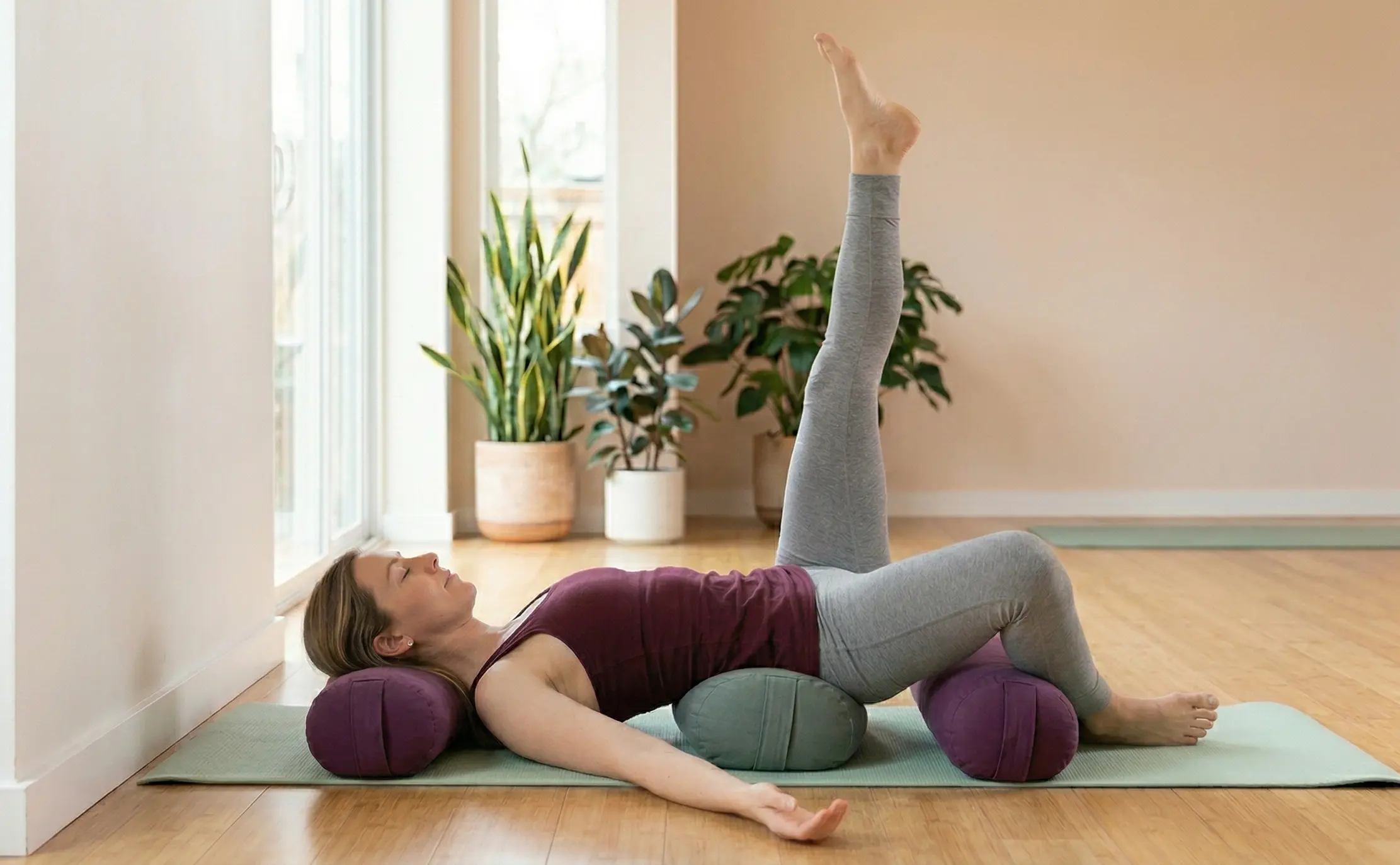
One Leg Variation (Single Leg Up the Wall)
In this variation, one leg rests upward against the wall, while the other leg is either extended straight on the floor or held in a bent position. This allows for focused attention on each individual leg, thereby improving both balance and flexibility.
Advanced Variations of Viparita Karani
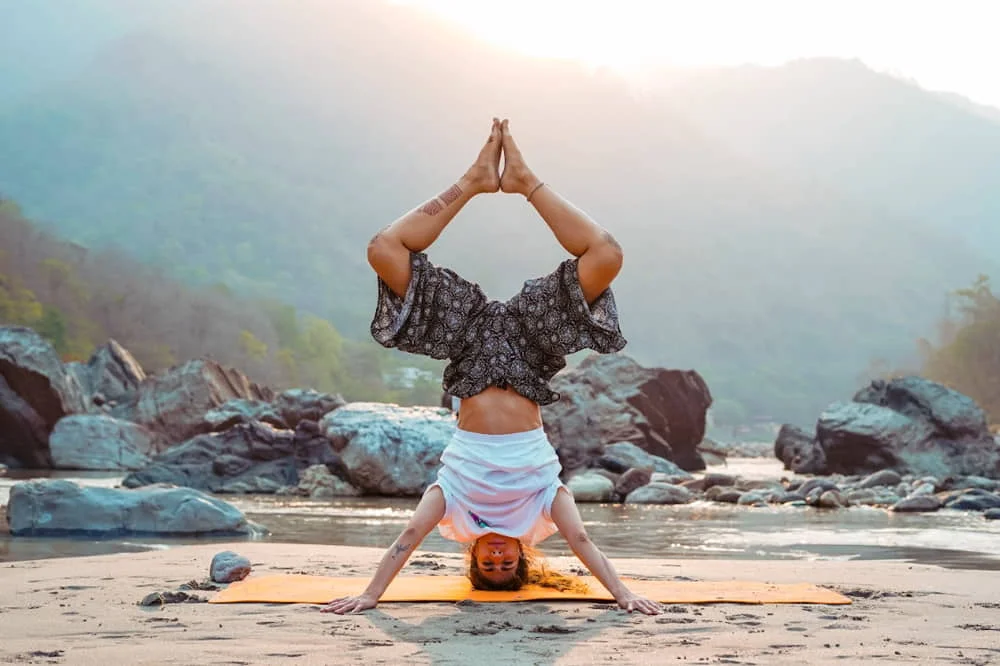
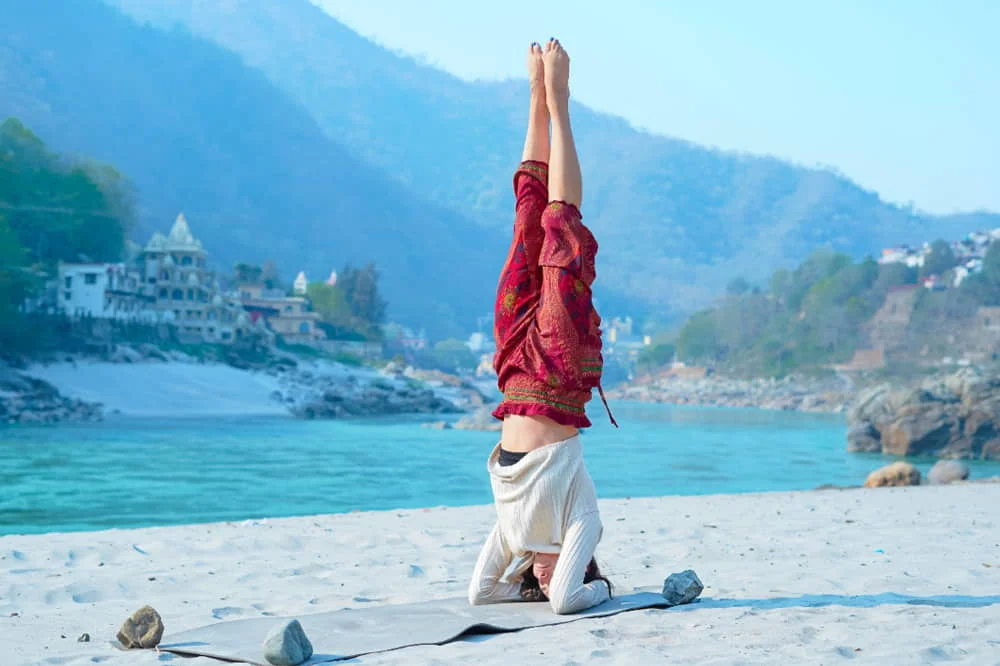
Unsupported Viparita Karani (No Wall)
In this variation, you hold your legs up without the support of a wall. This requires core strength and balance. This pose is somewhat challenging and improves body control.
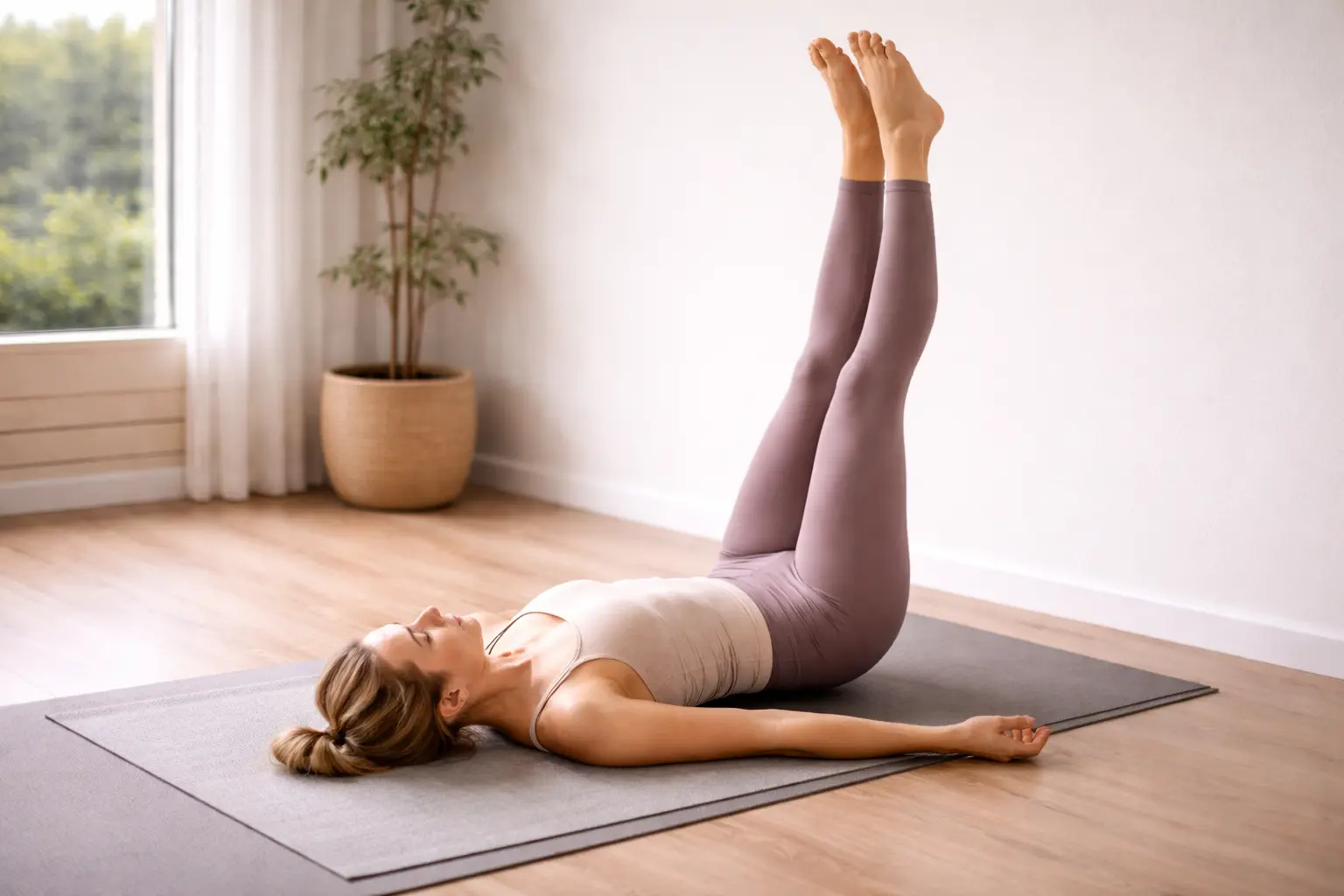
Viparita Karani with Core Hold
In this variation, you keep your legs elevated while actively engaging your core muscles (abs). This variation strengthens the core and improves stability.
Lotus Legs Viparita karani (Padmasana Variation)
In this variation, you fold your legs into Padmasana (Lotus Pose) and hold the position, either with or without the support of a wall. This pose enhances both flexibility and focus, but it is suitable only for those who possess good hip flexibility.
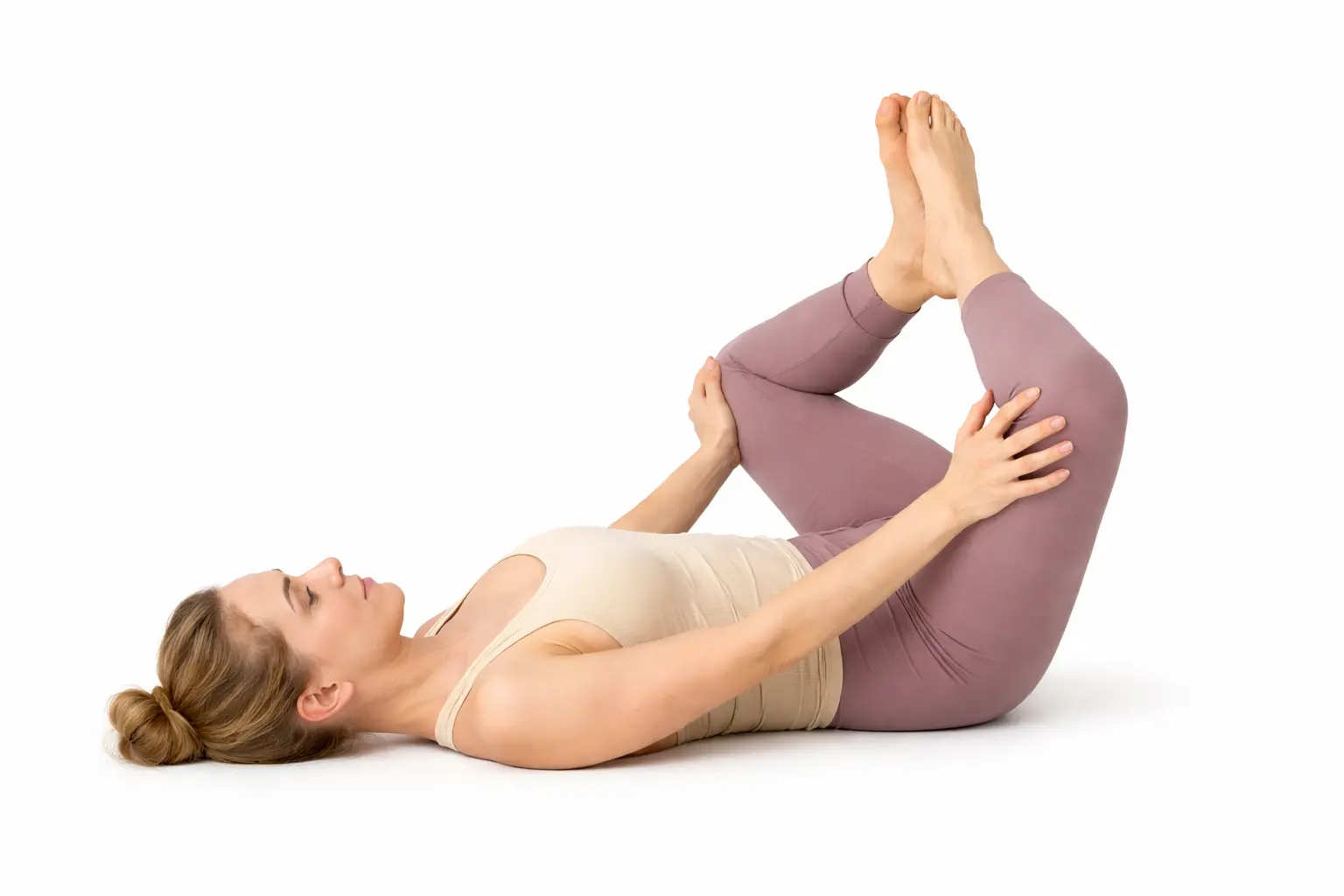
Dynamic Legs Movement Variation
In this variation, you perform slow movements while keeping your legs elevated—such as a cycling motion or moving your legs up and down. This improves both blood circulation and muscle activation.
About Mira Yogashala Yoga school in Rishikesh
Mira Yogashala is one of the most trusted and best yoga schools in Rishikesh. We offer various yoga courses. During these courses we provide every essential facility to the participants, like three daily satvik meals and comfortable rooms (private or shared) according to your choice, and we also organize excursion trips without any extra charges. If you also want to gain in-depth knowledge of yoga, then join our yoga teacher training courses.
- 100 Hour Yoga TTC in Rishikesh
- 200 Hour Yoga TTC in Rishikesh
- 300 Hour Yoga TTC in Rishikesh
- 500 Hour Yoga TTC in Rishikesh
Conclusion
Viparita Karani, or Legs Up The Wall Pose, is a simple but effective restorative yoga pose. This pose is appropriate for all levels and can be used to improve blood circulation, reduce fatigue and swelling in the legs, and calm the nervous system. This pose is particularly beneficial for individuals with long work hours, many travels, and a high-stress lifestyle, as it can help them relax and sleep better. The regular practice of this pose can also help with digestion, relieve minor back pain, and rejuvenate their energy levels.
Viparita Karani is a simple pose that does not require much physical strain but can provide significant physical and mental benefits. This pose can be practiced for a few minutes or as long as desired. Regardless of the duration, it can help rejuvenate an individual and is an excellent choice for maintaining a healthy lifestyle.