Introduction: Jal Neti Kriya
Starting the day feeling stuffed up, experiencing sinus pressure, sneezing attacks, and difficulty breathing through your nose may leave a negative impact on your daily activities. People often reach for decongestants or use temporary solutions. However, certain people prefer a more natural method to maintain their nasal hygiene. For them, the traditional yoga process called “Jal Neti Kriya” is useful.
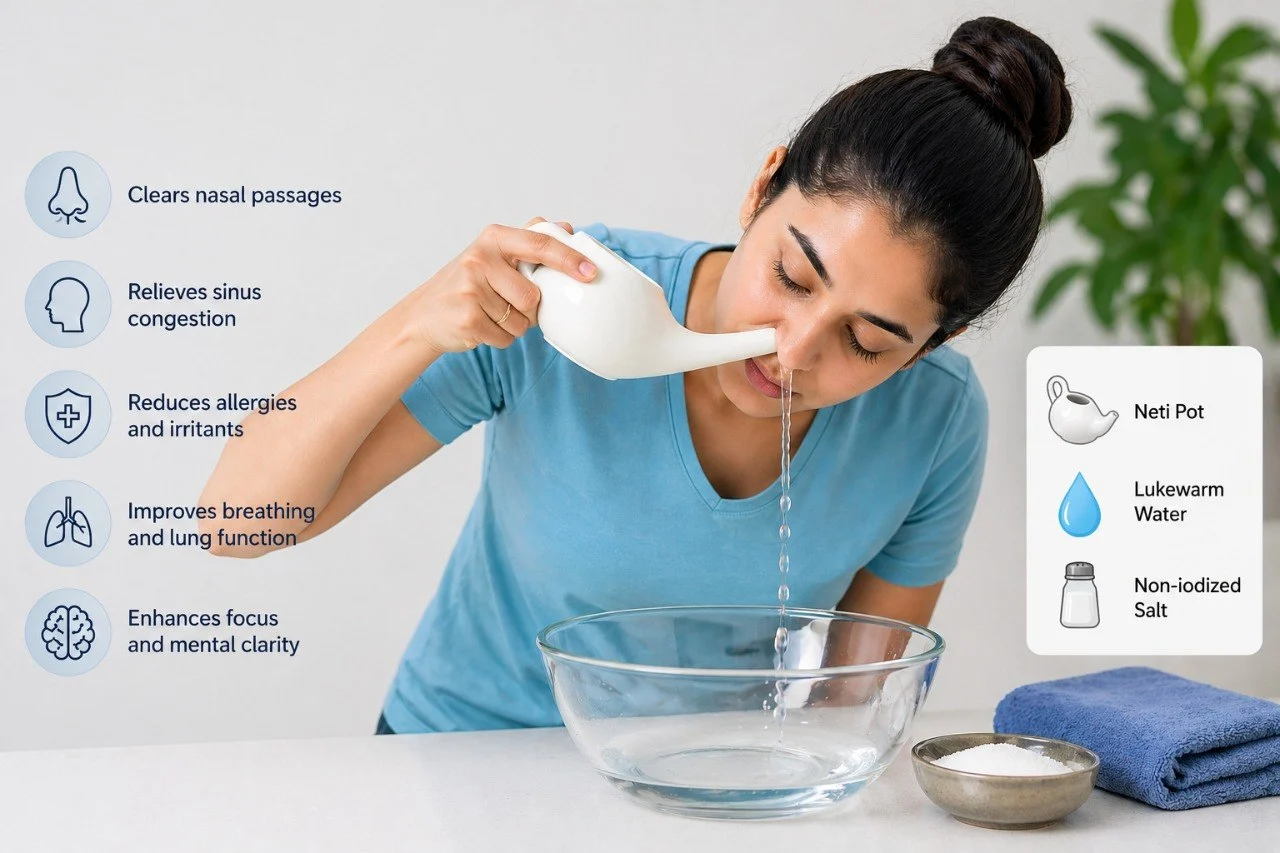
In traditional yoga practices, Jal Neti is considered a form of yoga that involves cleansing the nostrils with warm saline water with the help of a Neti pot. It helps in cleansing the nostrils from mucus, pollutants, irritants, etc.
While it was designed back then, Jal Neti is still very applicable in the contemporary world due to constant exposure to various air pollutants, dryness, seasonal changes, allergies, and congestion issues.
This guide will introduce you to Jal Neti, its benefits, drawbacks, safety precautions, and common mistakes beginners usually make.
What is Jal Neti Kriya?
Jal Neti Kriya is one of the six basic yogic cleansing techniques called Shatkarma. Such yogic cleansing procedures are believed to be essential for preparing the body for more advanced techniques such as pranayama and meditation.
The etymology is quite straightforward:
- Jal = Water
- Neti = Cleansing the nose
In the process, warm saline water is injected into one nostril via a special tool called the Neti pot. Then the water flows through the nasal passages, coming out through the other nostril.
If done correctly, Jal Neti can assist in removing the following:
- Unwanted mucus
- Dust
- Pollen
- Pollutants
- Crusts
- Irritants
Most yogis report an almost instantaneous sensation of freshness and easier breathing following the procedure.
Why Jal Neti is Popular Today
Although rooted in ancient yoga, Jal Neti is increasingly popular because modern lifestyles often irritate the nose and sinuses.
Common causes include:
- Air pollution
- Construction dust
- Dry indoor AC environments
- Seasonal allergies
- Pet dander
- Smoke exposure
- Frequent colds
- Mouth-breathing habits
Because of this, many people now use Jal Neti as part of a personal wellness routine.
Science Behind Jal Neti Kriya
Modern medicine also uses saline nasal rinsing techniques. The principle behind Jal Neti is similar.
Saline solution could be useful for:
- Thinning mucus
- Lubricating nasal cavities if dry
- Removing allergens
- Decreasing irritation
- Helping maintain proper function of cilia in nose
- Promoting temporary flow
However, some specialists in ENT recommend the rinsing procedure with saline solution only in particular cases under certain conditions.
It should not be used as the therapy for chronic sinusitis or infection in any case.
Benefits of Jal Neti Kriya
- Relieve Sinuses with Jal Neti Kriya
The most common reason why people practice Jal Neti Kriya is to ease symptoms caused by congested sinuses.
- Helps with Seasonal Allergies
As mentioned earlier, Jal Neti may relieve symptoms that appear due to seasonal allergies as it cleanses the nasal cavity from irritants.
- Facilitates Nasal Breathing
Users usually feel that the airways become clear after performing the Jal Neti practice.
- Helps Minimize Mouth Breathing
As nasal airways become clear during practice, people start breathing through their noses.
- Promotes Sound Sleep
Some people report reduced snoring due to minimized congestion of the nasal cavity.
- You Will Feel Fresh After Use
Cleansing of the nasal passages leaves one feeling fresh.
7. The Nasal Passage Remains Clean
Cleaning of the nasal passage keeps it clean.
- Useful after Pollution Contact
Useful when you come back from polluted areas like dusty roads.
- Keeps the Nose Clean
Regular washing helps maintain the cleanliness of the nostrils.
Jal Neti vs Neti Pot: What’s the Difference?
| Jal Neti | Neti Pot |
| Yogic cleansing practice | Tool used for practice |
| Traditional kriya | Container/device |
| Includes posture and breathing | Holds saline water |
| Yoga method | Accessory only |
In short, Jal Neti is the practice. The neti pot is the equipment.
What You Need for Jal Neti Kriya
Initially, you should make sure that you have the following items ready:
- Clean neti pot
- Sterile or boiled water (lukewarm)
- Salt (non-iodized)
- Washbasin or sink
- Tissues or towels
Correct Saltwater Mixture
One mistake made by most novices is mixing the wrong formula of salt.
The accurate salt solution formula will be:
- 1 cup lukewarm water
- ¼ to ½ teaspoon salt
The water should be slightly salty, just like tears.
Too much or too little salt can make you feel burning sensations.
How to Perform Jal Neti Kriya Safely (Step-by-Step)
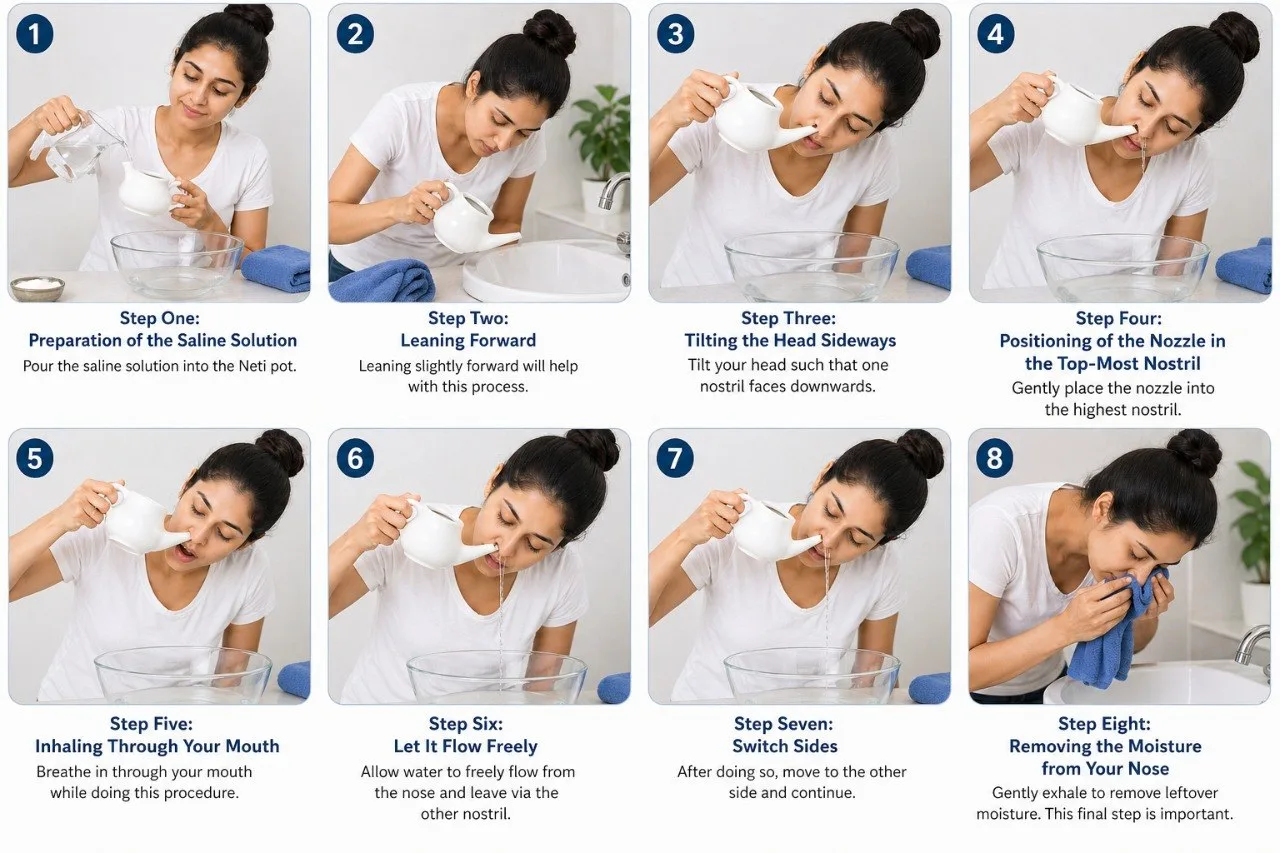
Step One: Preparation of the Saline Solution
Pour the saline solution into the Neti pot.
Step Two: Leaning Forward
Leaning slightly forward will help with this process.
Step Three: Tilting the Head Sideways
Tilt your head such that one nostril faces downwards.
Step Four: Positioning of the Nozzle in the Top-Most Nostril
Gently place the nozzle into the highest nostril.
Step Five: Inhaling Through Your Mouth
Breathe in through your mouth while doing this procedure.
Step Six: Let It Flow Freely
Allow water to freely flow from the nose and leave via the other nostril.
Step Seven: Switch Sides
After doing so, move to the other side and continue.
Step Eight: Removing the Moisture from Your Nose
Gently exhale to remove leftover moisture.
This final step is important.
My Practical Observation for Beginners
Many first-time users say the sensation feels strange for a few seconds. That reaction is normal. The key is staying relaxed and breathing through the mouth.
Once posture improves, the process becomes much easier.
Best Time to Practice Jal Neti Kriya
Morning
Good time for eliminating accumulated mucus.
Before Yoga
Good to practice prior to breathing and meditating exercises.
After Dust Exposure
Useful after outdoor pollution exposure.
Daily vs Occasional Use
Daily Use
Some people use it during allergy season or winter congestion.
Rarely Used
Some people practice it only on rare occasions.
Important Note
If dryness or irritation develops, reduce frequency.
Jal Neti Safety Tips
- Only Use Fresh Water
Use:
- Distilled water
- Boiled water
- Sterilized water
Never use polluted water.
- Have the Right Water Temperature
The wrong temperature can damage the nostrils.
- Maintain Saline Solution in Balance
Balance is very necessary for a good cleanse.
- It is Absolutely Necessary to Maintain Your Neti Pot Clean
Your Neti pot has to be maintained clean at all times.
- Avoid Keeping Moisture Inside
Avoid a heavy feeling by drying your nose.
- Stop if Pain Happens
Sharp pain is not normal.
Possible Jal Neti Side Effects
When the technique is poor, some people may experience:
- Mild burning
- Ear pressure
- Temporary sneezing
- Irritation
- Water retention feeling
- Nasal discomfort
- Most issues come from:
- Wrong head angle
- Wrong salt concentration
- Cold water
- Forceful pouring
- Poor drying afterward
Who Should Avoid Jal Neti Kriya?
Avoid or consult a doctor first if you have:
- Frequent nosebleeds
- Complete blockage in the nose
- Severe sinus infection
- Fever with congestion
- Ear infection
- Recent nasal surgery
- Nose injury
- Serious deviated septum issues
If symptoms persist regularly, consult an ENT specialist.
Common Beginner Mistakes
Using Tap Water
Unsafe unless properly sterilized.
Rushing the Process
Gentle pouring works better.
Breathing Through the Nose
Always breathe through the mouth.
Blowing Too Hard Afterward
This may create pressure.
Skipping Cleaning of Neti Pot
Poor hygiene increases risk.
Significance in Yogic Practice
In conventional yoga practices, purification exercises were important in preparing the body for spiritual enlightenment.
When the breath flows freely, pranayama becomes smoother, and meditation often feels easier.
This is why many yoga schools still teach it today under guidance.
Can Jal Neti Cure Sinus Problems?
No technique should be marketed as a panacea.
Jal Neti is used in addressing conditions such as congestion, irritation, and obstruction.
But chronic sinusitis, structural problems, allergies, or infection may require medical care.
Think of it as supportive care—not a miracle cure.
Expert Tip for Best Results
If you are new:
- Learn from a qualified yoga instructor.
- Start slowly
- Use proper water hygiene.
- Be moderate in its use.
- Watch the reactions of your body.
Being consistent is far more important than being aggressive.
About Mira Yogashala
At Mira Yogashala in Rishikesh, expert yoga teachers teach proper way to do Jal Neti Kriya, which helps us to relieve from the nasal blockage. Our School provides proper guidance to all its students .
The school offers 100-hour yttc, 200-hour, and 300-hour yoga ttc, and 500-hour yoga teacher training course in Rishikesh. Along with the course, students receive accommodation, healthy meals, and excursions in Rishikesh. After completion, the students get a certification from Yoga Alliance, USA.
In the 200-hour YTTC in Rishikesh, you will learn a detailed understanding of yoga philosophy, meditation, pranayama, anatomy, and asana practice, helping you build a strong foundation in both traditional and modern yoga teaching methods.
In 500-hour Yoga Teacher Training in Rishikesh, it offers full knowledge and understanding of yoga, various asanas from the basic to the next level. It includes multi-style yoga poses, pranayama, and meditation with yoga anatomy and philosophy.
Conclusion
Jal Neti Kriya is an easy yet efficient yogic technique that has proven itself throughout time.
In times of pollution, allergies, artificial air conditioning, and congestion, it can serve as a means of cleaning your nose and making breathing more comfortable.
If done right, it will be useful in:
- Maintaining sinus hygiene
- Promoting breathing
- Managing allergy issues
- Preparation for yoga poses
- Feeling fresh every day
However, what really matters is doing it the right way.
Frequently Asked Questions (FAQs)
- What is Jal Neti Kriya?
“Jal Neti Kriya” means cleansing using warm salted water in the nasal passage.
- Can one perform Jal Neti Kriya every day?
Yes, but based on individual requirements. Lessen your practice if you experience dryness.
- Does Jal Neti cure sinusitis?
Perhaps, but it can help in eliminating the mucus from the area.
- Are beginners allowed to perform Jal Neti?
Yes, provided there is professional guidance.
- What makes Jal Neti feel hot?
The primary reason is the incorrect saltwater concentration ratio and temperature of the water.
- What kind of water is used in Jal Neti?
Water that is sterilized, distilled, or boiled.
- Does Jal Neti solve the snoring problem?
Jal Neti can be practiced to treat snoring caused by nasal congestion.
- Can children do Jal Neti?
Absolutely, but it can be done only under professional guidance.
- Is Jal Neti safe in an illness situation?
No, except for cases when recommended by doctors.
- How long does Jal Neti take?
Around 5-10 minutes.