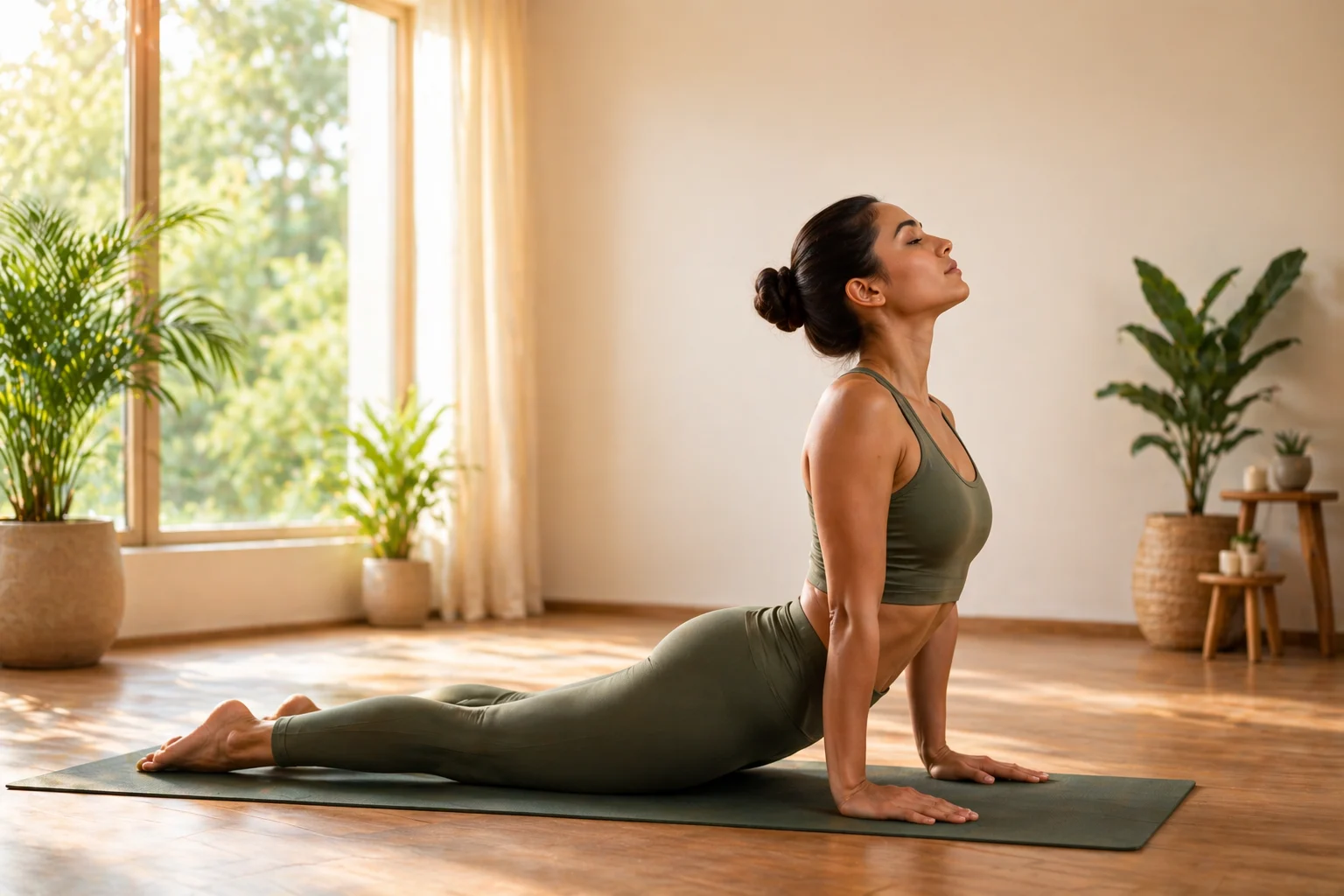
Cobra Pose (Bhujangasana) is a beginner-friendly yoga backbend that improves spinal flexibility, reduces back pain, and enhances posture. It involves lifting the chest while keeping the lower body grounded.
Introduction: Cobra Pose (Bhujangasana)
Cobra Pose (Bhujangasana) can relieve back pain and stiffness in just a few minutes a day—especially if you sit for long hours.
Apart from stretching your chest muscles, the pose will not only tone your lower back muscles but will also enhance your flexibility. But did you know how you can do this pose?
This article will look at the steps in doing the Cobra Pose, its benefits, and what to avoid while practicing this pose: step-by-step Cobra Pose for beginners.
What is Cobra Pose (Bhujangasana)?
Cobra Pose Quick Facts:
- Difficulty: Beginner
- Time: 10-20 seconds
- Benefits: Alleviates back pain, posture, flexibility
- Best Time: Morning or after exercise
The Cobra Pose (Bhujangasana) is a back-bend in which you lie face-down on the floor and raise your chest while keeping your lower part stable, similar to a snake lifting its head.
Bhujangasana, or Cobra Pose, is a yoga exercise that benefits you in many ways, including reducing spinal inflexibility and relieving back pain.
This pose is mainly done to
- increases spinal flexibility
- reduce back pain
- improve posture
Overall, this pose improves flexibility, activates the spine, and prepares the body for deeper yoga practices in a safe and controlled way.
Cobra Pose (Bhujangasana) for Beginners – Step by Step
Step 1 – Starting Position
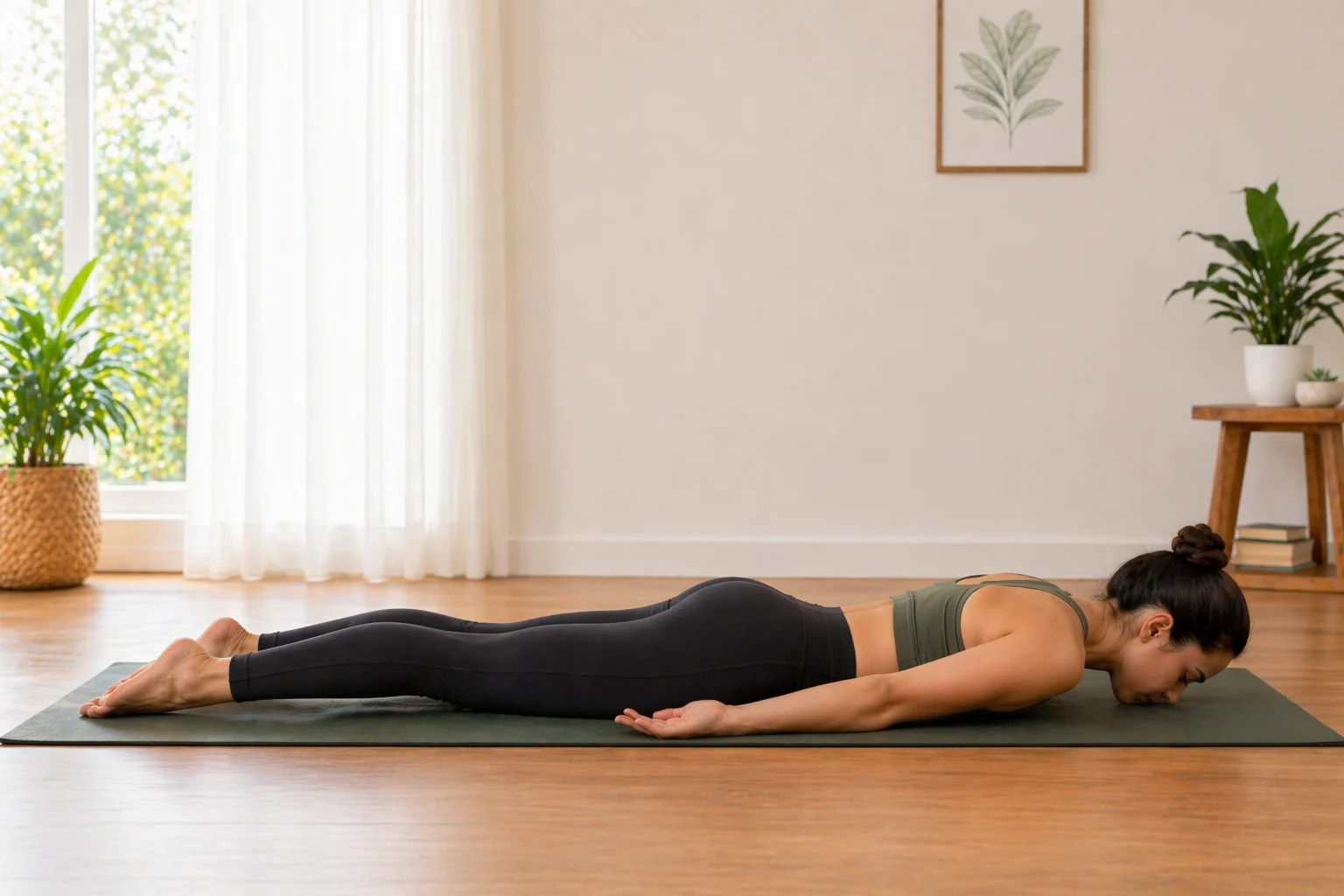
In the beginning stage, you need to lay down comfortably on a yoga mat with your legs fully stretched out.
Step 2 – Positioning the Hands
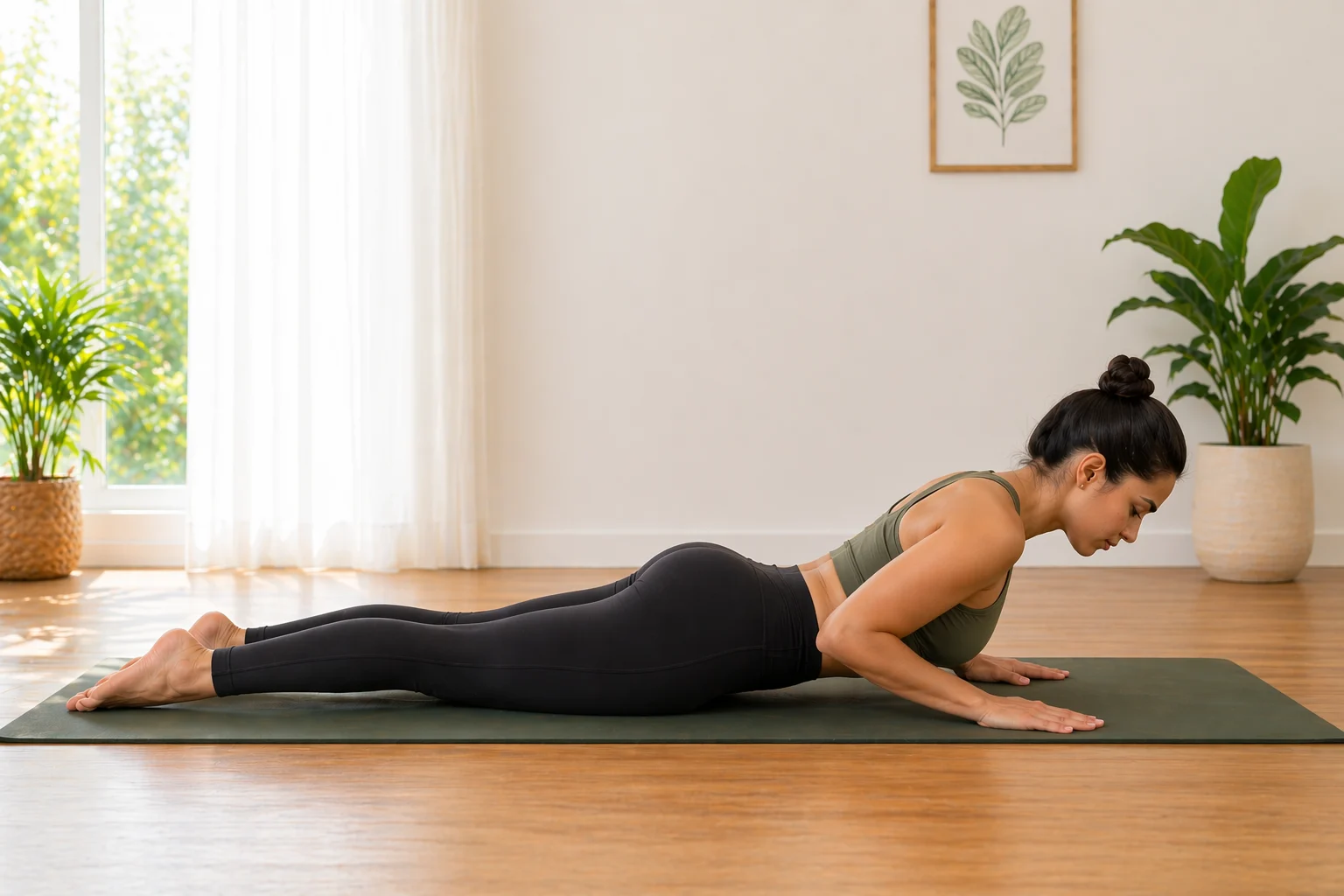
At this stage, place both your hands on the ground at the level of your shoulders.
Step 3 – Raising the Body
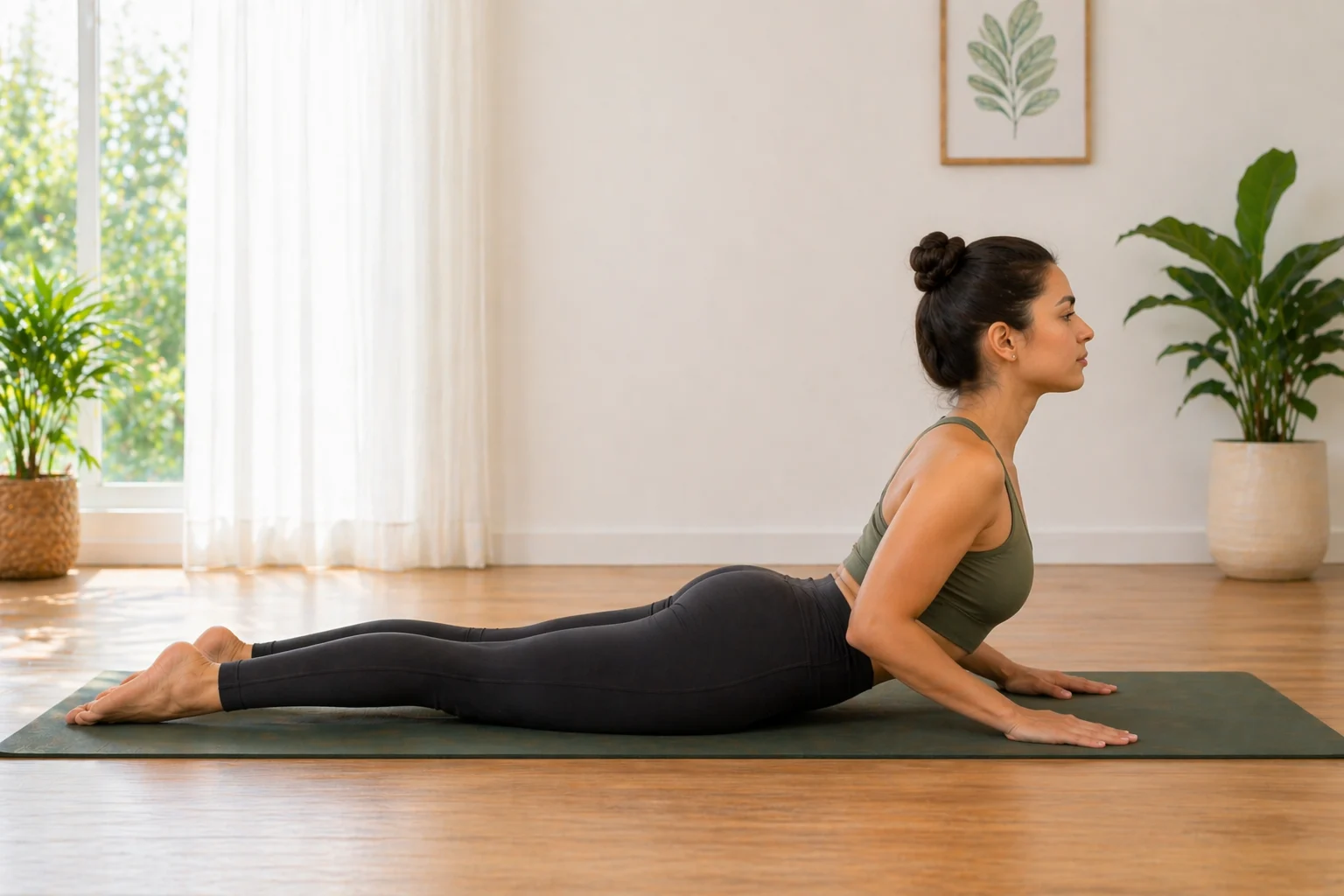
Raise your chest by slowly inhaling; however, one should not exert too much strain on the lumbar area.
Step 4 – Head Position
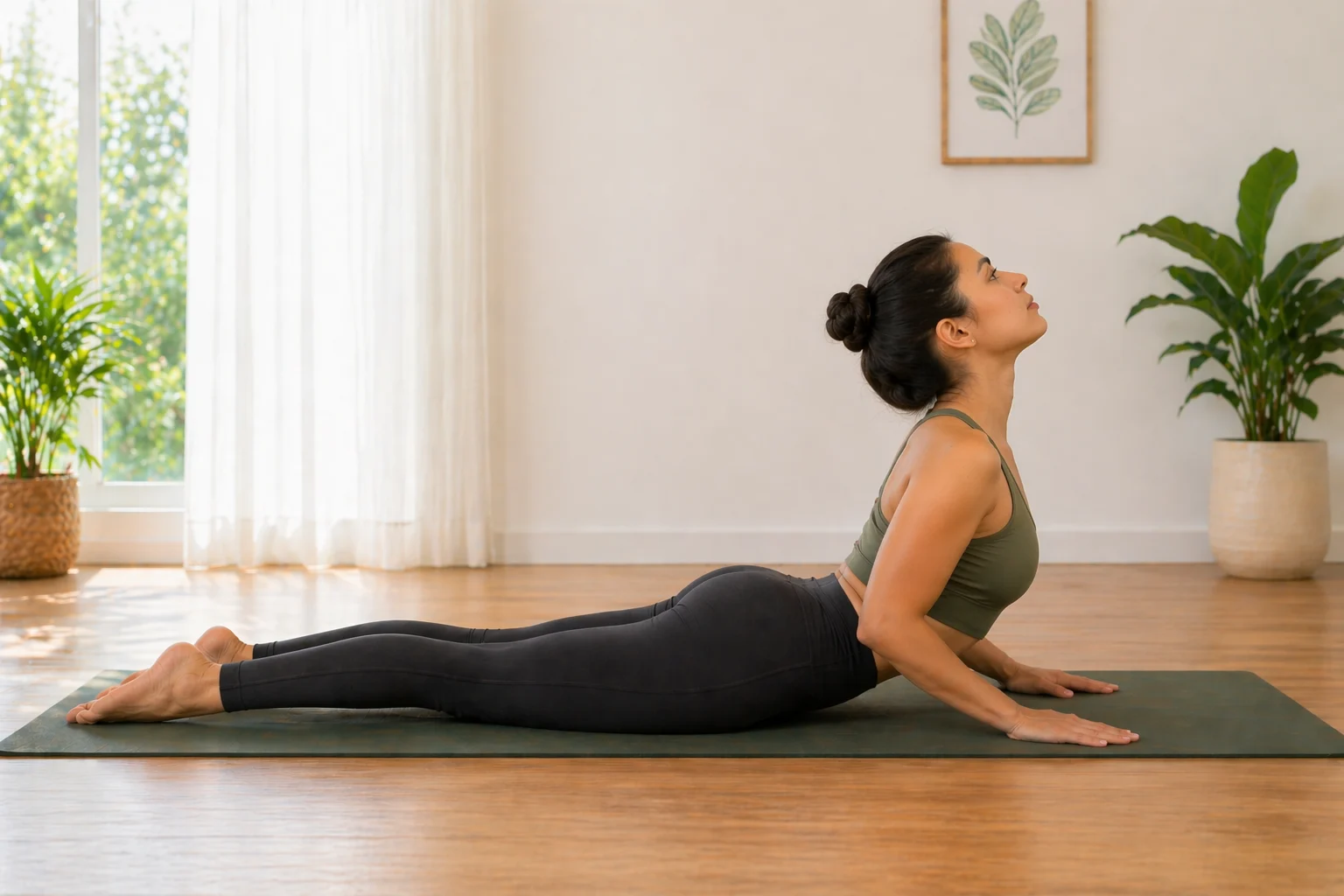
Slowly lean your head back and gaze upwards, enabling you to experience some stretching sensations on your neck and back.
Step 5 – Hold the Posture
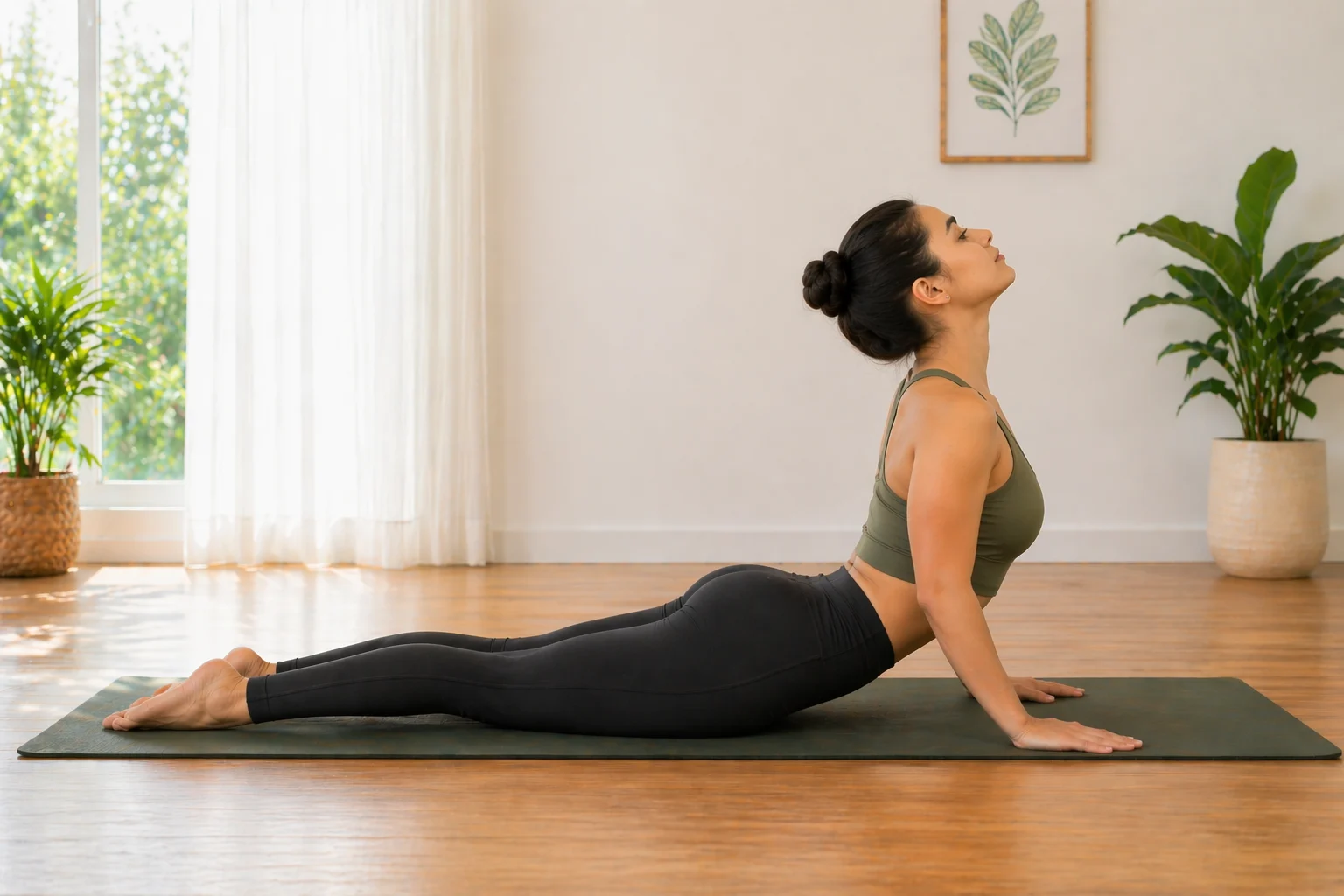
Hold the posture for about 10 to 20 seconds while ensuring that you breathe throughout the process.
Step 6 – Exit the Posture
Finally, exhale slowly and get your body back on the floor carefully.
How to Do Cobra Pose (Bhujangasana) Correctly?
To properly perform Cobra Pose, one needs to make sure that the body is relaxed before proceeding to do the pose. In this way, it will prove both beneficial and effective.
Remember the following guidelines:
- Avoid tensing your shoulders.
- Do not lock up your elbows tightly.
- Always breathe steadily.
Performing the Cobra Pose in this way will not only guarantee your safety from injuries but also allow you to reap its health benefits thoroughly.
Benefits of Cobra Pose (Bhujangasana)
- Cobra Pose for Back Pain Relief
Relieves back pain caused by sitting for long hours; it helps your lower back stay flexible.
- Improves Posture Naturally
The cobra pose improves poor posture by opening up the chest and ensuring your spine is aligned well.
- Increases Spinal Flexibility
Cobra Pose increases spinal flexibility; hence, your back is more flexible.
- Relieve Stress and Mental Tension
This pose is beneficial in relaxing your nervous system, hence relieving stress and mental tension.
- Strengthen Core and Lower Back
Stretches your shoulder muscles and makes your lower back and other muscles stronger.
- Improves Digestion
Bhujangasana activates digestive organs in the body; thus, it helps improve digestion and bloating.
- Enhances Blood Circulation
The posture improves blood circulation and supplies muscles with oxygenated blood for faster healing.
- Boosts Energy Levels
The regular practice of cobra pose will assist you in increasing your energy levels.
- Opens the Chest and Improves Breathing
Cobra pose opens the chest, which enhances breathing capacity.
Bhujangasana or Cobra Pose for Beginners
As per the views of yoga experts, Bhujangasana is considered the simplest and most safe pose for beginners who can master it from the very beginning.
But the following precautions must be taken by beginners:
- Start gradually: Start performing this yoga asana gradually to give enough time to the body to adapt to this pose.
- Do not stretch excessively: Never stretch too much because this could lead to lower back pain.
- Consistency is the key: Always perform this asana regularly since its benefits will be realized over time.
Therefore, if done correctly and patiently, this pose will be the starting point of your yoga practice.
Who Should Do Cobra Pose (Bhujangasana)?
- Office workers with back pain—helps relieve stiffness from long sitting
- Beginners starting yoga—simple and safe to learn
- People with poor posture—improves spinal alignment
- Anyone sitting long hours—boosts flexibility and mobility
Common Mistakes to avoid during Bhujangasana
When practicing Cobra Pose (Bhujangasana), minor errors can diminish the effectiveness of your practice and may even lead to injury.
Over-Arching Backwards – Overarching yourself beyond your limits puts extra strain on the lower back and might lead to injuries.
Pulling the Shoulders Up – The tension in the shoulders may put unnecessary strain on the neck and upper back regions.
Holding Your Breath – Taking short breaths makes the body rigid and stops the practitioner from enjoying the effects of the pose.
Moving Too Fast – Moving too quickly will distort the alignment, so remember always to maintain slow and steady movements.
When to Avoid Cobra Pose
This is an effective yoga pose that poses no health hazards if performed correctly.
However, there are instances where one needs to be careful when practicing this pose to avoid injuries.
In Case Of Severe Back Injuries
Individuals who have severe back injuries or spine problems should not perform this pose.
Consult Your Physician When Pregnant
When pregnant, it is advisable that one seeks professional guidance on doing this pose.
Immediately Stop if you Feel Pain
In case you feel a sharp pain while doing the exercise, you should stop immediately and rest your body.
How Long Does It Take for Bhujangasana to Have an Effect?
- After 1 Week: Stiffness Decreases
- 2-3 Weeks: Improvement in Flexibility
- After 4 Weeks and More: Improves Posture and Lowers Back Pain
Bhujangasana (Cobra Pose) Exercise—Anatomical Features
The Bhujangasana pose not only involves stretching of the back muscles but also working out a number of other muscles and joints within the body.
The principal action that this exercise requires is spinal extension. It helps open up the muscles of the back and other parts of the body.
Key Muscles Involved in the Cobra Pose
Lower Back: The back muscles support the spine and regulate back extension.
Erector Spinae: The muscle group supports keeping the entire spine in an upright state.
Glutes (Hip): These help stabilize the hip region while supporting the lower back.
Shoulders (Deltoids): These are mainly involved in helping lift the upper body.
Triceps: They support the arm muscles, thus helping lift the body.
Stretching Body Parts
The Chest (Pectorals): This body part stretches out to improve breathing.
Front Body (Anterior Chain): The entire front of the body opens up, thereby reducing stiffness.
The Stomach (Abdomen): The stomach muscles stretch out for improved digestion.
Joints Involved
Spine (Vertebral Column): This is where the primary movement occurs.
Shoulder Joints: They offer stability to the upper body parts.
Elbow and Wrist Joints: They stabilize the body’s weight.
Simply put, Cobra Pose is an exercise that builds up the back muscles while stretching the abdominal region, improving posture.
About Mira Yogashala
Despite being considered an easy posture to do, Cobra Pose requires proper knowledge about it to reap benefits from its practice. Instructors at Mira Yogashala in Rishikesh make sure that their students are aware of all details about postures they need to adopt during classes.
Mira Yogashala provides yoga teacher training courses, which are appropriate for beginners as well as yoga instructors looking for new ideas for their classes. Besides, students are offered accommodation and excursions. After completion, the students get a certification from Yoga Alliance, USA.
In the 200-hour YTTC in Rishikesh, you will learn a detailed understanding of yoga philosophy, meditation, pranayama, anatomy, and asana practice, helping you build a strong foundation in both traditional and modern yoga teaching methods.
In 500-hour Yoga Teacher Training in Rishikesh, it offers full knowledge and understanding of yoga, various asanas from the basic to the next level. It includes multi-style yoga poses, pranayama, and meditation with yoga anatomy and philosophy.
Conclusion
Start practicing cobra pose for just 5 minutes daily and notice visible improvements in your posture, flexibility, and back pain within weeks.
It is not merely a yoga posture but a natural method to restore your body’s alignment, strength, and vitality.
When practiced correctly and consistently, it gradually eliminates stiffness, alleviates back pain, and infuses your spine with newfound flexibility.
But perhaps most importantly, it teaches you to reconnect with your body—in a slow, balanced, and mindful manner.
So, if you are truly committed to improving your physical well-being, start today. A single small step—such as practicing Bhujangasana—has the power to transform your entire lifestyle.
Frequently Asked Questions
Q1. Can Bhujangasana give instant relief from back pain?
Ans: Yes, with constant practice, Bhujangasana can give relief from back pain and help to relieve stiffness in the lower part of the back.
Q2. Is Bhujangasana good for beginners?
Ans: Yes, Bhujangasana is regarded as one of the safest poses that can be performed by beginners.
Q3. For how long and how many times should one practice Bhujangasana?
Ans: To begin with, practice for 10-20 seconds at a time and do so three to five times.
Q4. How does one do Bhujangasana without causing any harm to themselves?
Ans: By performing the pose with correct alignment and slow movements, as well as controlling breathing while practicing.
Q5. Is Bhujangasana beneficial in improving spine flexibility and posture?
Ans: Yes, the answer is a resounding yes—it enhances spinal flexibility and naturally improves overall posture.