What is a full body stretching routine?
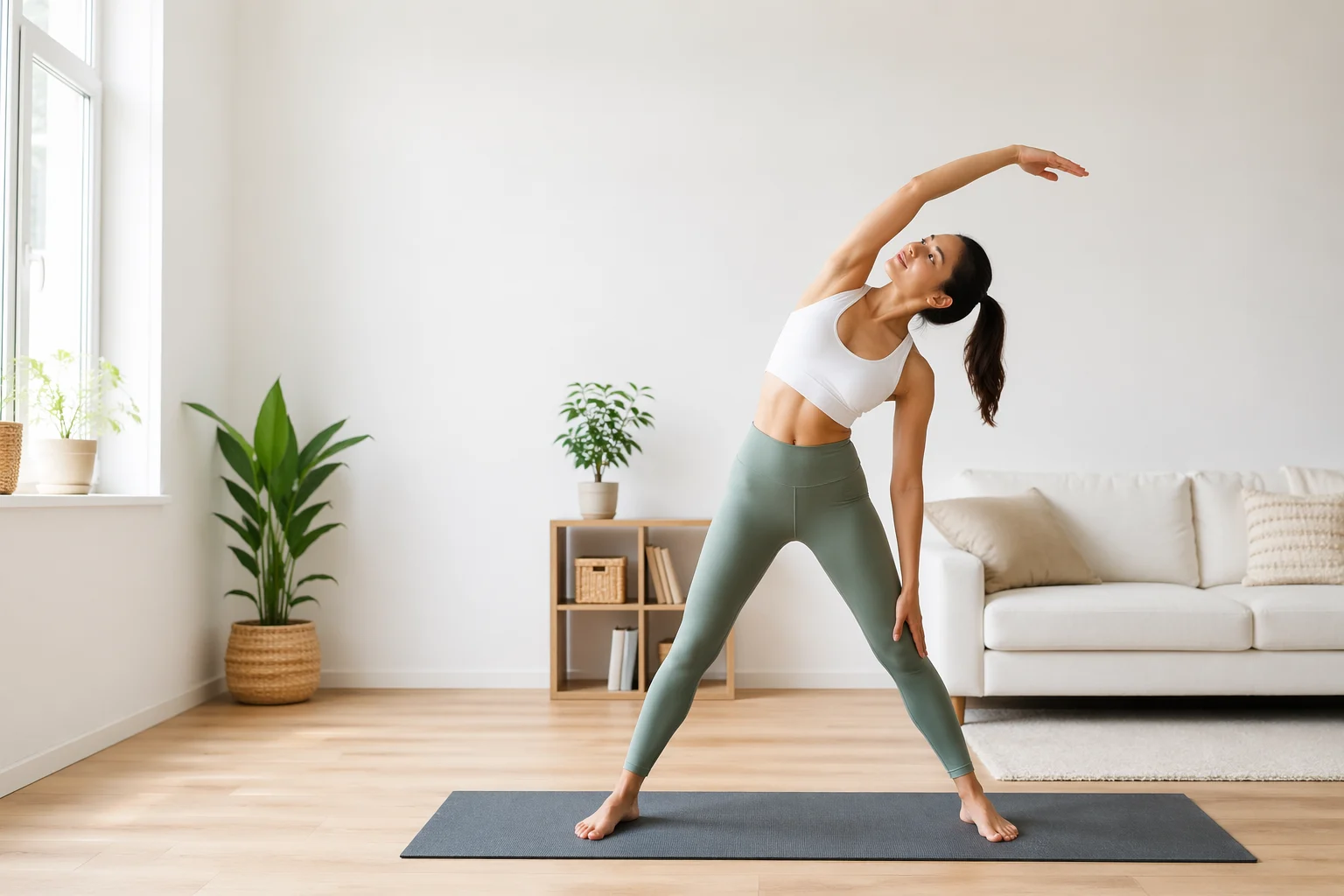
A full body stretching routine is a series of exercises that target all major muscle groups to improve flexibility, reduce stiffness, and enhance mobility. It typically includes both dynamic and static stretches performed daily or before and after workouts.
Introduction to Full Body Stretching
Feeling stiff after sitting all day? This 10-minute full body stretching routine at home is designed for beginners to improve flexibility, reduce stiffness, and boost energy—all in just 10 minutes.
So, the body gradually begins to stiffen. In this context, full-body stretching emerges as a simple yet incredibly powerful solution.
While it is common for people to believe that stretching exercises are only required prior to and following workouts, the reality is that one should engage in daily stretching exercises regardless of whether he or she is a beginner or an experienced athlete.
In this article, we will discuss the significance of stretching exercises, the elements of a proper stretching exercise regimen, and how one can integrate the routine into his or her daily activities.
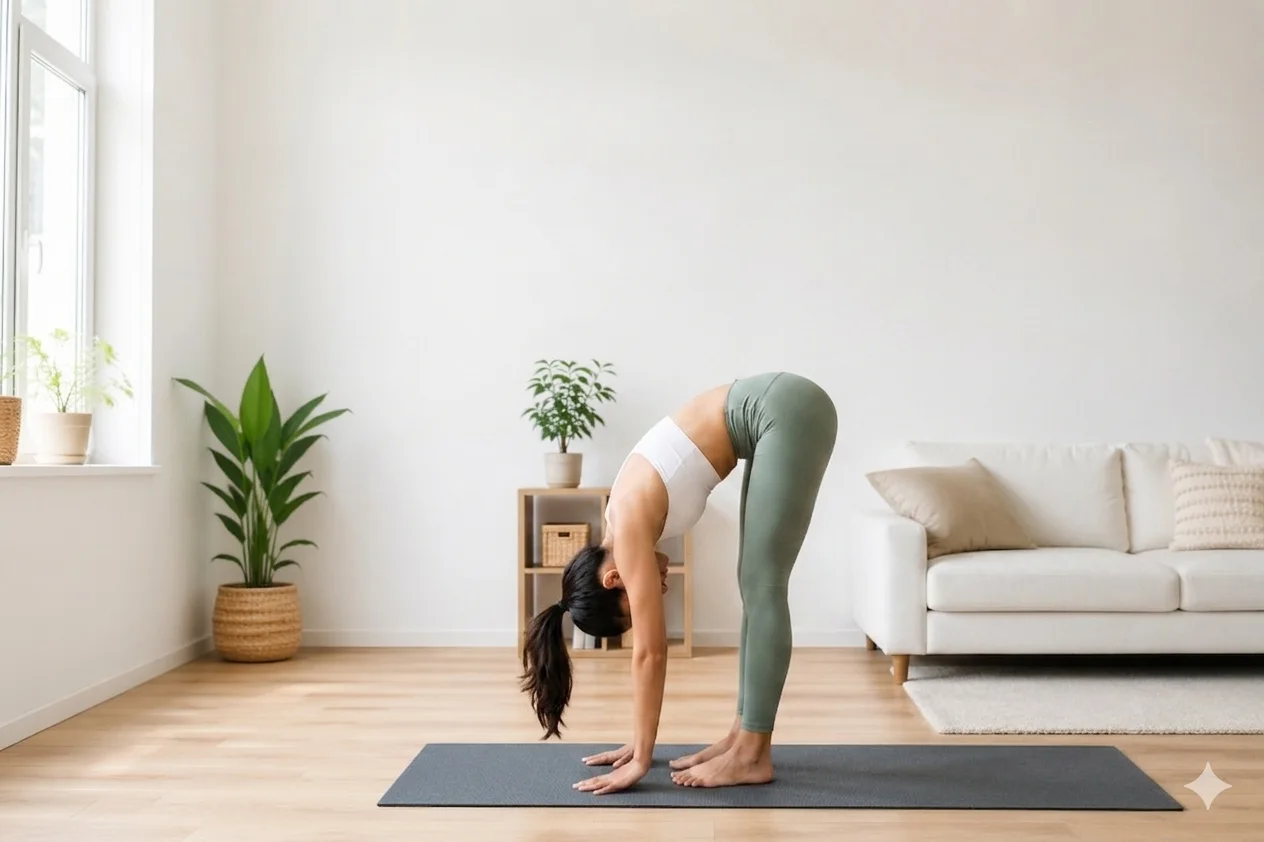
What is stretching, and why is it important?
Stretching refers to the extension of the body’s muscles to maintain flexibility, functionality, and balance within the muscles.
Full body stretching involves a series of exercises that help stretch and increase muscle flexibility across the whole body.
Therefore,When you perform stretching exercises regularly, you not only prevent your muscles from becoming tight, but your joints also begin to function more efficiently. That’s why it enhances the body’s mobility and reduces the risk of injury.
In addition, if you are new to stretching, you need to take your time to learn how to stretch the proper way. Stretching can be much safer and more effective if done the right way.
Types of Full Body Stretching
Before you plan to have an effective stretching regime, you need to understand that there are different kinds of stretching exercise.
Knowing what kind of stretching to perform at the right time is critical if you want to maximize the effectiveness of stretching.
1. Static Stretching
Static stretching refers to holding one particular stretch in a fixed position for 15-30 seconds, giving the muscles time to gradually stretch.
This form of stretching is especially important when performing stretches after working out because it reduces muscle tension.
In addition, it promotes flexibility and relaxation of the body.
2. Dynamic Stretching
Dynamic stretching involves stretching muscles through movement—such as arm swings, leg swings, or light lunges.
Moreover, this exercise warms up the body, which is the key requirement to ensure good results from pre-workout stretching
In addition, it gets the muscles ready for physical activity; hence, the risk of getting injured is decreased, along with improved performance.
Thus, if one seeks to achieve a balanced stretching regime, it is ideal to start it with dynamic stretching and finish it off with static exercises.
10-Minute Full Body Stretching Routine for Beginners
If you are a newbie to stretching, the following stretching routine should suit you well:
- Neck Stretches (1 Minute)
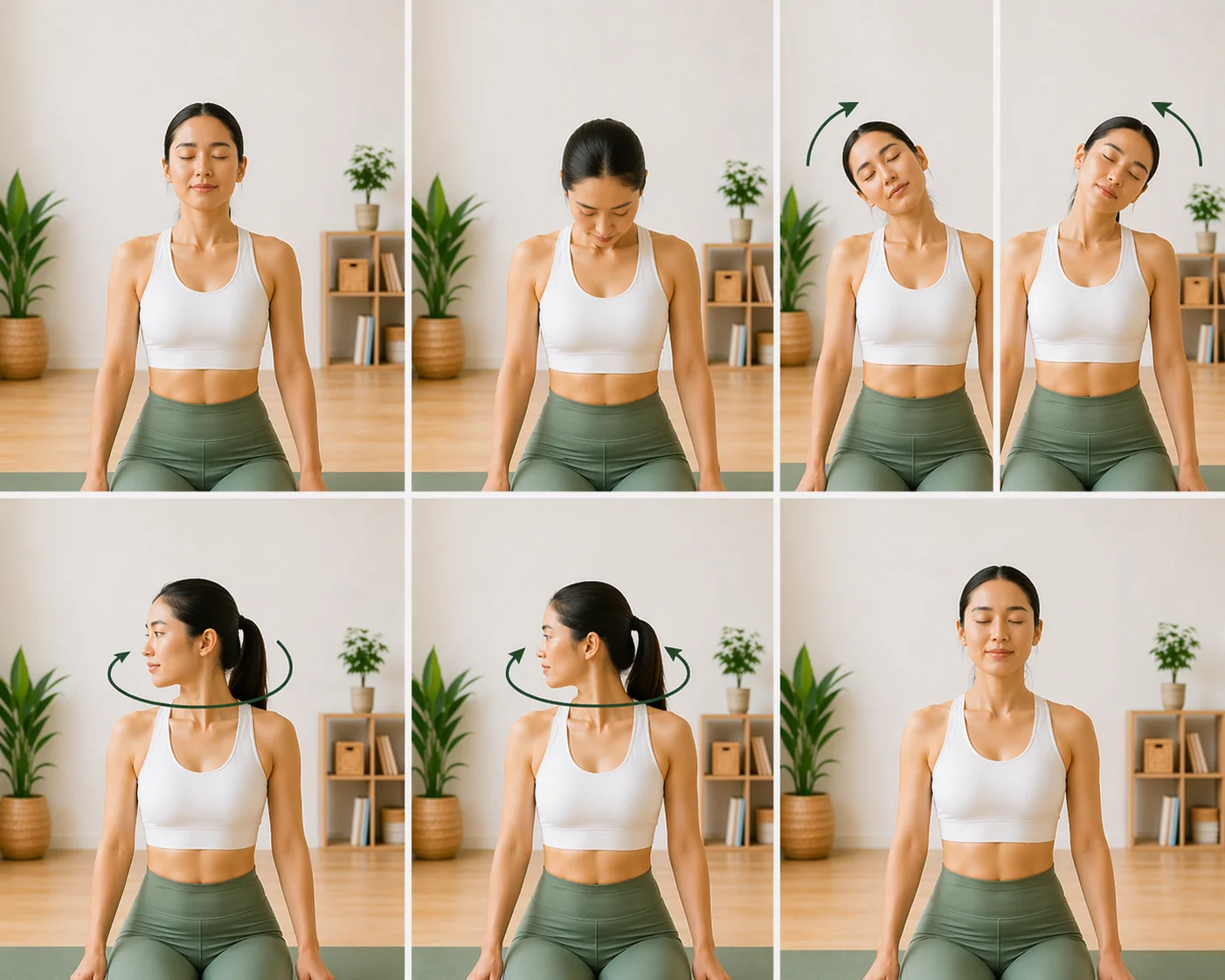
Performing gentle neck rotations will help get rid of any neck stiffness. This exercise is especially useful for people spending much time working on computers.
Steps:
- Sit or stand upright.
- Tuck your chin toward your chest.
- Tilt your head to the right and left.
- Slowly rotate your neck (clockwise and counterclockwise).
- Finally, relax with your head straight.
- Shoulders Stretches (2 Minutes)
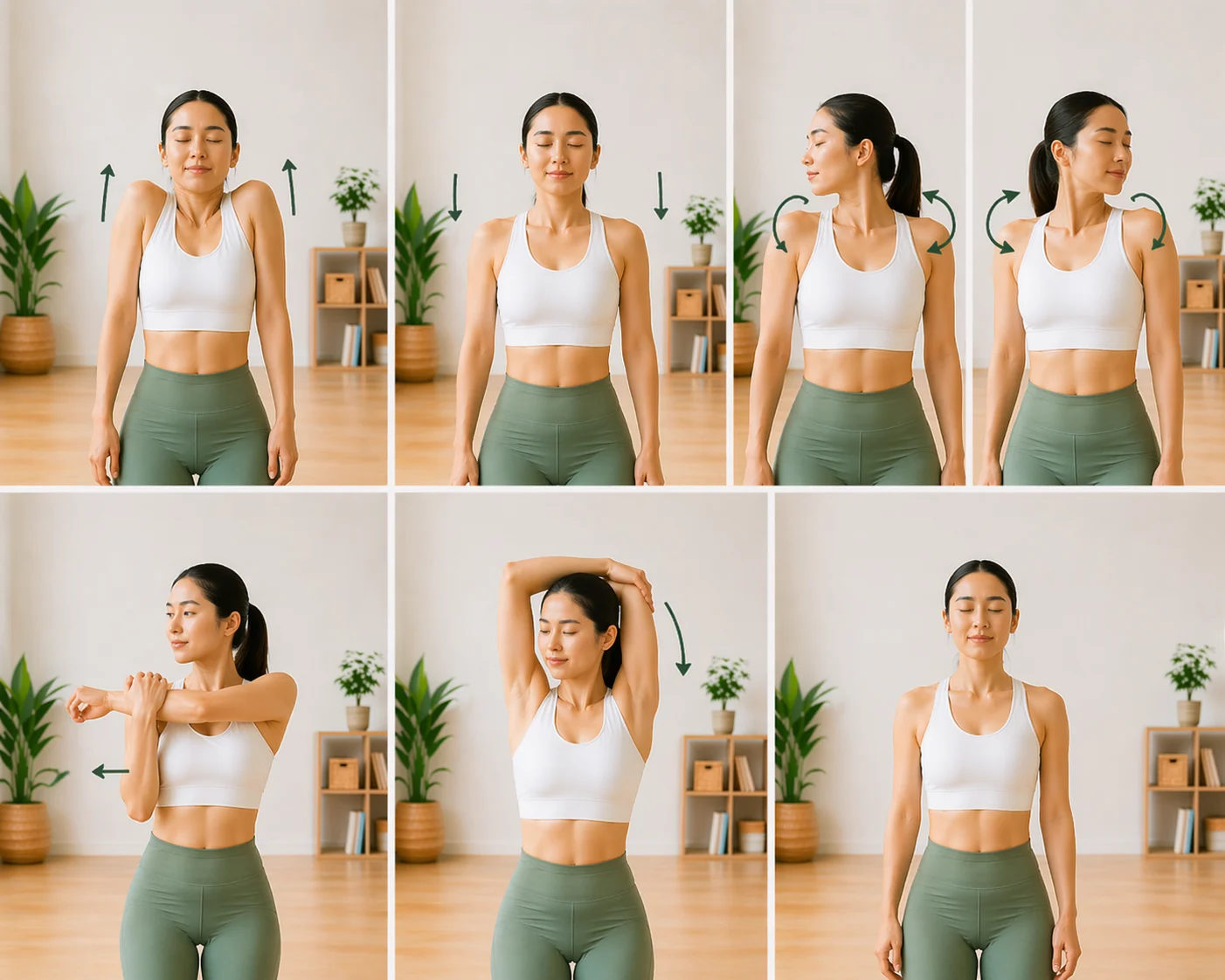
Shoulder rotations ease the tension in your shoulders.
Steps:
- Stand or sit upright, keeping your shoulders relaxed.
- Lift both shoulders up, then release them.
- Perform shoulder rolls (both clockwise and counter-clockwise).
- Bring one arm across the front of your body and pull it with the other hand.
- Raise one arm overhead and stretch it backward.
- Finally, let your shoulders go limp and relax.
- Back Stretches (2 Minutes)
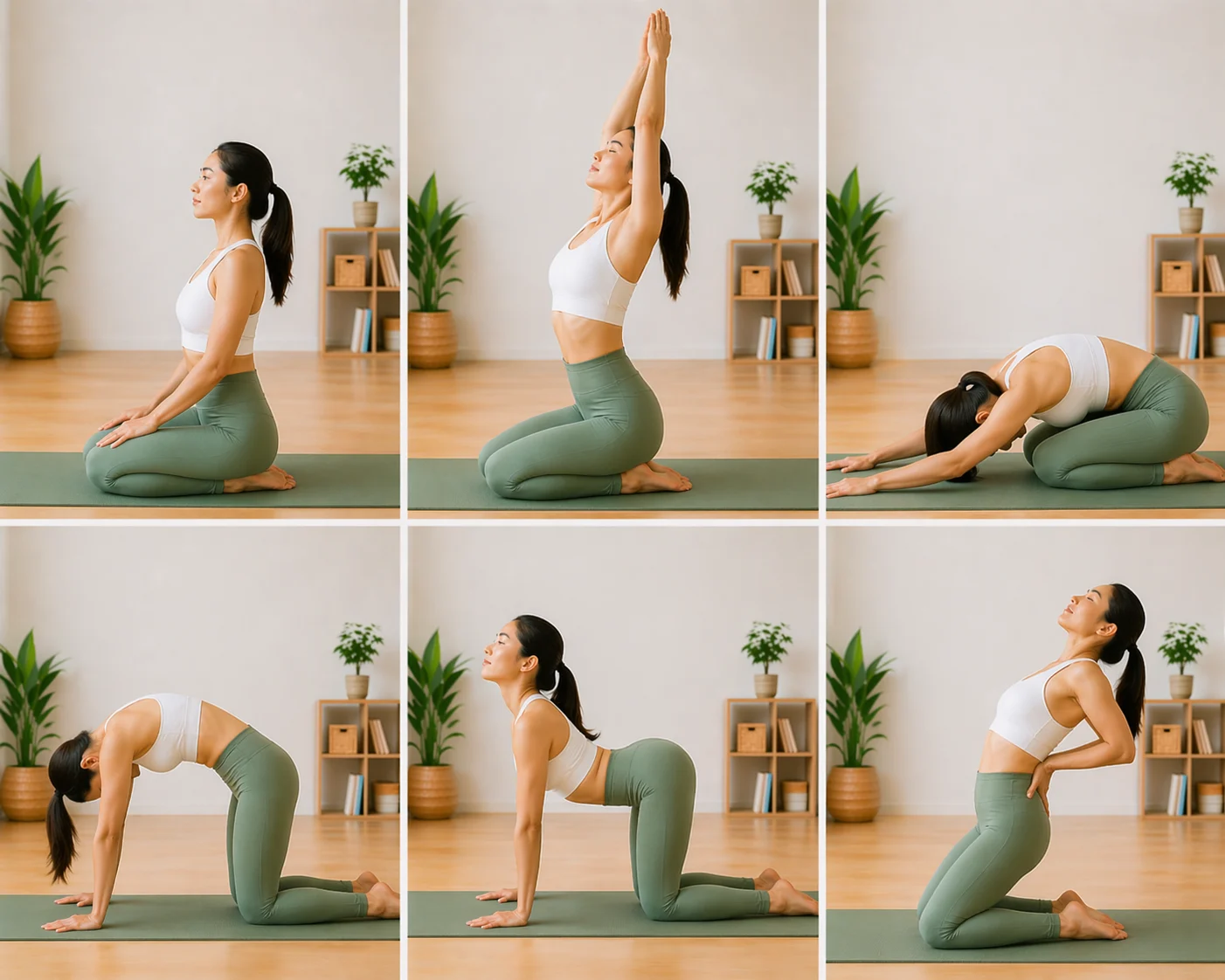
The back stretches will allow you to maintain the proper flexibility of your spine.
Steps:
- Stand or sit upright, keeping your spine straight.
- Raise both arms overhead and stretch your body.
- Slowly bend forward.
- Reach your hands forward and round your back (Cat Stretch).
- Lean slightly backward (Backward Stretch).
- Finally, return to a neutral position and relax.
-
Hamstring Stretches (2 Minutes)
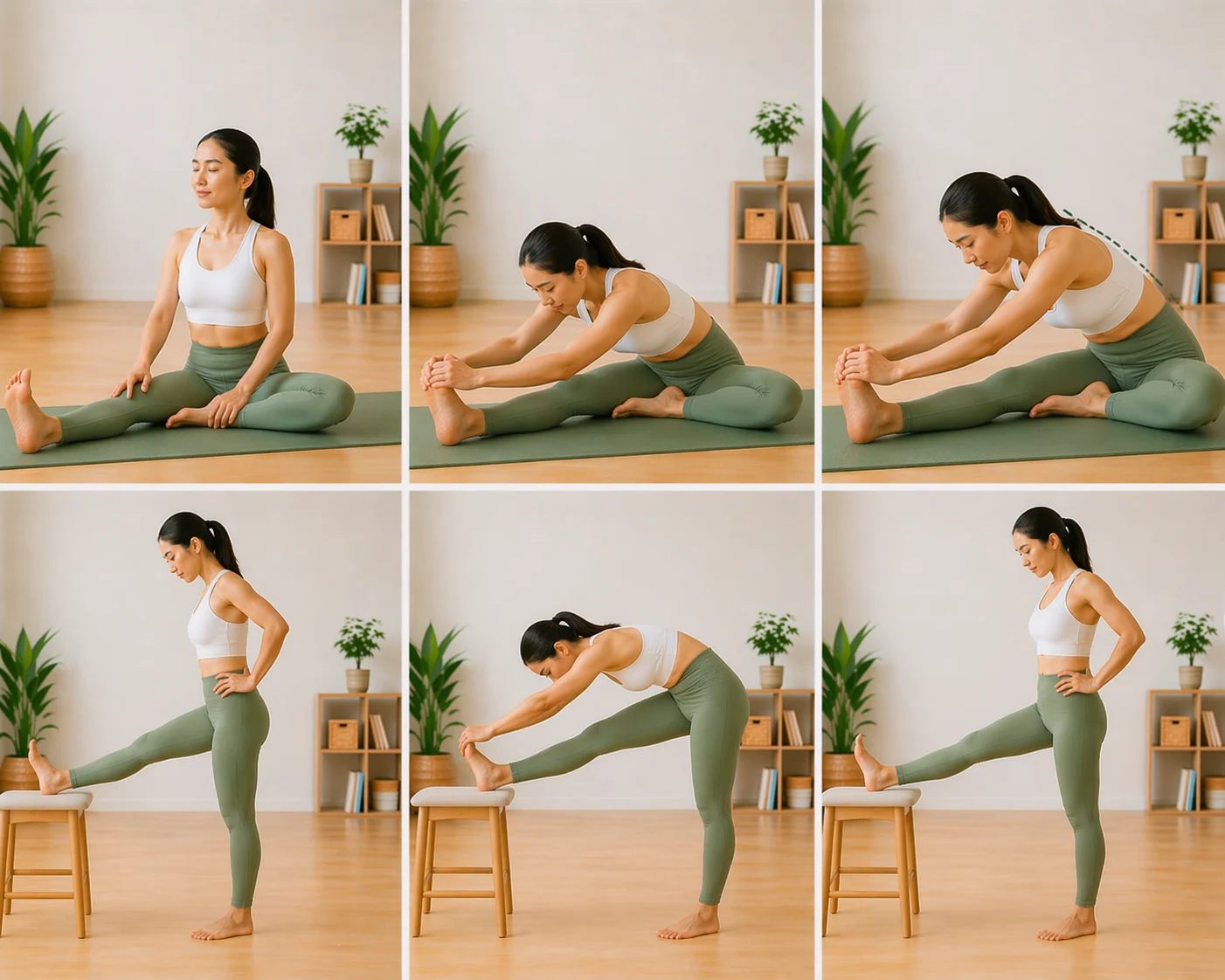
This type of stretching contributes to increased body flexibility, particularly that of the legs.
Steps:
- Sit or stand upright, keeping one leg extended straight in front of you.
- Bend the other leg and put it near your thigh.
- Lean forward slightly and try to reach for your feet.
- Keep your knee slightly relaxed; do not lock it.
- Hold for 15–30 seconds.
- Repeat on the other side.
- Calf Stretches (1 Minute)
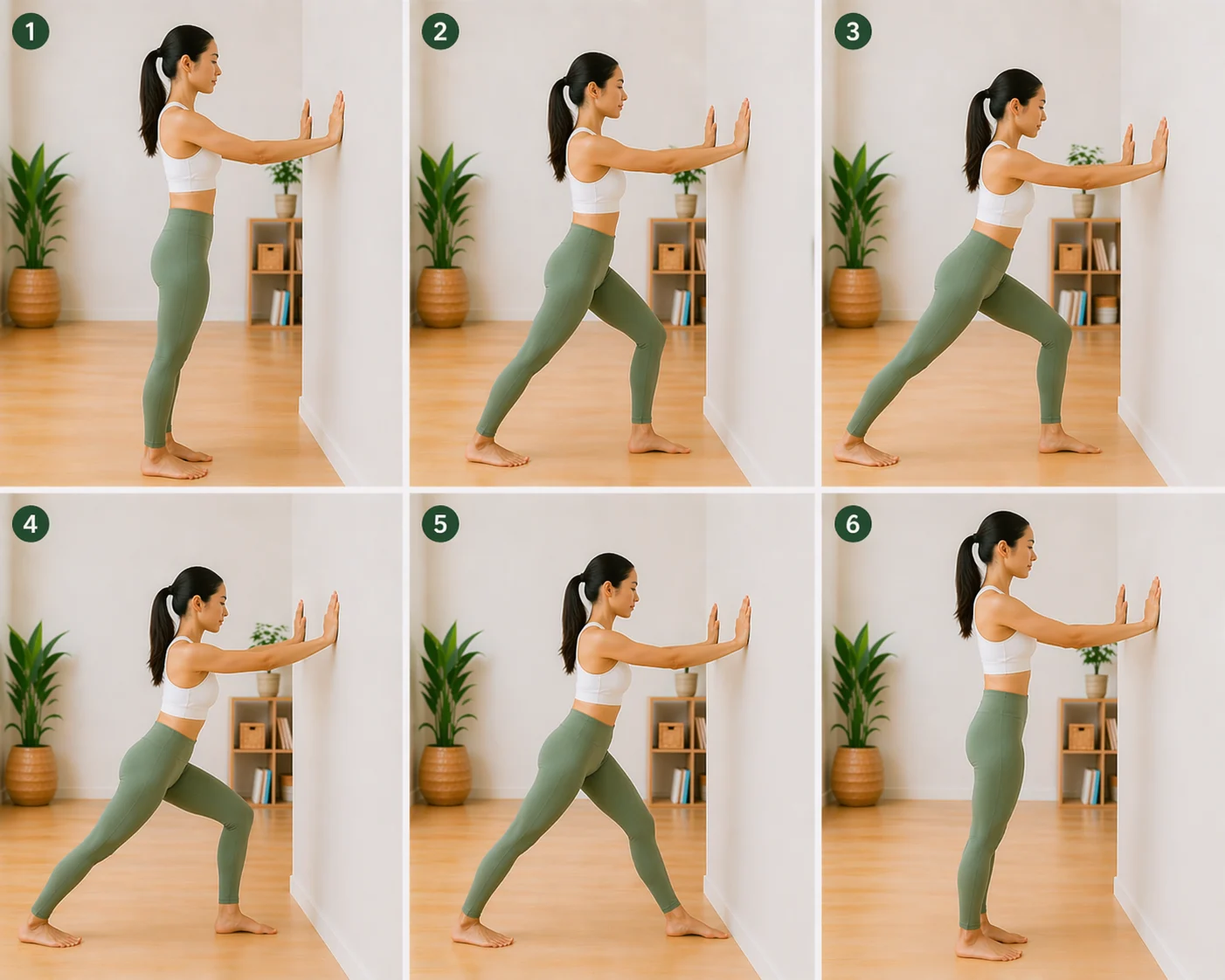
This exercise stimulates the leg muscles and improves your posture while walking.
Steps:
- Stand facing a wall and place your hands on it.
- Put one of your feet forward, leaving the other foot backward.
- Stretch your back leg without lifting your heels off the ground.
- Bend your front knee and lean toward the wall.
- Hold for 15–30 seconds.
- Repeat on the other side.
- Chest Stretching (2 minutes)
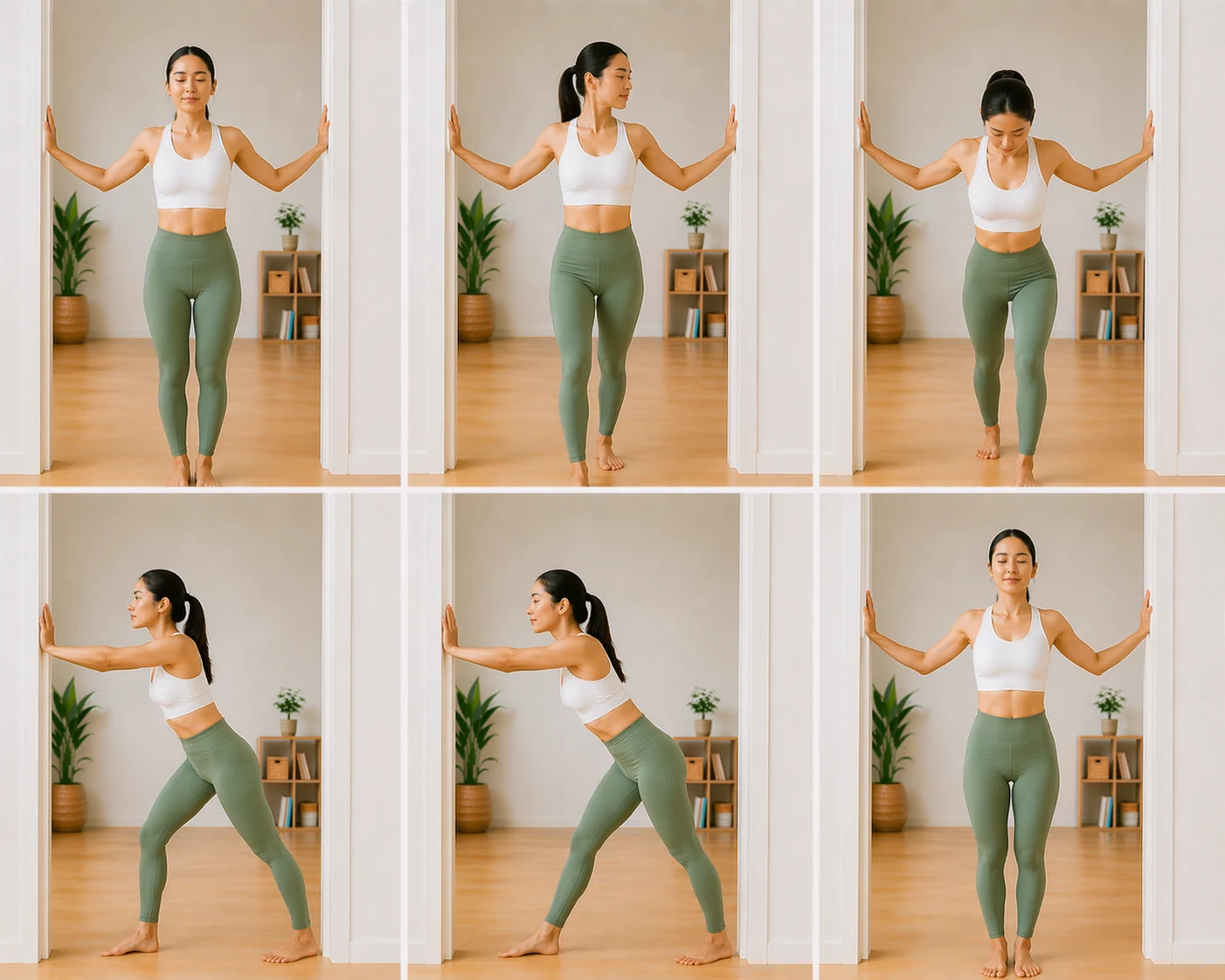
This will aid in correcting shoulder problems and improve general body posture.
Steps:
Stand erect or place yourself between two doors.
- Extend both your arms horizontally and rest your palms against the walls or door frame.
- Push your torso forward gently.
- Maintain your shoulders in a relaxed state.
- Maintain this pose for 15-30 seconds.
- Come back to the initial posture.
Morning Full Body Stretching Routine at Home
In starting your exercise routine with some stretches, your muscles slowly get activated and loosen up.
- Neck & Shoulder Stretches
Start off by slightly stretching your neck and shoulders because these are parts where the body feels stiffness.
Performing slow neck rolls and shoulder rotations helps release tension and also improves posture.
- Back Stretch
Next, perform a simple back stretch; this enhances spinal mobility and helps the body “open up.”
This constitutes a vital part of a full-body stretching routine and also helps mitigate the effects of sitting throughout the day.
- Deep Breathing
Lastly, include deep breathing exercises since they play an important role in connecting your mind with your body.
Deep breathing will result in improved oxygen flow, and thus, you will feel rejuvenated mentally.
Best Time for Stretching
- Early Morning (Best Time)
In the morning when you wake up, your muscles are inactive; hence, by engaging in early morning stretching, you will gradually get your body active.
- Before a workout
Before undertaking a workout, it is vital to do some dynamic stretches to prepare your muscles.
- After a Workout
After exercising, static stretching relaxes the muscles, alleviates soreness, and accelerates the recovery process.
- After Sitting for Long Periods
If you sit for long periods of time, then by engaging in stretches now and then, you can alleviate stiffness and enhance blood circulation.
- At Night Before Sleep
Stretches before sleeping help to relax muscles, relieve stress, and ensure better sleep quality.
Benefits of Full Body Stretching
- Makes Your Body Flexible
As you stretch regularly, muscles will become flexible, and all body movements will be smooth and easy without pain.
- Improves Posture
With regular stretches, your body posture will get improved automatically.
- Prevents Injuries
Active and flexible muscles prevent any sort of strain in your muscles.
- Enhances Blood Circulation
All stretches help in improving blood circulation in muscles and thus make them active.
- Eliminates Stress
By doing regular stretches, your mind becomes relaxed, stress gets released, and mental peace is achieved.
- Increases Efficiency
Flexibility and activity in muscles will lead to better efficiency in physical training and everyday life.
- Reduces Muscle Rigidity
Stretching after a long period of sitting reduces rigidity and makes you feel lighter.
- Boosts Body Energy Levels
Stretching during morning or daytime times boosts body activity to keep energy levels constant all day long.
- Enhances Mobility and Balance
Stretches taken daily ensure that joints are flexible and balanced.
How Long Should You Stretch Daily?
- Duration for Beginners
A daily stretching regime lasting 10-15 minutes is enough for beginners to slowly increase flexibility.
- Moderate Level
With an increasing body adaptation, the duration of stretching exercises may be increased to 20-30 minutes.
- Duration of Individual Stretches
Every stretch must be done within 15-30 seconds to enable muscles to contract and relax.
How to Stretch Properly
- Gentle Stretches; Don’t Jerk
It is important to stretch muscles gently without jerking since this may cause harm to your body.
- Deep Breathing During Exercise
Pay attention to breathing during stretching exercises; deep breathing is essential for relaxing muscles.
- Stop When You Feel Pain
Avoid painful sensations when performing exercises; pain means excessive stretching, and your body gives this signal.
- Be Consistent
One must maintain a consistent schedule for exercising, as consistency is important for flexibility improvement.
When Will You See Results from Stretching?
- 1 week: Reduced stiffness
- 2–3 weeks: Improved flexibility
- 4+ weeks: Better posture & mobility
Who Should Avoid Certain Stretching?
- People with Any Injury or Pain
When there is any injury or pain in the body, one should not do any stretches. This requires consulting a specialist.
- People with Recent Surgical Operations
A person who has had surgical operations in the recent past should not stretch until it is safe to do so.
- People with Severe Health Conditions
Some health problems such as arthritis or a slipped disc require avoiding some stretches since they can cause further harm.
- Pregnant Women
There are certain stretches that pregnant women should avoid because some stretches are risky for them.
Common Mistakes to Avoid in Full Body Stretching
- No warm-up exercise before stretching
It is dangerous to stretch without doing warm-up exercises first.
- Applying too much force
During stretching, the application of excessive force will cause an increase in the tension of the muscles; which will not improve their flexibility but may harm them.
- Irregular practice
If you do not follow a daily stretching routine, improvements in flexibility and mobility will stall, and your overall progress will slow down.
- Expecting quick results
Stretches should be done gradually; hence, it is important not to expect quick results, since this might demotivate you.
Personal Experience
When I incorporated daily stretching into my routine, the changes initially felt very subtle and didn’t seem particularly significant.
Also, the tension resulting from sitting for long hours slowly started disappearing, causing everything else to become easier.
The biggest difference was made in terms of my body posture, as my shoulders were now found to be straighter.
To be honest, that was when I truly realized that—through small, consistent efforts—daily stretching makes a major and meaningful difference in the long run.
Mira Yogashala-Yoga School in Rishikesh
Mira Yogashala, located in Rishikesh, is a genuine yoga school that offers yoga training programs in the heart of the magnificent Himalayas. The yoga school offers several YTTC such as the 100 Hour Yoga TTC, the 200 Hour Yoga TTC in Rishikesh, the 300 Hour YTTC in Rishikesh, and the 500 hour yoga teacher training course in Rishikesh that are designed from beginners to experienced students.
We also provide accommodation facilities, sattvic diet, and organized tours to explore the spirituality of Rishikesh. With effective instructors and peaceful environment, Mira Yogashala makes sure that its students develop their skills and become good yoga teachers around the world.
Conclusion
Full-body stretching is not limited merely to enhancing flexibility; rather, it profoundly impacts your overall health and daily performance.
Therefore, When you regularly incorporate stretching exercises into your daily routine, not only do your muscles remain flexible, but your joints also function more efficiently.
In simple words, daily stretching improves posture, enhances blood circulation, and gradually helps to alleviate stress.
Whether you are only at the beginning stage of incorporating stretching into your fitness program or an active individual, an effective stretching regimen will ensure that your body stays injury-free and full of energy throughout the process.
In the end, if you sincerely want your body to stay healthy and active, then begin your day with a stretching regime that is intended for beginners. These are small things that make big differences.
FAQs (Frequently Asked Questions)
Q1. Should stretching be done every day?
Ans. Yes, stretching helps keep the muscles flexible, less stiff, and mobile.
Q2. Does stretching improve posture?
Ans. Yes, regular stretching corrects muscle imbalances and naturally improves posture by enhancing body alignment.
Q3. When is the best time for stretching exercises?
Ans. It’s best to stretch yourself three times during the day—in the morning, before exercise, and after exercise because each of these sessions has its own specific advantages.
Q4. How much time should beginners spend on stretching?
Ans. It’s enough for beginners to stretch themselves for 10-15 minutes daily.
Q5. What is the right way to stretch?
Ans. It’s important to stretch slowly, pay attention to your breathing process, stop when it hurts, and be consistent with stretching exercises.