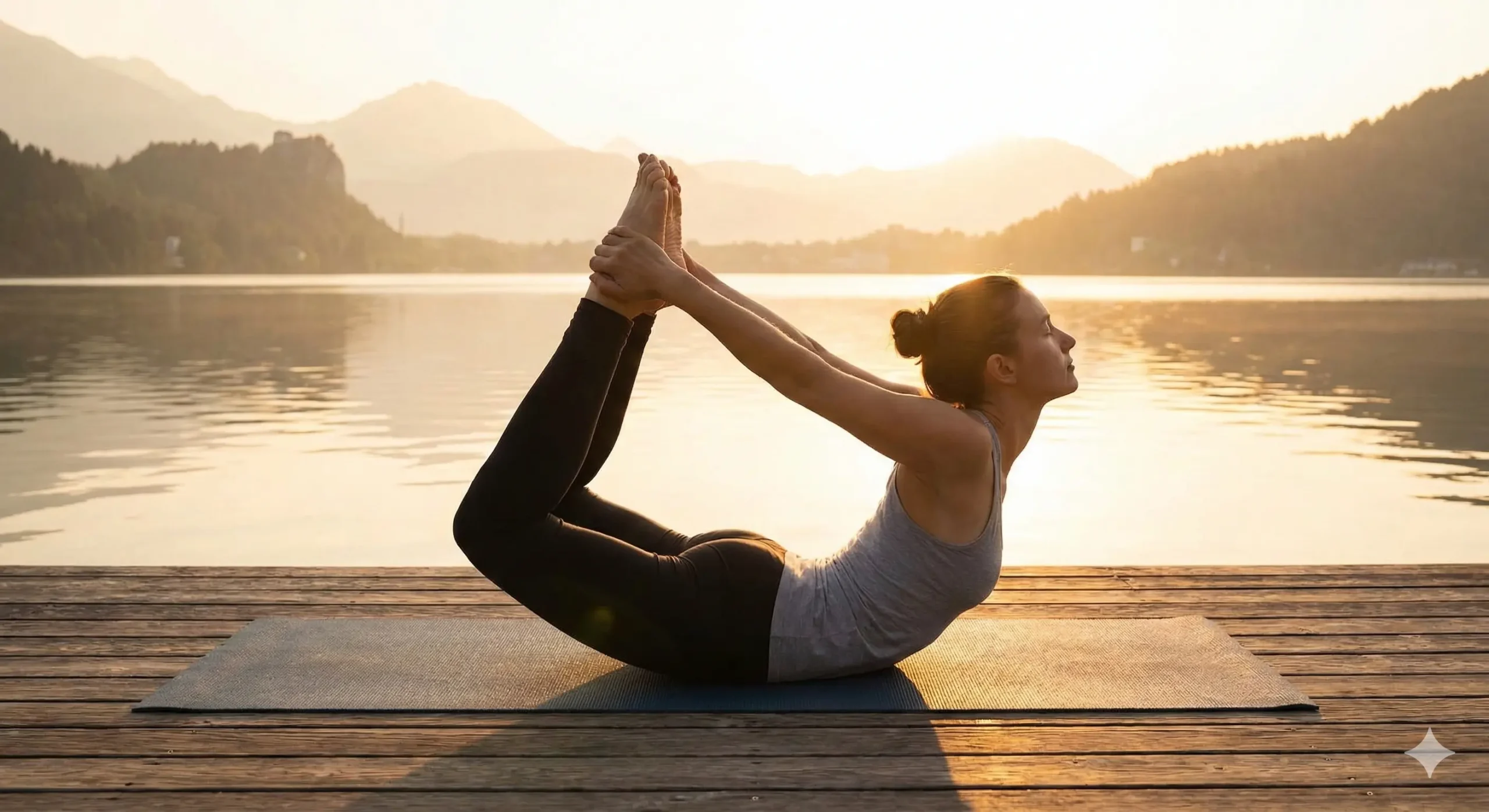
Dhanurasana is an important yoga posture, which is called Bow Pose in English. The word “Dhanurasana” is made up of two Sanskrit words—”Dhanur,” meaning bow, and “asana,” meaning sitting or body position. In this asana the body shape becomes like a bow; hence, it is called Dhanurasana. In Dhanurasana, the person lies on his stomach and holds his legs from behind with his hands. And slowly raises his chest and legs.
In this position the balance of the body remains on the stomach, and the body bends like a bow. This asana helps in increasing the flexibility of the body and strengthening the spine. This yoga asana activates the muscles of the abdomen, back, chest, and thighs. By doing Dhanurasana regularly, the digestive system improves, energy in the body increases, and the body becomes stronger. Apart from this, this asana is also helpful in reducing stress and improving body balance.
Benefits of Dhanurasana (Bow Pose)
Dhanurasana is an effective yoga posture that is considered very beneficial for both the body and mind. Regularly practicing this pose increases flexibility and provides relief from many physical problems.
The first benefit is that Dhanurasana makes the spine strong and flexible. When we bend our body backwards while doing this asana, the back muscles become stronger, which can reduce the problem of back pain.
Another important benefit is that it improves the digestive system. While doing Dhanurasana, there is slight pressure on the abdominal organs, which improves digestion and can provide relief from problems like gas and constipation.
This asana also stretches the chest and lungs, which improves oxygen flow in the body and increases breathing capacity. Regular practice of bow pose increases energy, reduces stress, strengthens the muscles of the thighs, shoulders, and abdomen, and provides mental peace. Dhanurasana is therefore crucial for maintaining the body’s strength, balance, and overall health.
How to Do Dhanurasana
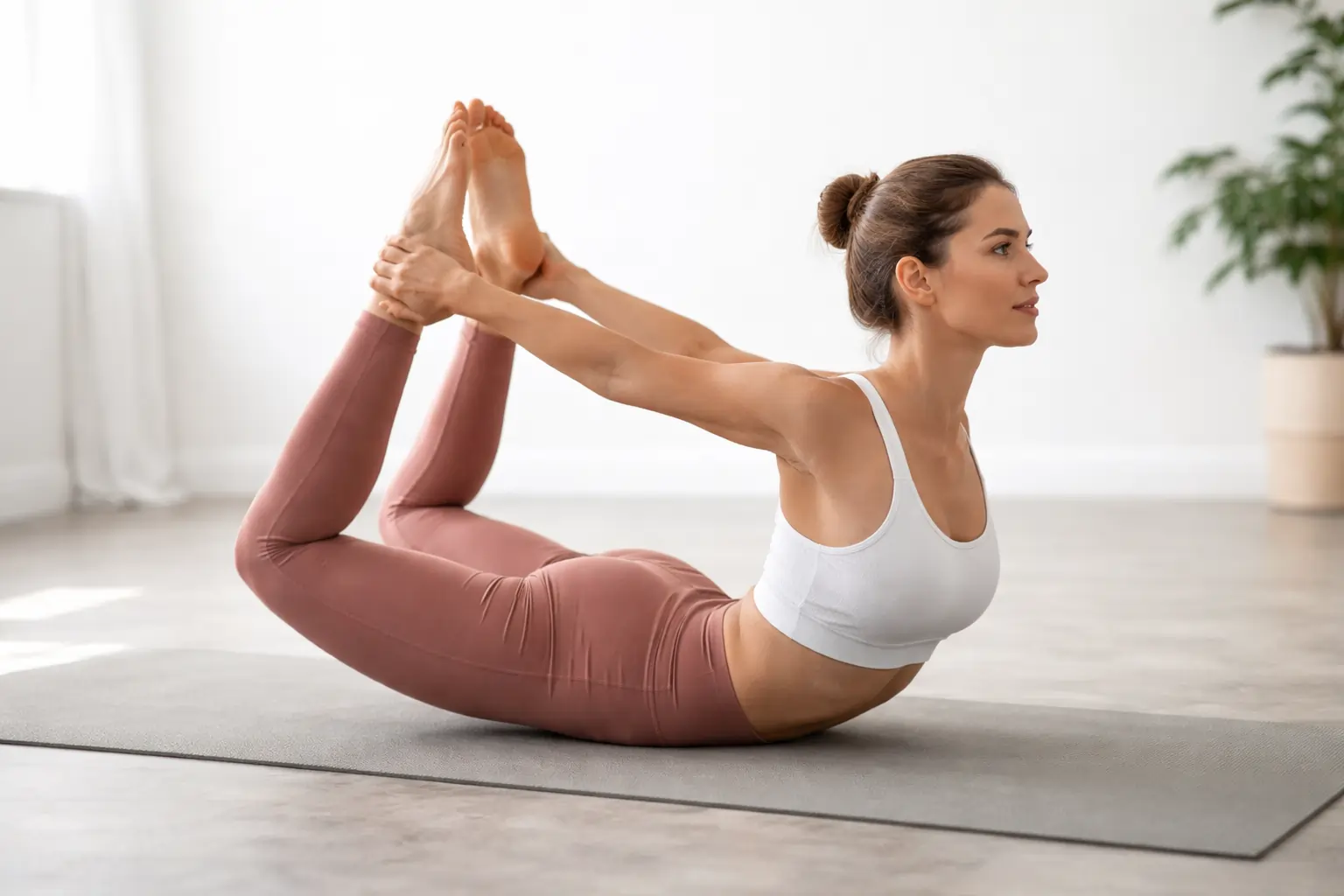
Steps:
- First of all, it is necessary to lie flat on the yoga mat on your stomach.
- Then you should bend your knees and lift your legs up.
- Now you should take both your hands back and try to hold your ankles
- Take both your hands back and try to hold your ankles.
- Now, while breathing deeply, lift your chest and thighs off the ground. Pull your legs upward so that your body bends like a bow.
- Hold this position for 15–20 seconds, breathing normally. Make sure to maintain balance on your stomach.
- You should make sure you are in balance while on your stomach.
- You should slowly exhale and then lower your chest and legs.
- You can rest for a few seconds and then can repeat this asana 2 to 3 times if you want.
Best Time to do Dhanurasana
-
Morning is the best time
The best time to do dhanurasana is in the morning on an empty stomach. In the morning the body is fresh and full of energy; hence, doing yoga at this time gives more benefits to the body. Doing it in the morning also improves the digestive system and keeps the body active throughout the day.
-
Should be done on an empty stomach
Bow Pose should always be done on an empty stomach. This asana should not be performed immediately after a meal. It is best to perform this asana at least 3-4 hours after eating.
-
Doing yoga in between
Dhanurasana should usually be done after warm-up and light asanas. This prepares the body well and reduces the chances of injury.
-
You can do it in the evening as well
If you do not get time in the morning, you can do it in the evening also, but even then the stomach should be empty, and it should be done only 3–4 hours after eating food.
Precautions of Dhanurasana (Bow Pose)
- Dhanurasana is an effective yoga asana, but it is very important to take some important precautions while doing it.
- Firstly, Dhanurasana should be done on an empty stomach or at least 3–4 hours after a meal. Doing this asana on a full stomach may cause stomach discomfort.
- If a person has back pain, serious spinal problems, a slipped disc, or a recent injury, he or she should consult a doctor or yoga instructor before doing this asana.
- Pregnant women should not do Dhanurasana, because this asana puts pressure on the stomach.
- People who have high blood pressure or a hernia or have undergone abdominal surgery should also avoid this asana.
- Initially, do this asana for a short time and gradually increase the time as you practice.
Common Mistakes in Bow Pose
Many people make some common mistakes while doing Dhanurasana, which can hinder the full benefits of the asana and increase the risk of injury. Therefore, it is crucial to avoid these mistakes.
- Forcing excessive bending of the body
Many people try to bend the body too much backwards to get quick results. This can cause back or waist pain. Always perform asanas according to your ability.
- Not holding the ankles correctly
Some people do not hold their ankles properly or keep their feet too loose, which leads to poor balance. It is important to hold the ankles firmly.
- holding breath
Many people hold their breath while doing Dhanurasana, which is wrong. Breathing should be normal and deep throughout this asana.
- Extending the knees too much
The knees should not be spread too far while doing Dhanurasana. It is best to keep your knees around shoulder width.
- Doing asanas without warm-up
Some people start doing Dhanurasana directly, which can cause muscle strain. Therefore, it is important to do a light warm-up first.
Variations of Bow Pose
There are many variations of Dhanurasana, which can be done according to the level of yoga practice. Some of the main types of Dhanurasana are given below.
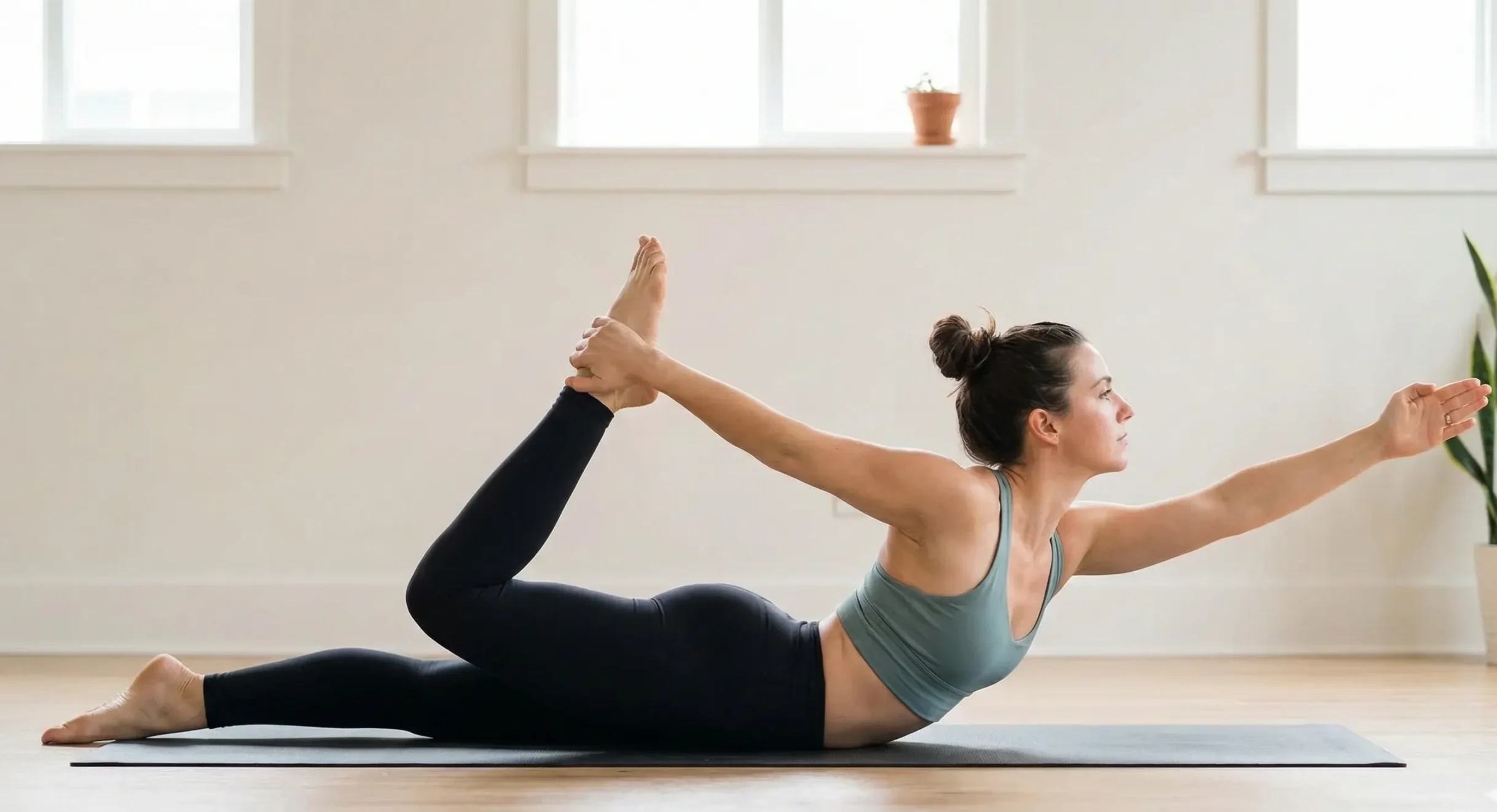
1. Ardha Dhanurasana
Ardha Dhanurasana is a lighter version of Dhanurasana. In this pose, the asana is done by lifting each leg separately. This pose is suitable for beginners and helps strengthen the back and thigh muscles.
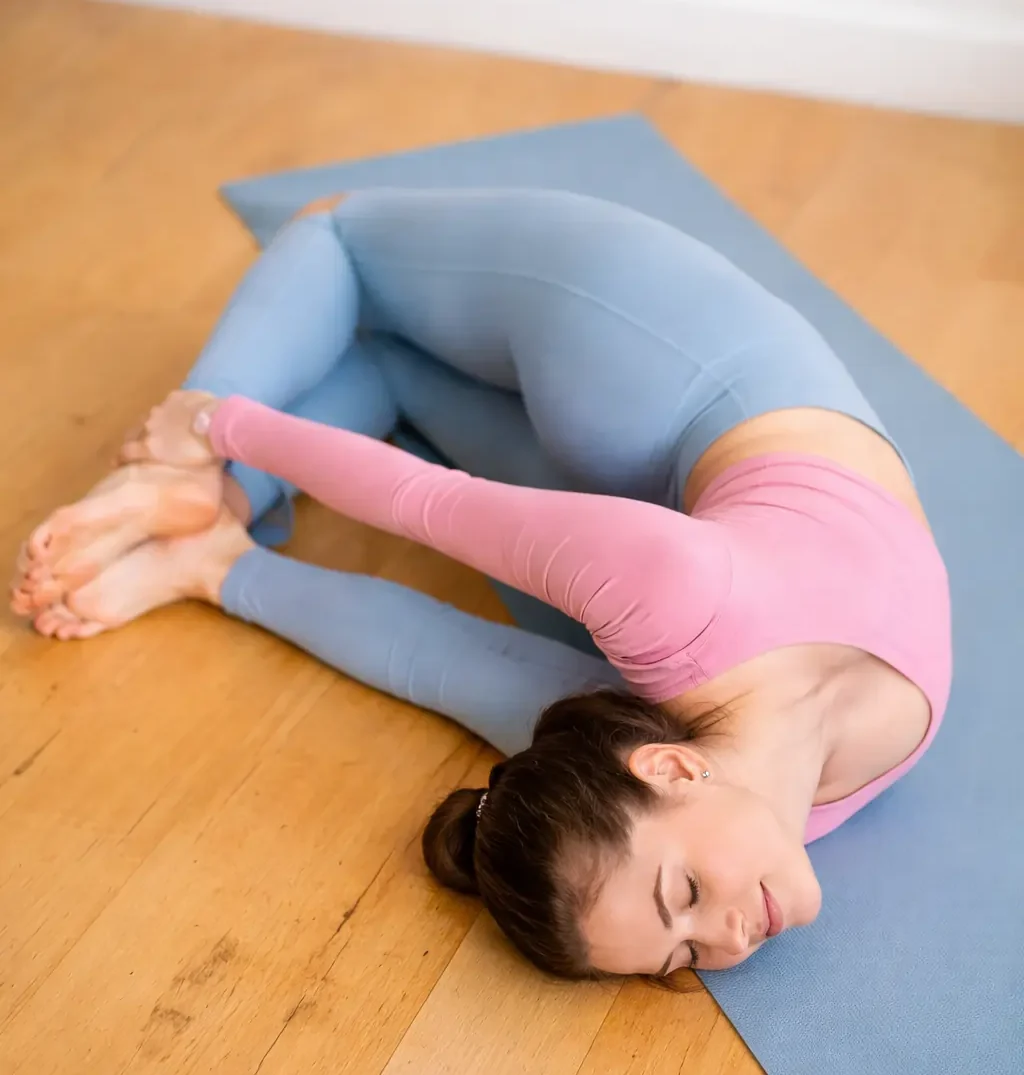
2. Parsva Dhanurasana
“Parsva” means side or edge. In this asana, the normal Dhanurasana position is assumed, and then the body is slowly twisted to the right or left. Therefore, it is called Parsva Dhanurasana. Parsva Dhanurasana helps flex the spine, activates the abdominal muscles, and improves digestion. Furthermore, this pose helps increase flexibility and improve balance.
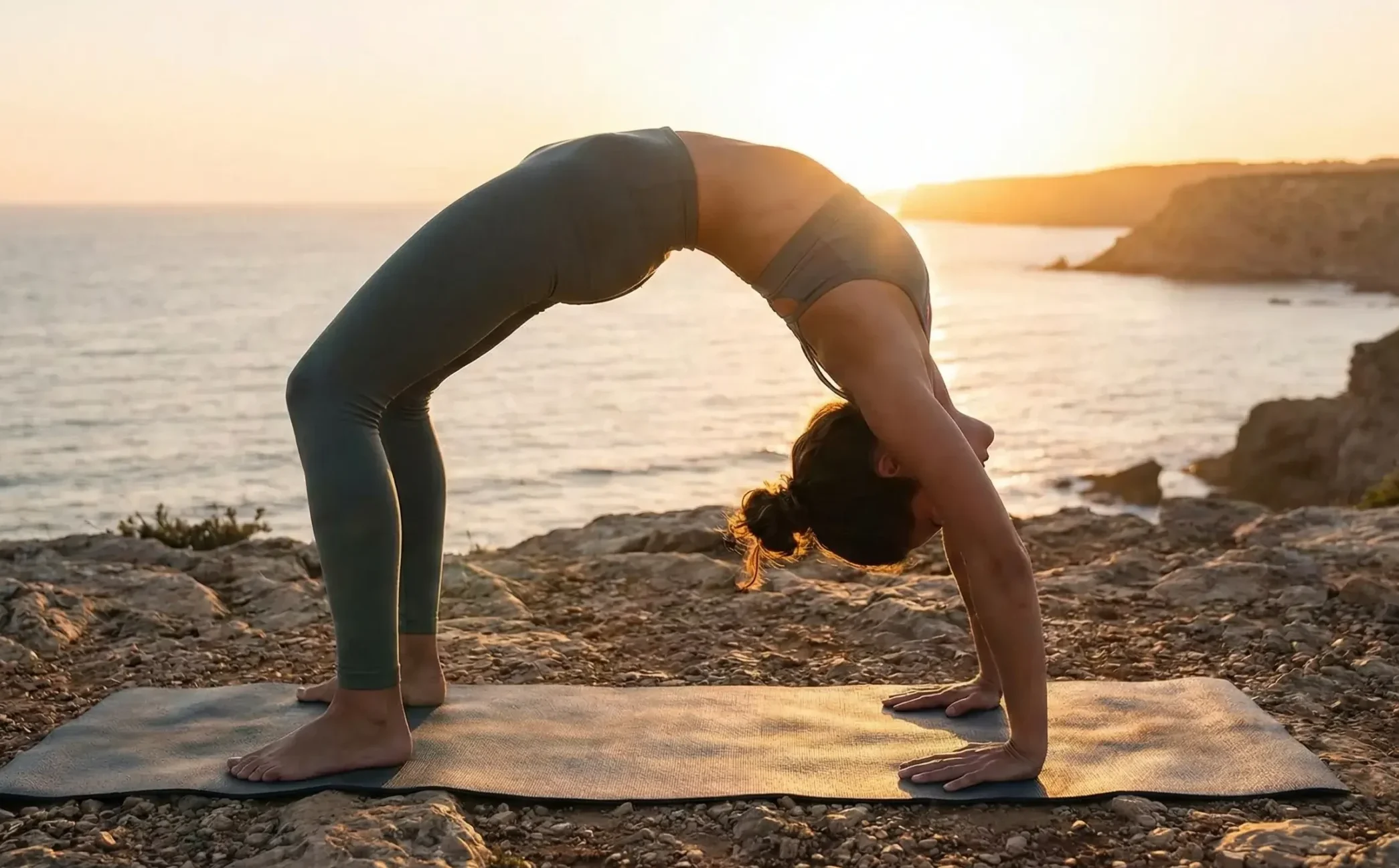
3. Urdhva Dhanurasana
Urdhva Dhanurasana is also known as Wheel Pose. In Urdhva Dhanurasana, the body is lifted upwards into a wheel-like position. This is an advanced yoga asana, and it increases the strength of the spine, arms, and legs.
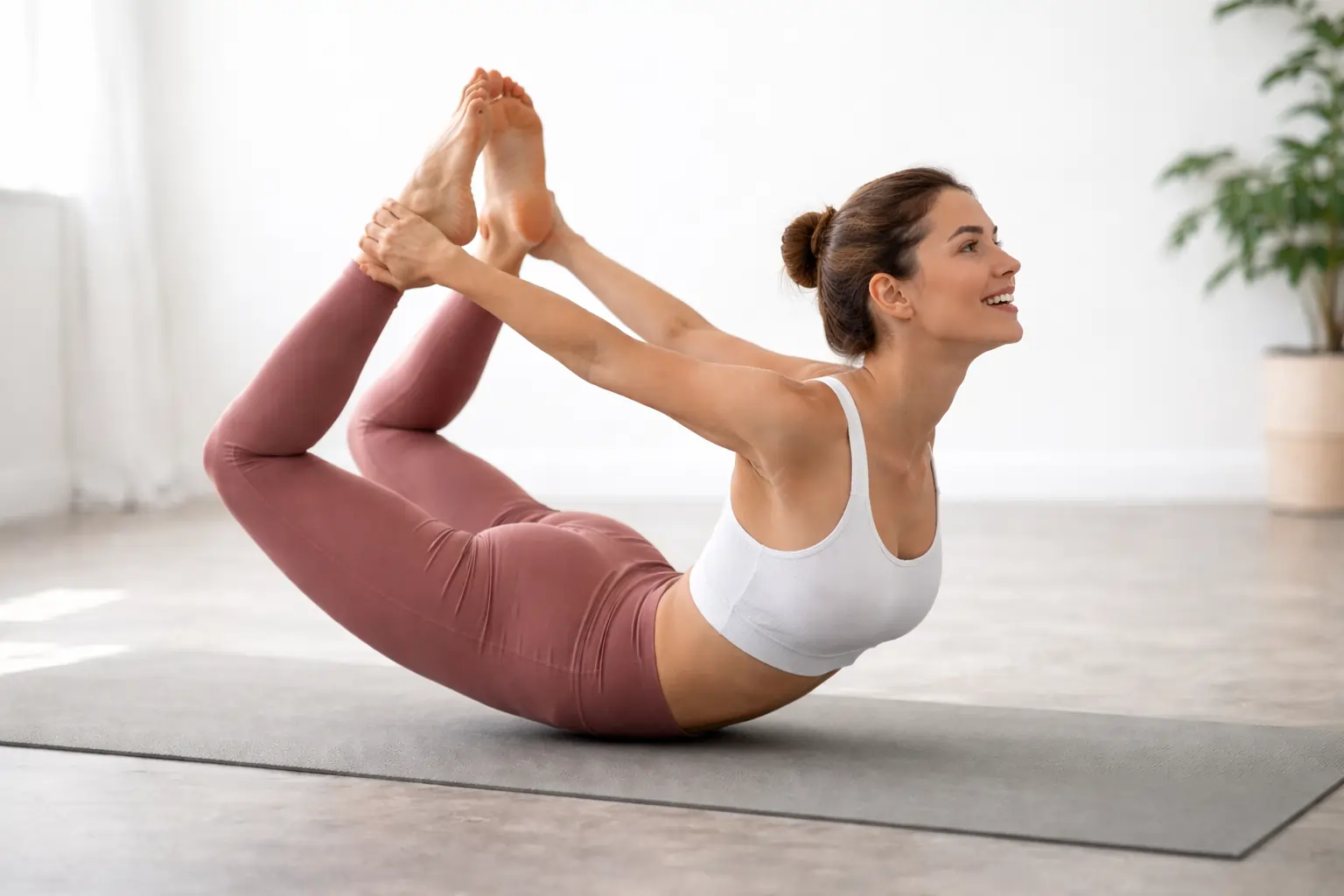
4. Rocking Dhanurasana
Rocking Dhanurasana involves gently rocking the body back and forth while remaining in the Dhanurasana position. This massages the stomach and improves the digestive system.
About Mira Yogashala
Mira Yogashala is a well-known yoga center dedicated to promoting traditional yoga practices in Rishikesh. It is the place where beginners as well as experienced practitioners can deepen their understanding of yoga. Mira Yogashala provides various facilities to students during its yoga courses to ensure a comfortable and supportive learning environment. They offer various yoga courses like
- 100 Hour Yoga Teacher Training in Rishikesh
- 200 Hour Yoga Teacher Training in Rishikesh
- 300 Hour Yoga Teacher Training in Rishikesh
- 500 Hour Yoga Teacher Training in Rishikesh
Conclusion
Dhanurasana is an essential and beneficial yoga pose that helps strengthen, flex, and balance the body. Frequent Dhanurasana practice activates the abdominal muscles, strengthens the spine, and increases flexibility. This pose is also beneficial for strengthening the digestive system, boosting vitality, and enhancing breathing.
Bow pose is not only beneficial for physical health, but it also helps reduce mental stress and calm the mind. Performing this pose correctly also improves body balance and posture. However, it is extremely important to take care of the correct method, time, and precautions while performing this yoga pose. Beginners should do it slowly and according to their ability. Thus, Dhanurasana is an effective yoga asana that plays an important role in making both the body and mind healthy, energetic, and balanced with regular practice.