What is Crane Yoga Pose (Bakasana)?
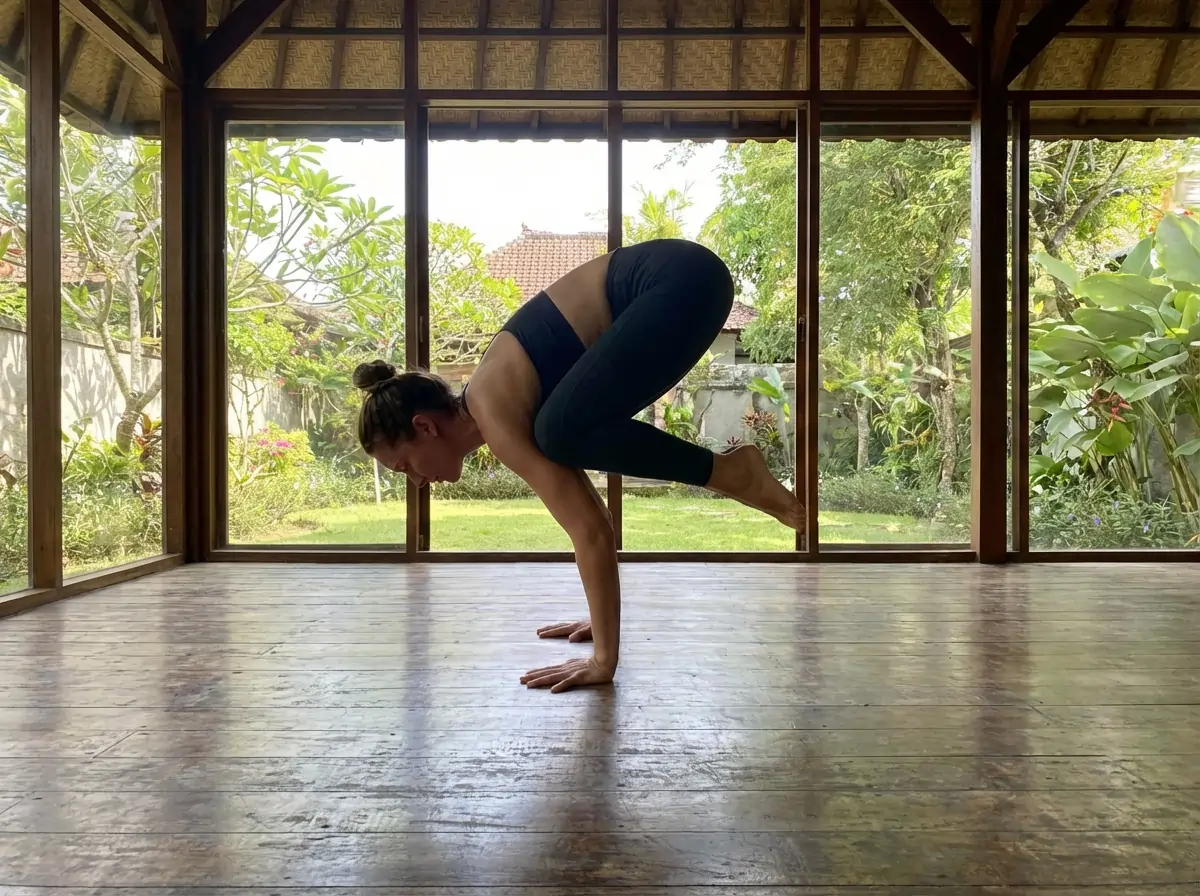
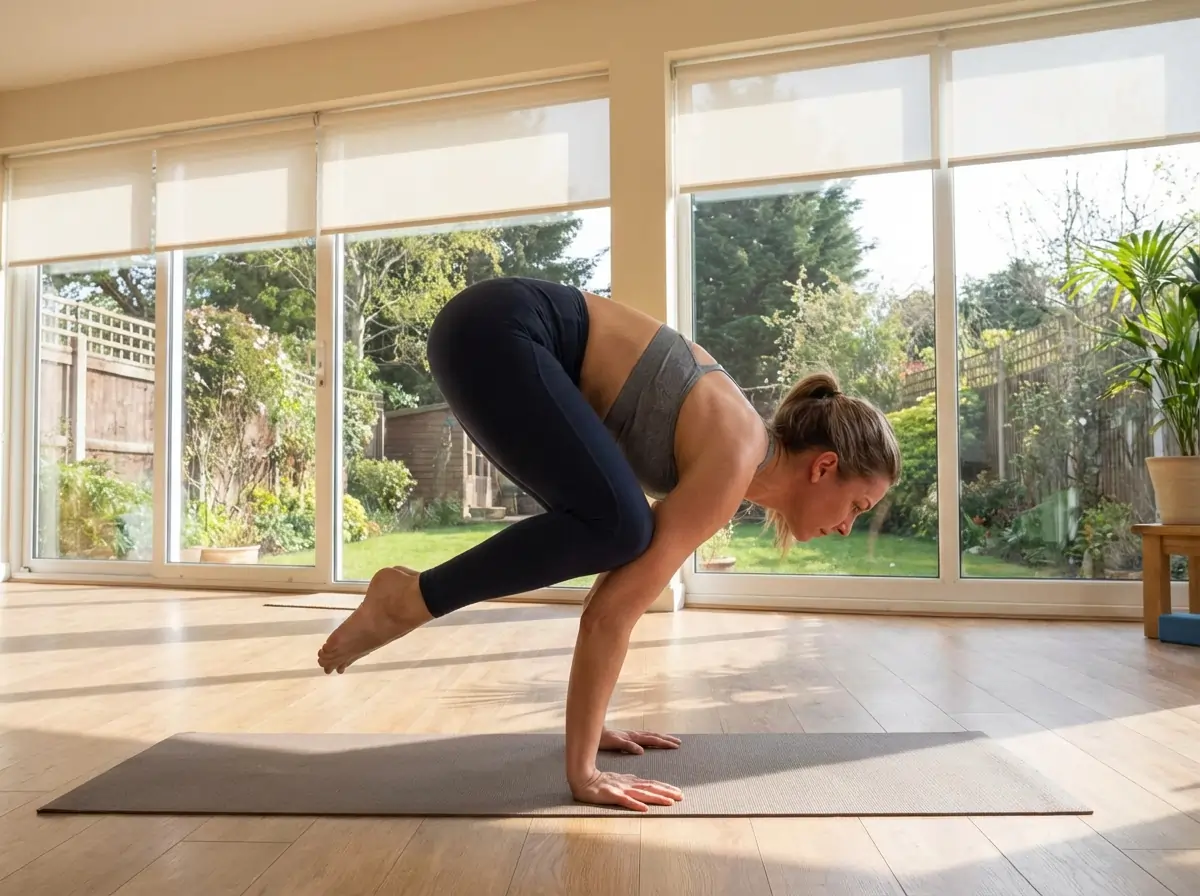
The Crane yoga pose, also called Bakasana, is a very advanced arm balance yoga pose that is a perfect blend of strength, balance, and concentration. While in this pose, the entire weight of the body is supported by the hands, the knees rest on the arms, and the entire body is balanced in the air. The word “Bakasana” is derived from the word “baka,” which means “crane,” and “asana,” which means “posture.”
The Crane Yoga Pose not only helps to enhance the physical strength of the person, but it also helps to improve the mental focus of the person. The regular practice of the Crane Yoga Pose helps to strengthen the core muscles, develop strong wrists, and improve the overall coordination of the human body. This pose is considered an important milestone in yoga, especially for beginners who wish to learn arm-balancing poses.
Benefits of Crane Pose
The benefits of the Crane Yoga Pose, also known as Bakasana, are numerous. The most important benefit is the development of strength. The crane pose strengthens the hands, wrists, and shoulders, as the whole body’s weight rests on these areas. The pose also strengthens the core muscles, thus strengthening the stomach and the stability of the body.
Practicing the Crane Pose in yoga also improves balance considerably. Holding the body steady in the air requires proper balance. The Crane Yoga Pose also increases focus and concentration, as the mind has to remain completely alert while performing the pose.
When the pose is successfully maintained, the self-belief increases, thus increasing the confidence level. The Crane Yoga Pose is the perfect combination of strength, balance, and clarity.
How to Do Crane Yoga Pose Step by Step
Crane Pose can appear to be slightly challenging in the beginning. However, if proper techniques are followed, it can be mastered in a very easy manner. The step-by-step instructions for Crane Pose are as follows:
Step 1. First, you have to go into a squatting position, but you should keep your feet slightly apart. (Stand up straight, then slowly lower yourself down as if you were about to sit on the ground (squatting).)
Step 2. After that, you should place your hands on the ground, keeping them slightly apart.
Step 3. Now, you should gently try to rest your knees on your upper arms, i.e., your triceps.
Step 4. After that, you should shift your weight forward and slowly try to lift your feet off the ground, one by one.
Step 5. You should keep your core muscles tight and look slightly ahead, but you should not look down, or else you might lose your balance.
Step 6. Once you find your balance, hold the pose for a few moments and maintain normal breathing.
Common Mistakes to Avoid in Crane Yoga Pose
It is crucial to avoid these common mistakes while performing the Crane Yoga Pose:
- Looking down: It throws off your balance; always keep your gaze slightly ahead.
- Keeping the core loose: The body will not remain stable; keep your core tight.
- Not engaging the arms: Placing the entire weight solely on the hands reduces stability.
- Flaring the Elbows: The elbows should be kept slightly bent and tucked in.
- Rushing: Attempting to jump directly into a pose without any practice.
- Practicing with Fear: Fear Causes a Loss of Balance
- Failure to perform a proper warm-up increases the risk of injuries to the wrists and shoulders.
Tips for beginners to master crane yoga pose
Crane Yoga Pose can be a bit challenging for a novice, but by following a few simple tips, you can become proficient in this pose within a short period of time.
- Practice the pose on a soft surface: While you are a novice, you can practice the pose on a soft surface by using pillows or cushions to avoid the fear of falling.
- Look ahead: It is advisable to look ahead, as looking at the ground can interfere with balance. Therefore, you should look at a single point.
- Tighten your core muscles: Your core muscles can help you balance your body.
- Practice the pose with your legs: Practice the pose by lifting your one leg, then lifting both legs.
- Use a yoga block: The yoga blocks can help you balance your feet.
- Practice the pose daily: Practicing the pose a little every day can help you improve your balance as well as boost your confidence.
- Warm up your muscles: Preparing your muscles, especially your shoulders, is very important.
Who Should Avoid Crane Pose?
The Crane Yoga Pose is an advanced arm-balancing pose; therefore, it is not suitable for everyone. Some individuals should avoid it or practice it only under expert guidance.
- People with wrist or shoulder injuries: This pose places excessive pressure on these joints.
- Those with back pain or spinal issues: Poor posture can aggravate the pain.
- Patients with High Blood Pressure: Blood pressure can rise while balancing in a standing position.
- Pregnant Women: Risk of losing balance.
- Beginners without Guidance: Directly attempting balancing can result in failure.
- Weak core and low strength: It can be difficult to hold the body.
Join Yoga School in Rishikesh | Mira Yogashala
Mira Yogashala is the trusted and authentic yoga school in Rishikesh known for its traditional yoga courses. They offer multiple yoga courses. During these yoga courses, they provide every essential facility to the participants, like three times daily satvik meals and comfortable rooms and accommodation. and they also offer excursion trips without any extra charges. After successful completion of these courses, participants will also receive a Yoga Alliance certificate. Join our upcoming batch of yoga courses:
- 100 Hour Yoga TTC in Rishikesh
- 200 Hour Yoga TTC in Rishikesh
- 300 Hour Yoga TTC in Rishikesh
- 500 Hour Yoga TTC in Rishikesh
Conclusion
The crane yoga pose, also referred to as the Bakasana, is one of the powerful arm balance poses that combine strength, balance, and focus in a beautiful way. Even though this pose looks difficult and complex, with constant practice and patience, one can master this pose as a beginner. This pose not only strengthens the wrists and arms but also the mind.
With regular practice, avoiding mistakes, and tips for a beginner, it is possible to finally attain balance and comfort in this pose. However, it is very important to be cautious and listen to the body, especially if there are some concerns, and avoid overstretching.
With constant and devoted practice and patience, Bakasana can be one of the greatest achievements in one’s yoga journey and can be very helpful for one’s growth and development.