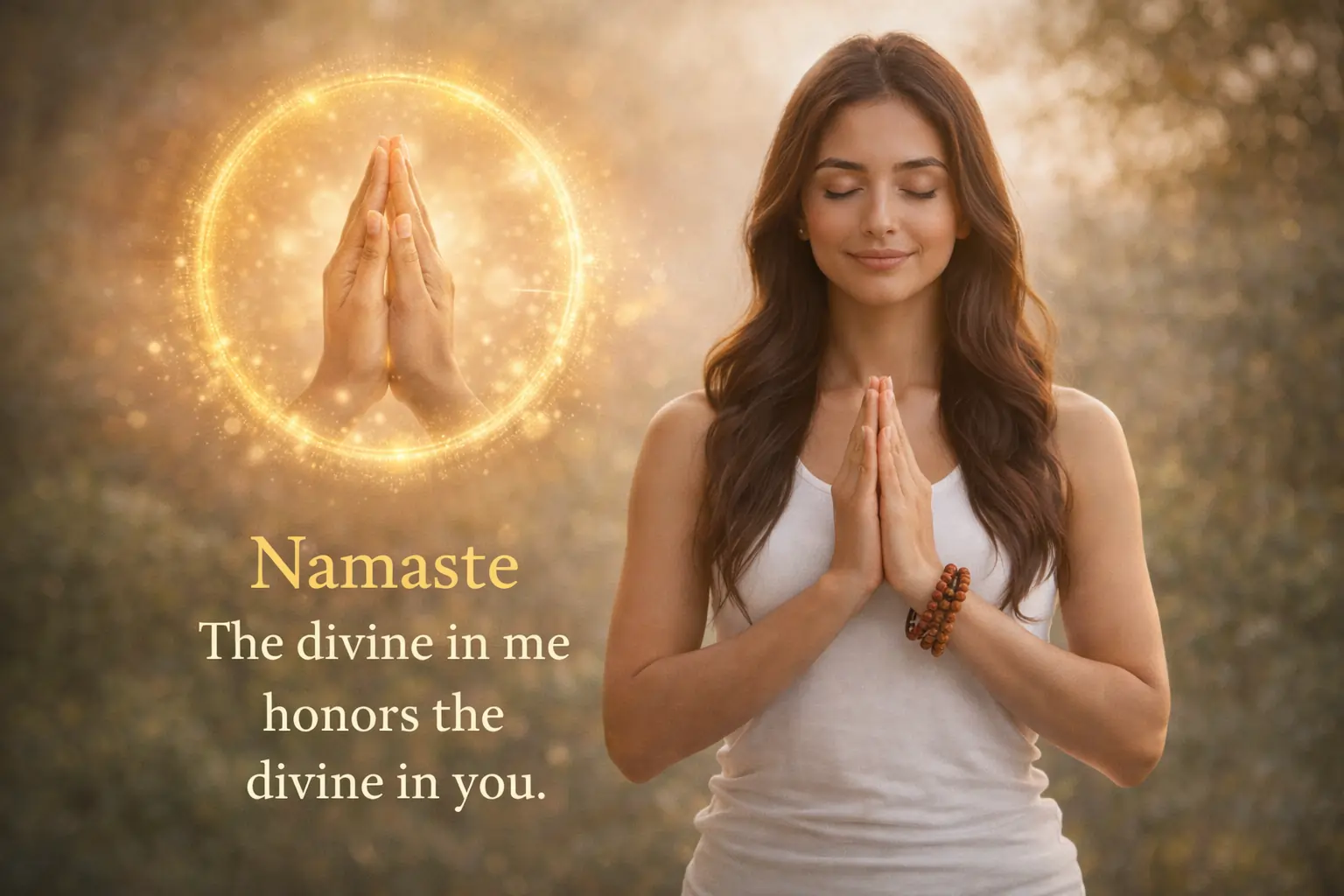
You must have seen many people greeting each other with ‘NAMASTE.’ And if you have ever attended a yoga class, you must have often heard the word ‘NAMASTE’ as well. Many people think that in India, ‘Namaste’ is just a standard way of greeting, but it’s not; ‘Namaste’ has a deep meaning. In Hindu tradition, the word ‘Namaste’ is used to show respect, humility, and gratitude to the other person.
Where Does Namaste Come From?
In ancient times, the word ‘Namah’ was used for deities during Yajnas (religious rituals) like OM NAMAH SHIVAY. At that time, the word ‘NAMAH’ was used to show respect to the deities. It is also used in mantras to connect the body and soul with divine energy.
Over time, people started using it as a way to greet each other. The word ‘Namah’ was also used in ancient and Vedic scriptures. That’s why Namaste is not just a greeting; it’s a spiritual act.
What Does Namaste Mean?
“Namaste” is a gesture that comes from ancient Vedic Sanskrit. It is made up of two words—‘Namah’ and ‘Te.’
- ‘Namah’ is the word for bow, respect, and salute.
- ‘Te’ is the word used for ‘YOU.’
“Namaste” means “I respectfully bow to you.” The meaning includes deep respect, humility, acceptance, and reverence. The pronunciation of ‘NAMASTE’ is (nah-muh-stay).
Enhance Your Yoga Journey with Mira Yogashala:
Mira Yogashala is known as the best yoga school in Rishikesh, certified by Yoga Alliance USA. We offer authentic yoga teacher training with serene settings by the Ganga. In our yoga school, we have experienced yoga instructors to teach our students and make every yoga journey truly transformative. Mira Yogashala offers multiple courses, such as
- 100-Hour Yoga Teacher Training Course in Rishikesh
- 200-Hour Yoga Teacher Training Course in Rishikesh
- 300-Hour Yoga Teacher Training Course in Rishikesh
- 500-Hour Yoga Teacher Training Course in Rishikesh
Spiritual Meaning of Namaste:
The word ‘Namaste’ has a meaning in the spiritual act that “the pure energy within me honors the pure energy within you.” Also, the word ‘Namah’ has a deep spiritual meaning—it signifies the humility of the soul and the renunciation of anger.
The word ‘Namaste’ is most widely used during yoga practice. At the beginning and end of the class, through this, a holy connection and energy is developed between the soul of the yoga instructor and his students.
Role of Namaste in Yoga:
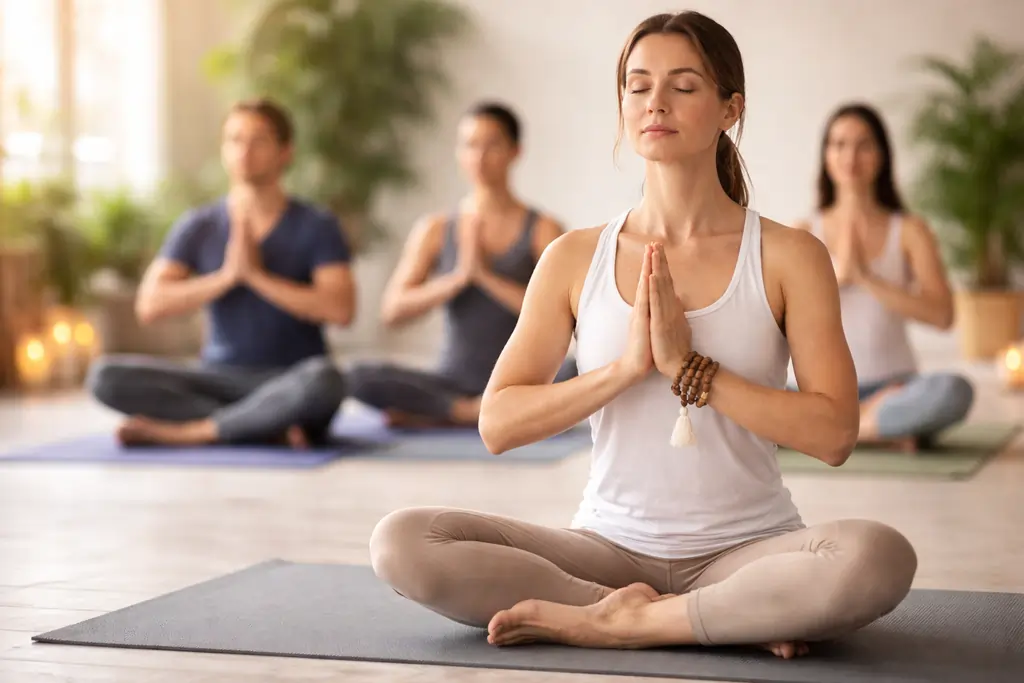
Namaste is commonly used as a greeting, but it is also practiced in yoga. In yoga, Namaste is done at both the beginning and end of the session. In yoga, the Namaste gesture is also known as “Anjali mudra.” This mudra is directly connected to the heart, and it allows a positive exchange of energy between two people. This mudra also represents peace, respect, and love. Anjali mudra is used in many places, such as while doing namaste, at the beginning and end of the yoga class, during meditation, in prayer, etc.
The spiritual and mental significance of Namaste in yoga:
Namaste is a gesture that is used for greeting, and there are many scientific benefits of doing Namaste:
- When we join our hands, our nerve endings get activated.
- Doing Namaste quickly calms the mind and prepares it for yoga practice.
- Doing Namaste sends calming signals to the brain; because of this, the heart chakra becomes active, which gives the brain a feeling of peace and safety.
- Placing hands on the heart center calms the mind, balances energy, and enhances the emotional connections.
- Namaste is done in a bowing posture, and this posture has its own benefits. This posture automatically reduces a person’s ego and increases humility.
- Attentiveness—it makes you attentive to the present moment.
- It builds connections and understanding between people.
Namaste in daily life: as a greeting
The word ‘Namaste’ is not limited to yoga; it is also used in daily life. Generally, we all use the word ‘Namaste’ to show respect to elders. ‘Namaste’ teaches us how we should speak to elders and to younger ones. The word ‘Namaste’ is a way of saying hello, in which we greet elders with ‘Namaste.’ It is not just a word; it is also a symbol of our values and positivity. With the help of ‘Namaste,’ conversation begins softly and respectfully. And it also creates a positive atmosphere.
The word ‘Namaste’ is also used to say goodbye respectfully. It also reflects your values/culture, humility, and gratitude.
Before doing Namaste, these things should be known
- The word ‘Namaste’ can be used anytime and anywhere, with elders as well as young children. It reflects your manners.
- You should know how to say the word ‘Namaste’ correctly. The pronunciation of ‘Namaste’ is (nah-muh-stay).
- Position of Hand: Join both palms in front of the chest and keep the fingers pointing upward.
- Body Posture: Keep the back and shoulders straight, without bending.
- Head Position: head slightly bowed, which shows respect.
- Maintain eye contact: While doing Namaste, you should make eye contact with the person in front of you.
- Sound: While saying ‘Namaste,’ your voice should be calm, gentle, and soft.