
Summary: Yoga TTC in Rishikesh
A yoga teacher training course in Rishikesh is much more than attending yoga classes.
It is a complete lifestyle experience designed to immerse students in the traditional yogic way of living.
A typical day includes meditation, pranayama, yoga practice, philosophy classes, anatomy lessons, teaching methodology, self-study, and healthy yogic meals.
While the schedule can seem challenging at first, especially for beginners, most students quickly adapt to the routine and discover the benefits of discipline, consistency, and mindful living.
By the end of the course, many students find that the structured daily schedule becomes one of the most transformative aspects of their training.
In this guide, we’ll walk you through what a typical day looks like during a yoga teacher training course in Rishikesh and what you can expect as a student.
Introduction: Yoga TTC in Rishikesh
Rishikesh is known as the World Capital of Yoga; in fact, people from all over the world come every year to practice and experience yogic learning; thus, thousands can be witnessed coming here.
One of the most frequently asked questions by students before a yoga teacher training course is the following:
The question that comes to your mind must be, “How exactly does a day look during Yoga TTC in Rishikesh?”
Some students visualize a day filled with yoga postures, and some shake their heads, wondering if the schedule is too rigorous or not manageable.
In fact, an excellent yoga TTC is designed to provide a wholesome experience of learning. A day encompasses practice (think physical challenge), theory, study of the instrument, meditation, and breathwork as well as self-study/self-inquiry.
If you are joining a 100-hour yoga TTC or maybe on your way to go for longer, like a 200-hour yoga TTC, it may be more than an addition of the other factors, so until then try to know what your daily routine is during that event.
Quick Answer: What to Expect on a Normal Day in a Rishikesh Yoga TTC?
A typical day during a yoga TTC in Rishikesh starts early with meditation and pranayama, followed by yoga practice, philosophy classes, anatomy lessons, teaching methodology sessions, self-study, and wholesome yogic meals.
Most training schedules run from around 5:30 AM to 8:00 PM, creating a structured environment that supports physical, mental, and spiritual growth.
Why Yoga TTC in Rishikesh Follow a Structured Daily Schedule
A yoga training schedule sounds much more organized and disciplined than most students realize.
That said, there is a purpose for this structure.
The old yogic wisdom that focuses upon discipline, regularity, and conscious living. What you may have heard is the timing of routines that are followed in many yoga teacher training courses based on ancient yogic traditions being practiced for generations.
A structured schedule helps students:
- Develop healthy habits
- Improve focus and concentration
- Build physical stamina
- Create consistency in practice
- Reduce distractions
- Experience a balanced lifestyle
For many, their initial impression of how rigid the schedule is soon gives way to seeing that the scheduled structure actually provides stability so one can devote oneself entirely to learning and self-development.
A Typical Day During a Yoga TTC in Rishikesh
Schedules differ slightly from school to school, but yoga teacher training courses generally follow a standard format, such as a 200-hour YTTC in Rishikesh.
5:30 AM – Wake Up
The day typically starts before the sun has risen.
From the perspective of yoga, one should wake up extra early to get started, and yogic tradition believes that this is extremely beneficial, as at that hour you feel a lot calmer in your mind, and it’s also awesome to see peaceful energy around.
Waking up early in the morning is a difficult change for many students; however, within a few days most grow accustomed to that rhythm and start enjoying the silent energy of mornings.

6:00 AM – Meditation and Pranayama
Your first class of the day is often awareness, meditation, and pranayama.
Meditation is a practice that helps students to cultivate mental clarity, awareness, and focus.
Pranayama practices show students how to control their breath, one of the biggest tools in yoga.
Common pranayama techniques may include:
- Nadi Shodhana
- Kapalabhati
- Bhastrika
- Ujjayi Breathing
This prepares your mind & body the rest of the day.
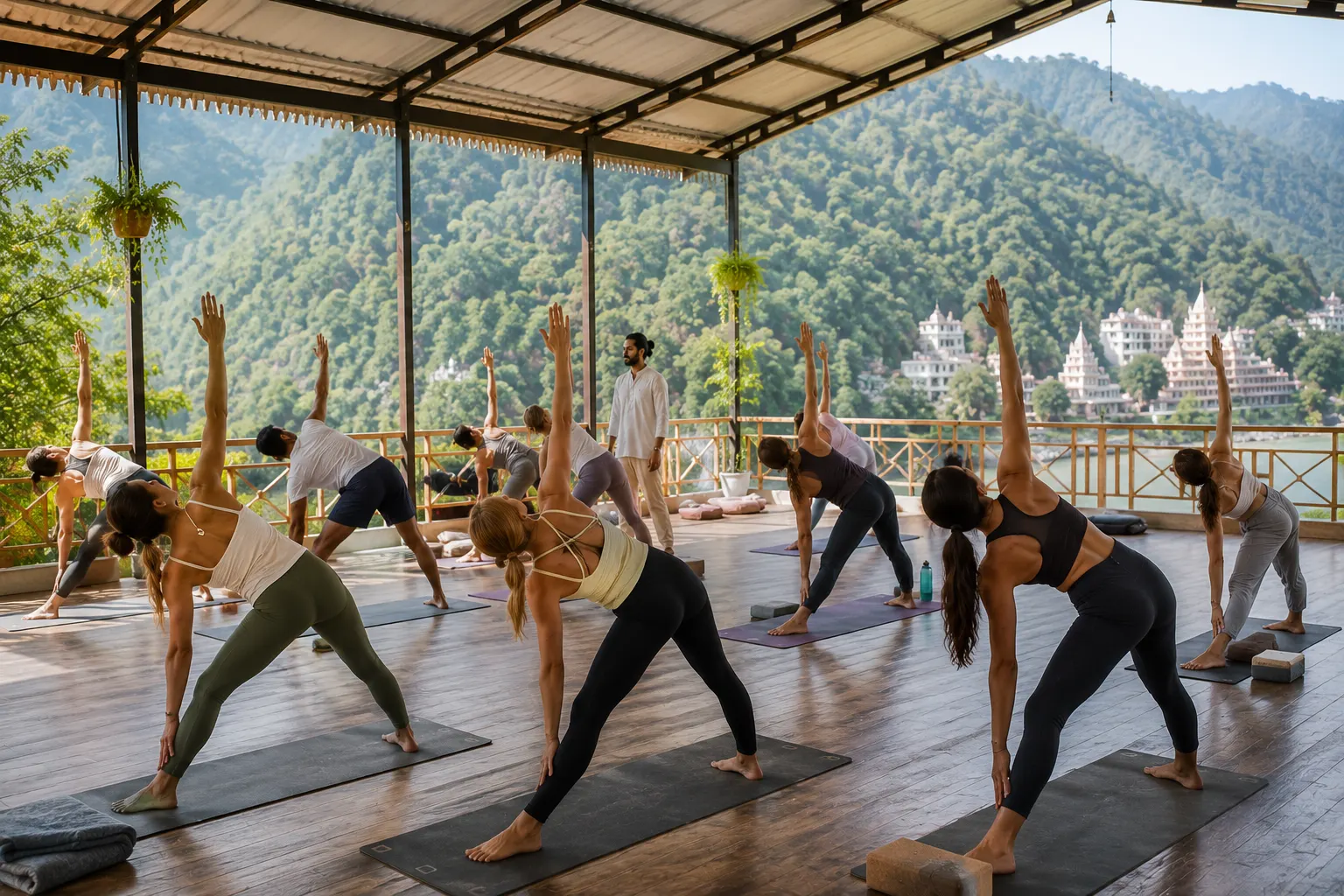
7:00 AM — Morning Yoga Session
After meditation, students practice a yoga asana class.
This can be centered on Hatha Yoga, Ashtanga Yoga, or even a mixture of both depending on the school.
Morning practice often emphasizes the following:
- Proper alignment
- Flexibility
- Strength
- Balance
- Breath awareness
The students gain confidence gradually and are trained to practice safely.
8:30 AM – Breakfast
After the morning session, it will be followed by a healthy yogic breakfast.
Yoga TTC courses offer nutritious vegetarian meals designed to support energy levels to keep you invigorated consistently.
Common breakfast options may include:
- Fresh fruits
- Oatmeal
- Traditional Indian dishes
- Herbal tea
- Fresh juices
In trainings of a highly intensive nature, nutrition becomes important for students.
10:00 AM – Yoga-Philosophie
For many students, the biggest surprise is that yoga is so much more than asanas.
Students in philosophy classes study the roots of yoga by diving into traditional texts.
These sessions make the students realize how yoga is not just about flexibility & fitness!
Topics often include:
- The Eight Limbs of Yoga
- The Yoga Sutras of Patanjali
- Yogic ethics and values
- Mindfulness and self-awareness
- Traditional yogic lifestyle practices
Philosophy classes are a part of the training that, for many students, become some of the most inspiring, as they offer something practical to make life more sane and balanced.
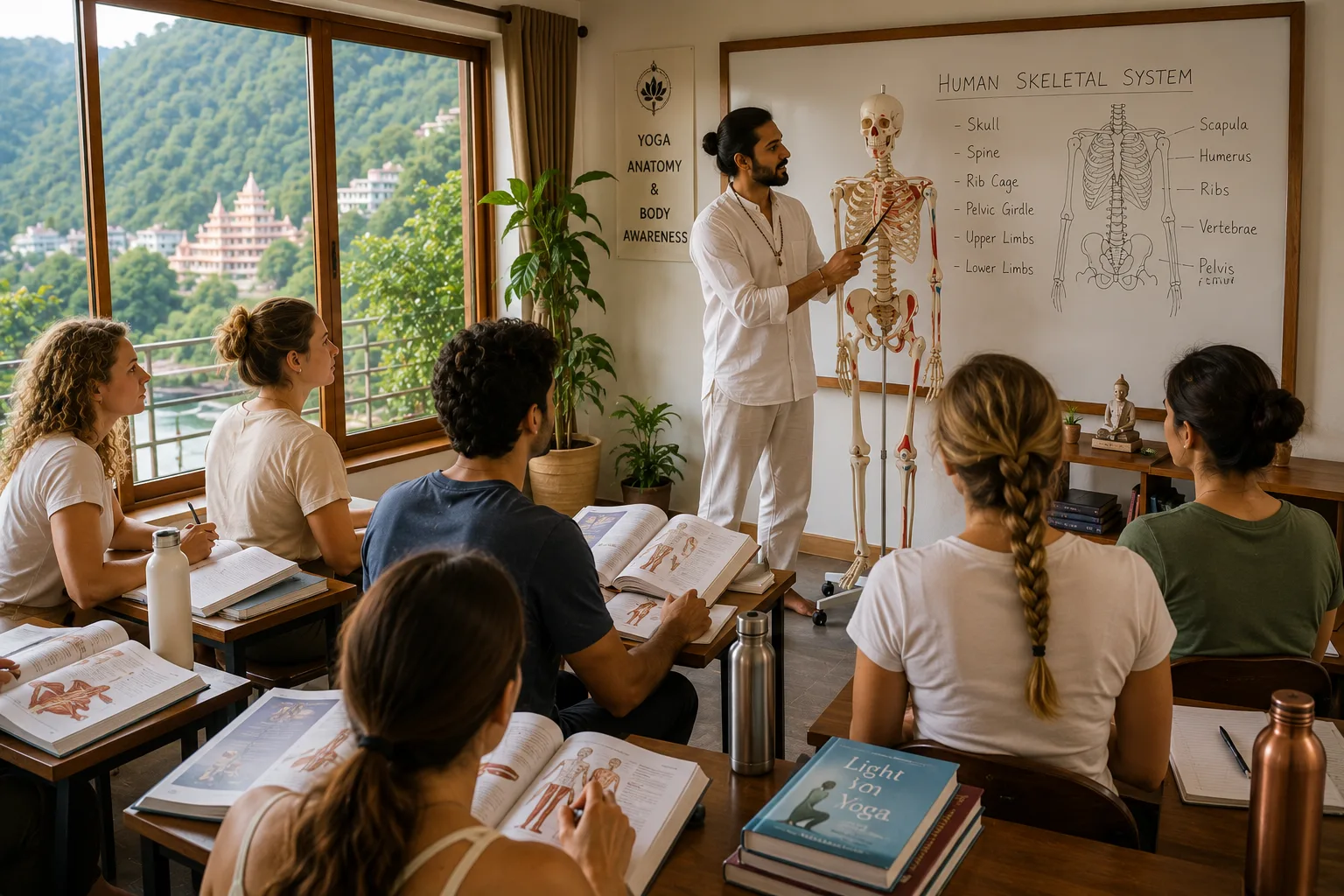
11:30 AM — Anatomy & Physiology
Learning how the body works is a key skill that all competent yogis and teachers possess.
Anatomy classes help students understand:
- The skeletal system
- Major muscle groups
- Joint movement
- Injury prevention
- Safe alignment principles
The anatomy taught provides students with an understanding of how the body relates to yoga, not just facts that they must remember.
This knowledge allows students to practice more safely and helps prepare future educators with the confidence they need to responsibly guide others.
1:00 PM – Lunch Break
Students then longingly take nutritious lunch after a tiring morning of practice and study.
Traditional yoga schools in Rishikesh provide sattvic meals, which aid physical health and support mental clarity.
Food is generally made fresh from scratch and includes:
- Rice
- Lentils
- Vegetables
- Salads
- Herbal teas
- Seasonal fruits
The lunch break also allows us an hour to relax, spend time with other students, and get our batteries back up for the afternoon lectures.
2:00 PM – Rest and Self-Study
The half-hour break in the afternoon is part of the daily program.
Often, students use this time to:
- Review class notes
- Practice meditation
- Complete assignments
- Read yoga texts
- Rest and recover
Given how much information teacher training involves, self-study is a useful tool for students to digest the content learned each day.
This calmer point in the school year is welcomed by many students, as it provides time for self-reflection and personal growth.
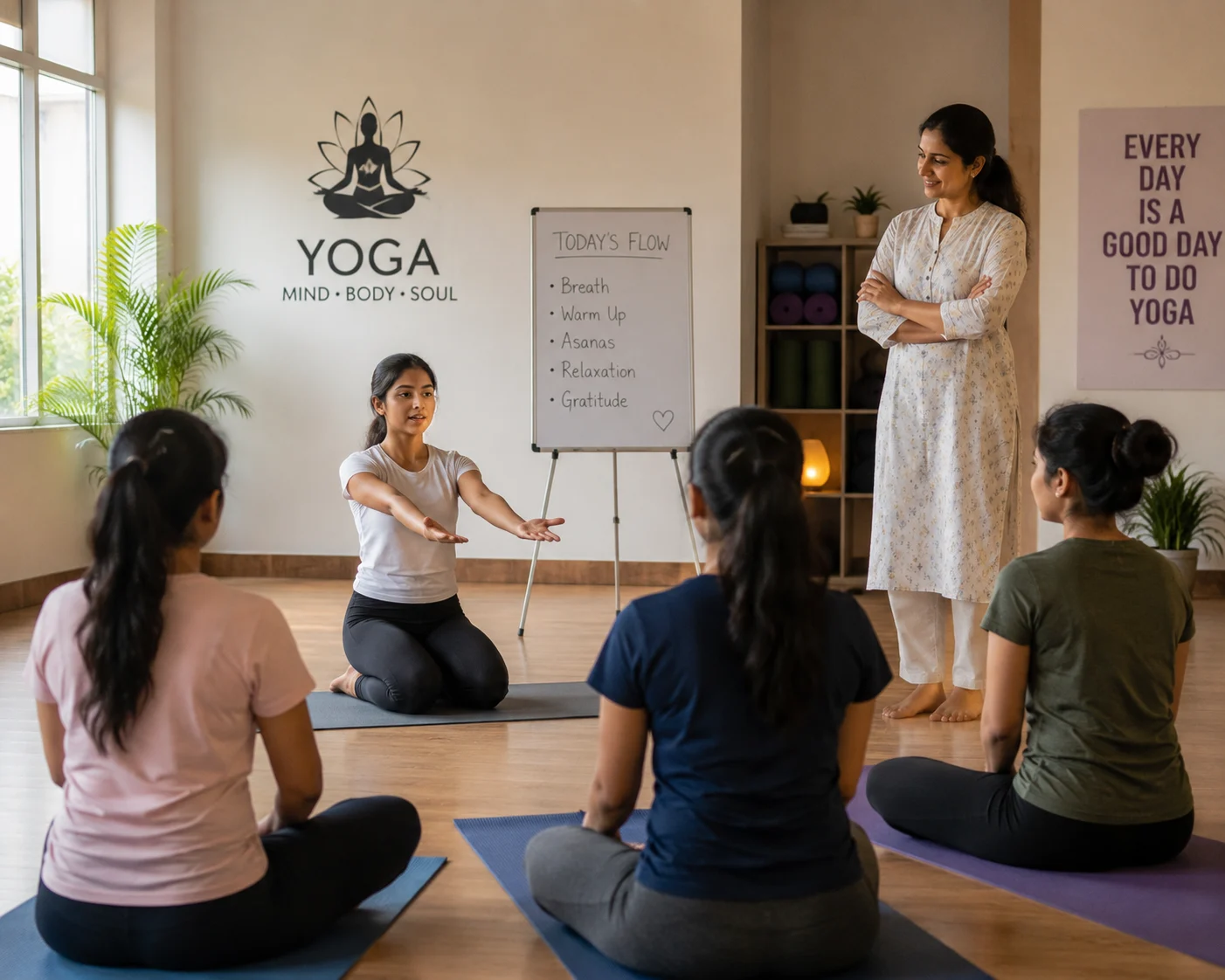
3:00 PM – Teaching Methodology
In a yoga teacher training course, teaching methodology is one of the most lucrative subjects.
Even students without any ambition to become a professional yoga teacher attend the classes and find it extremely helpful.
Teaching methodology typically covers the following:
- Class sequencing
- Verbal cueing
- Demonstration skills
- Observation techniques
- Student safety
- Alignment corrections
The students learn to lead a yoga class more and more confidently with time.
If you are a beginner, this can be intimidating at first. But practice and encouragement from teachers create a supportive environment that builds confidence over the course.
5:00 PM – Ashtanga or Evening Yoga Session
This is done in many yoga TTCs, which allow an evening yoga practice session.
The instructor usually teaches a class that is characterized by Ashtanga Yoga or another fluid style of practice.
The evening session is designed to:
- Build stamina
- Improve focus
- Develop discipline
- Deepen body awareness
- Refine alignment
It can be any combination of those elements, and students usually see big progress in their strength, flexibility, and even confidence during these daily practices.
The available structure also aids the development of a regular personal practice that the students will be able to carry on after completing the course.
6:30 PM – Evening Meditation and Rest
As the day marks its close, students engage in meditation, relaxation strategies, or mindfulness exercises.
This session helps students:
- Release physical tension
- Calm the mind
- Improve concentration
- Reflect on the day’s learning
- Prepare for restful sleep
For numerous students, those nighttime sessions are among the most tranquil points of their time spent training.
This, combined with the natural splendor of Rishikesh and the spirituality, gives one a feeling of being in balance, which is so rare to attain outside.
7:30 PM – Dinner
Dinner, however, is always a little lighter than lunch (which includes snacks between) and prepares to aid digestion before sleep.
Dinner is also another chance for students to bond with classmates, talk about their lives, and make friends with individuals from across the globe.
A yoga TTC is special because of this community that tends to develop among the students during the training.
8:30 PM – Self-Study and Rest
Following dinner, students often devote a while to reviewing notes, course supplies, or getting ready for courses the subsequent day.
Most students sleep early as they get up early in the morning.
Even though this schedule seems very tough at first, many, in fact, find that it actually gives them room to build better habits, get more sleep, and achieve a balanced mental state.
What at first feels difficult again becomes by the end of the training one of the best parts of the whole experience.
A Day in the Life at Mira Yogashala During Yoga TTC in Rishikesh
Every day at Mira Yogashala is structured to give students experience with yoga, which includes the whole lifestyle, not just exercise.
Yoga teacher training courses incorporate the wisdom of ancient yogic practices along with theory, practical teaching, dedication to daily routines, personal advancements, and self-training in a well-organized daily schedule.
One has to start early with some meditation and pranayama, then do yoga asana and energize the body and mind.
The curriculum covers yoga philosophy, anatomy, and teaching methodology as well as overviews of alignment and adjustment techniques while enjoying yogic meals throughout the day alongside a significant amount of time for self-study.
Your schedule is designed to give adequate time to the balance between taking in knowledge & reflecting over it.
At first, the routine is intensive, especially for students during their lifetime; within a couple of days, both body & mind acclimatize to this old-age wisdom, which makes them grateful for being offered to live with dignity.
The daily rhythm at Mira Yogashala is one of the most transformative parts of many graduates’ training experience.
What Beginners Usually Find Most Challenging During a Yoga TTC in Rishikesh
You might wonder if a 200-hour yoga TTC is for beginners, but the truth is, it offers intensive learning.
There are challenges that almost all students will encounter in the initial days of training.
Adjusting to the Daily Routine
The most significant adjustment has been to a morning schedule.
Since classes begin well before dawn, it can mean an early start time for students unaccustomed to waking up at such an hour.
That said, the vast majority of students get used to this routine in the first week and later appreciate the order and discipline that such a structure gives.
Physical Fatigue
Initially, one can become sore and exhausted when practicing yoga every day for a few hours.
Students often experience:
- Tight muscles
- Mild soreness
- Physical exhaustion
- Increased body awareness
If added to the right amounts of rest, nutrition, and consistency, the body adapts to becoming stronger over time and more accustomed to running every day.
Learning New Concepts
One of the big surprises for most beginners is just how much theory goes into a yoga TTC.
Subjects such as:
- Anatomy
- Yoga Philosophy
- Sanskrit Terminology
- Teaching Methodology
may feel overwhelming at first.
Luckily, these topics are taught in levels, giving them confidence as the course gets more difficult.
Stepping Outside the Comfort Zone
The most difficult for many students has less to do with physical work and more to do with mental work.
Activities such as:
- Teaching practice classes
- Speaking in front of a group
- Receiving feedback
- Learning unfamiliar concepts
can feel intimidating.
But those experiences make some of the best stories during your training.
What We Have Observed After Training Students at Mira Yogashala
Over the years, Mira Yogashala has opened its doors to students from all walks of life, professions, and backgrounds.
Now one thing we see commonly is that beginners tend to underestimate themselves.
So, often students show up thinking they aren’t flexible enough or they don’t know enough and they’re not experienced enough to even take a teacher training course.
However, after only a couple of weeks, they start to feel more confident and disciplined and have a much greater connection to the practice.
Experience has told us that students who enter the training curious and willing to put in the work can achieve amazing things no matter their starting point.
Many of our most successful graduates came in with minimal hours of yoga under their belt and completed the training with a solid grounding in the study of yoga (yoga philosophy, anatomy, meditation, and teaching methodology).
You have been doing this long enough that you realize that commitment and willingness to learn go much further than arm balances or advanced poses ever will.

What Students Usually Enjoy Most About a Yoga TTC in Rishikesh
The training is grueling, but students often describe it as one of the best experiences of their lives.
The Spiritual Atmosphere of Rishikesh
Rishikesh is known as the Yoga Capital of the world; it provides a unique environment that nurtures learning and self-discovery.
Enclosed with the Himalayan range and a sacred river, Ganga, students find it easy to unite themselves from worldly distractions and work toward their self-development.
Building Meaningful Connections
The Yoga Teacher Training Course, or Yoga TTC, attracts people from various countries, cultures, and backgrounds.
You form deep friendships and a tight-knit community through living, practicing, and learning together—something for life after training in many situations.
Personal Transformation
A lot of health and wellness students come in looking to enhance their yoga but go home with so much more!
They often experience:
- Greater confidence
- Improved self-awareness
- Better physical health
- Increased mental clarity
- A deeper understanding of themselves
No wonder Yoga TTCs are still drawing souls out there from across the globe in droves.
Why Students Choose Mira Yogashala for Their Yoga TTC in Rishikesh
Mira Yogashala is a traditional yoga school in Rishikesh that focuses on sharing authentic and traditional yogic teachings for the benefit of our students in a warm or friendly environment.
We have programs for students with all levels of experience, even total beginners who want to expand their knowledge of yoga.
Our Courses include:
100-Hour Yoga Teacher Training in Rishikesh
200-Hour Yoga Teacher Training, Rishikesh
300 Hour Yoga Teacher Training in Rishikesh
With certified instructors, small class sizes, and individualized attention to yoga philosophy lessons, Mira Yogashala intends for students to discover the basics of yoga while savoring the authentic yogic lifestyle of Rishikesh.
How a Yoga TTC in Rishikesh Can Change Your Daily Life
A lot of students think that going for yoga TTC is only about better physical practice.
But we usually find that the effects also go well beyond the yoga mat.
Students frequently report improvements in:
- Daily discipline
- Time management
- Mindfulness
- Stress management
- Sleep quality
- Self-confidence
Very often, the habits formed in school continue long after students have returned home.
For most, it’s where the curtains of a more healthful and aware lifestyle open.
Final Thoughts: Yoga TTC in Rishikesh
The schedule of a yoga TTC in Rishikesh itself is meticulously planned with an aim to develop the physical, mental, and spiritual well-being of students.
From early morning meditation and pranayama to asana practice and classes on philosophy, anatomy, and self-reflection, everything in the schedule enhances your knowledge of yoga.
It may seem intense at first, but most students quickly adapt to the routine and begin experiencing the benefits of disciplined yogic living.
Apart from teaching yoga, Yoga TTC molds you to be more confident and self-aware and leads to healthy habits and a deeper connection with yourself.
Mira Yogashala has welcomed students from all walks of life and every corner of the globe interested in yoga, most leaving with a greater understanding of how change is a genuine force for good—shifting perspectives and lifestyles.
Often, the best experiences stretch well outside of a classroom and form deep personal development and genuine changes in life itself.
Whether you are interested in becoming a certified yoga teacher or just want to deepen your personal practice, knowing what a day in the life of one looks like can help you prepare for this amazing journey.
Whether your goal is to become a certified yoga teacher or simply deepen your personal practice, understanding the daily rhythm of a yoga TTC can help you prepare for the journey ahead.
Frequently Asked Questions
Q1. Is a 200-hour yoga TTC good for complete beginners?
Ans. Yes. After all, even the best 200-hour Yoga TTC programs are intended to accommodate people who have either been on the mat before or those looking for a structural foundation in yoga.
Q2. Do I need to be flexible before joining?
Ans. No. Flexibility is optional. What matters is consistency, dedication, and eagerness to learn.
Q3. How Difficult is a 200-Hour Yoga TTC
Ans. While the schedule and level of learning are rigorous, with students attending for eight hours a day, five days a week, most adapt quickly and find it very rewarding.
Q4. Does a 200-hour yoga TTC qualify you to teach yoga?
Ans. Yes. A 200-Hour Yoga TTC, which is a recognized certification course, gives you the foundation to start your yoga teaching journey.
Q5. Should you obtain a 200-hour TTC if you’re not looking to teach?
Ans. Absolutely. A lot of students come for their own personal development, self-awareness, and connection to yoga, not to teach.