

Introduction
Have you ever taken the time to consider how amazing your body truly is? Every breath we breathe, every step we take, every heartbeat—all of these things happen without our conscious awareness. We refer to this exquisitely synchronized internal system as human anatomy and physiology.
The body’s structure is known as anatomy. The body’s function is called physiology. When taken as a whole, they help us comprehend the composition of the body and how it functions so smoothly.
Knowing anatomy and physiology may change the way you move, breathe, and live, whether you’re a yoga practitioner, a fitness fan, a medical student, or just someone interested in the human body.
Let’s explore this amazing world in the simplest, most relatable way.
What Is Human Anatomy?
The scientific study of the human body’s structure and organs is known as “human anatomy.” It describes the structure of the body and how its various components work together to sustain life.
Gross Anatomy:
The study of bodily structures that are visible to the unaided eye, such as bones, muscles, the heart, and organs, is known as gross anatomy.
Microscopic Anatomy:
The study of tissues and cells, which are too tiny to see without a microscope.
What Is Human Physiology?
In simple terms, your body’s whole operation is explained by physiology.
Physiology is the software, or the mechanisms that keep everything running correctly, if anatomy is the hardware.
It clarifies items such as:
- How your lungs absorb oxygen;
- How your heart pumps blood;
- How your muscles contract;
- how your brain transmits signals;
- How metabolism and digestion take place
You may comprehend the reasons behind each action, breath, and experience by studying physiology. Anatomy and physiology work together to show you that your body is a complex, intelligent, self-regulating system rather than merely a collection of pieces.
Major Systems of the Human Body
Here is a summary of the central bodily systems and their roles to keep things straightforward and organic.
The skeletal system
There are 206 bones in your framework.
Function:
- Providing shape and structure, protecting organs (for example, the ribs shield the heart and lungs, the skull shields the brain),
- facilitating movement, and
- Producing blood cells.
Understanding your bone alignment is essential for safe movement in yoga and fitness.
The Muscular System
You can move, breathe, grin, and even blink thanks to more than 600 muscles.
Functions:
- Movement,
- Posture,
- Balance, and
- Heat production
Every yoga stance you perform is an ideal illustration of your muscles cooperating.
The nervous system
It is the electrical circuitry in your body.
Comprises:
- The brain,
- spinal cord, and
- nerves
Functions:
- Transmits messages throughout the body;
- Manages memory, movement, sensation, and emotions
It’s what gives you the ability to feel, think, react, and learn.
The respiratory system
Your respiratory system comprises the
- Diaphragm,
- Windpipe, and
- Lungs.
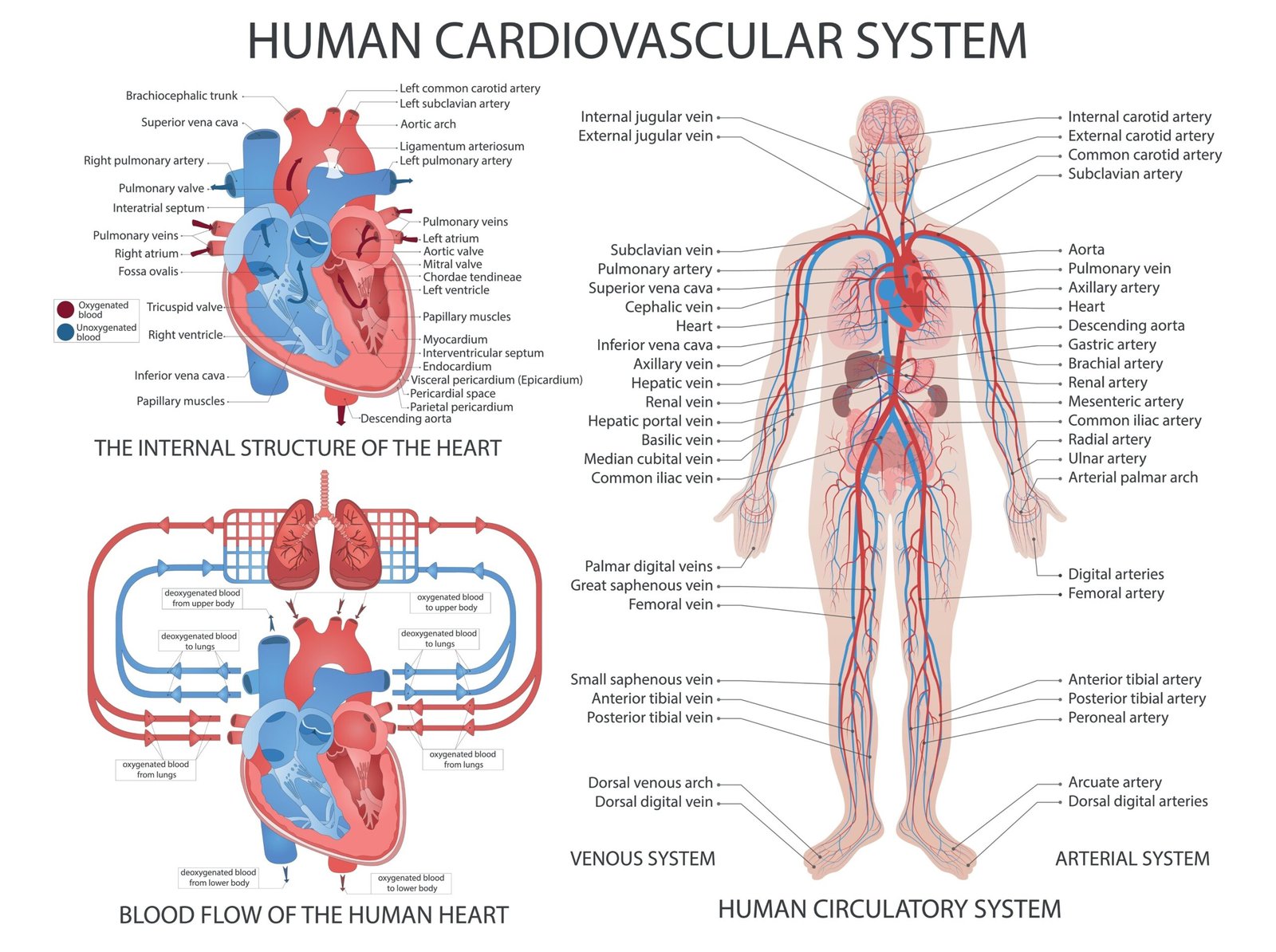
Carbon dioxide is released, and oxygen is taken in. Pranayama, or breathwork, has a direct impact on this system.
The network of transportation in your body.
Comprises:
- Heart,
- Blood, and
- Blood Vessels.
Functions
- Pumping blood,
- Delivering nutrition and oxygen, and
- Eliminating waste.
Just the fact that your heart beats more than 100,000 times a day is astounding!
Digestive System:
Your system for processing food.
Includes:
- Pancreas,
- Liver,
- Intestines,
- Stomach, and
- Mouth.
It not only breaks down food, absorbs nutrients, and gets rid of waste. You stay active and full of energy when you have healthy digestion.
The Endocrine System
Your headquarters for hormones.
Comprises:
- Pituitary,
- Pancreas,
- Thyroid, and
- Adrenal glands.
Functions:
- Managing growth and reproduction,
- Controlling metabolism, and
- Regulating stress and mood.
Emotional and lifestyle well-being are closely linked to hormonal balance.
Urinary System
The elimination of waste from your body. Comprises the bladder and kidneys.
Its functions include filtering blood and eliminating excess water and contaminants. Your internal environment is kept tidy by this mechanism.
The reproductive system:
The reproductive system is in charge of generating new life.
Affects emotions, hormones, and general health as well.
Immune System:
Your body’s defense system.
Functions:
- Prevents illnesses
- Combats infections
- Sleep, diet, exercise, and
- Stress reduction contributes to a robust immune system.
How Anatomy and Physiology Relate to Daily Life
Understanding your body can be beneficial even if you’re not a doctor. This information simplifies life in the following ways:
Improved Posture
Understanding how your spine functions can help avoid muscular imbalance, back pain, and neck pain.
Improved Breathing
Gaining an understanding of your lungs can help you develop better breathing methods, which are crucial for stress alleviation, yoga, and meditation.
Improved Motion
To prevent injuries during exercise or everyday activities, you understand how your muscles and joints move.
Improved Stress Reduction
You can maintain your composure and equilibrium by being aware of how your endocrine and neurological systems react.
Better Health Decisions
You automatically make better lifestyle choices when you understand how hormones, circulation, and digestion function.
Human Anatomy and Yoga: The Perfect Partnership
You are already aware of the close relationship between yoga and anatomy and physiology if you have participated in a yoga retreat or a yoga teacher training program in Rishikesh.
This is why it’s important:
- You get the skill of safe movement.
- Knowing your joints and muscles helps you avoid strain and damage.
- You are aware of alignment.
- Why core engagement is essential, why your knees shouldn’t lock, and why your spine must remain long.
- Your breathing improves
- Knowing your lungs and diaphragm makes pranayama a lot more logical.
- If you are an instructor, you are a better teacher and can confidently and safely guide students.
- You establish a connection between your body and mind.
The relaxation of your neurological system following meditation is explained by physiology.
For this reason, every quality 200-hour or 300-hour yoga teacher training program includes anatomy.
Why Understanding Your Body Is Empowering
Human architecture and physiology convey one profound truth: your body is a miracle of nature, incredibly resilient, intelligent, and adaptable. Your systems work together to keep you alive and well. Deliberate eating, deliberate movement, deep breathing, and adequate sleep all assist this internal balance.
Whether you’re studying for curiosity, practising yoga in Rishikesh, or signing up for a teacher training program, the first step to a healthier, more mindful, and more powerful existence is understanding your body.
You can only learn to listen to your body, which is constantly communicating with you, by studying anatomy and physiology.
Final Thoughts
One profound reality is revealed by human architecture and physiology: your body is a marvel of nature, highly robust, clever, and adaptive. To keep you alive and well, all of your systems cooperate. This internal equilibrium is supported when you eat deliberately, move intentionally, breathe deeply, and get enough sleep.
Understanding your body is the first step to a healthier, more conscious, and more powerful existence, whether you’re studying for curiosity, doing yoga in Rishikesh, or enrolling in a teacher training program.
Learning anatomy and physiology only teaches you how to listen to your body, which is always speaking to you.