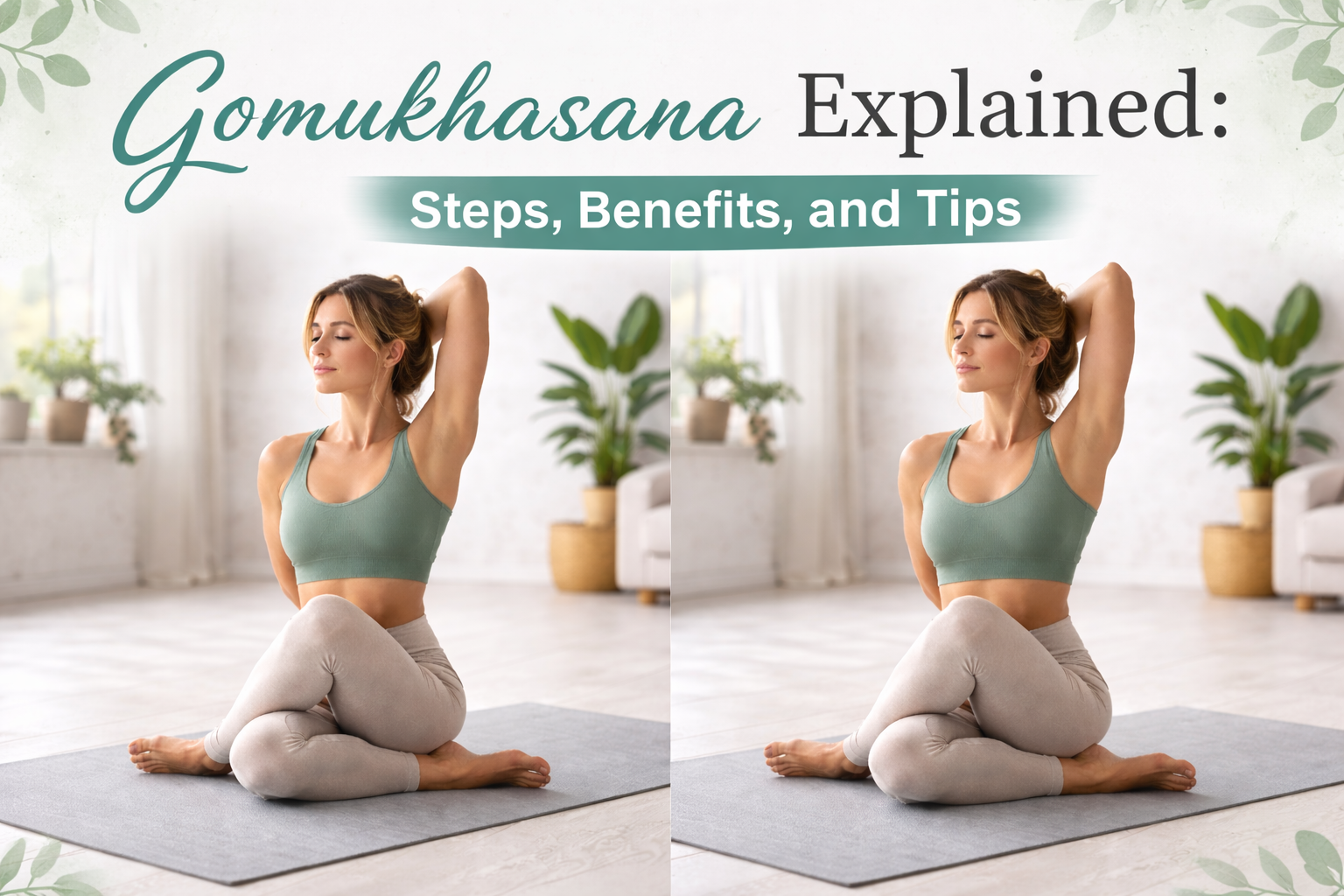
Gomukhasana, which means Cow Face Pose, is a seated yoga asana that stretches the hips, thighs, shoulders, and chest thoroughly. Gomukhasana, the name comes from the Sanskrit words (Gow meaning cow) and (Mukha meaning face). The English name of the asana is “Cow Face pose”.
How to do Gomukhasana:-
Gomukhasana is widely practiced in Hatha Yoga and Ashtanga Yoga and is very effective for loosening up a stiff hip joint that results from prolonged sitting.
Here’s the complete guide on how to practice Gomukhasana safely:
Step-by-Step Instructions to Practice Gomukhasana:-
Sit in a Comfortable Seated Position:-
You can now sit on the yoga mat by extending your legs in a straight position in front of you (Dandasana). Keep your spine straight and shoulders relaxed.
Position your legs:-
Bend your left knee, bringing your left foot to the right side of your right hip. Now, bend your right knee, bringing it over the position of the left knee, placing your right foot alongside the left hip. Both knees should be aligned in one line.
Ground the Sitting Bones:-
Ensure both sitting bones are evenly placed on the yoga mat. This helps maintain balance and keeps the spine straight.
Arm Position:-
Raise your right arm straight up, bend your elbow, and then move your right hand down to place it between both shoulder blades on one side. Next, move your left hand from below, then try to lock the fingers of both hands together. Once you have finished this step with one hand, finish this process with your other hand as well.
Spine alignment:-
Keep your chest open, shoulders relaxed, and spine straight. Avoid bending forward or arching your waist.
Hold on the pose:-
Stay in this same pose for 10-20 seconds or more, depending on your comfort.
Tips and Precautions:-
Beginners should not force the knees or arms.
If you have knee pain, hip, or shoulder injuries, avoid this asana.
Physical Benefits of Gomukhasana:-
Gomukhasana, or Cow Face Pose, has numerous physical health advantages that can help in flexibility, strength, as well as balance. Among the main health advantages of Gomukhasana is its deep stretching function for the hip, thigh, as well as buttocks muscles. This is helpful for loosening tensions due to sitting for long periods or immobility.
This pose also benefits the shoulders, arms, and upper back since the position of the arms stretches the triceps, deltoids, and rotator cuff muscles. This also aids in relieving any stiffness in the shoulders.
Gomukhasana is a gentle expansion of the chest and the rib cage, which in turn is helpful in improving lung capacity and hence breathing. This asana also increases the flow of oxygen in the body. Gomukhasana is also responsible for increasing the functions of the digestive and urinary systems. Daily practice of this asana can reduce tension and increase flexibility.
Therapeutic Benefits of Gomukhasana:
Gomukhasana (Cow Face Pose) is widely appreciated in yogic therapy for its therapeutic values on the body. The yogic position is widely useful in combating stiffness and pain in the hip joints, knees, shoulders, and upper back of a person.
As far as therapeutic benefits are concerned, Gomukhasana can help in sciatica pain as well as in mild lower back pain. In this pose, the positioning of the hands also benefits shoulder therapy as this increases the flexibility in the rotator cuff, so people with frozen shoulder or restricted mobility in the shoulders can also perform this pose.
The chest-opening component of Gomukhasana benefits the respiratory passages. In addition, it stimulates the digestive and urinary systems. This posture also increases blood circulation within the chest region.
On a nervous system level, the slow breathing in Gomukhasana helps relieve stress, anxiety, and mentally exhausting conditions. Performing the Gomukhasana regularly helps in physical as well as medical wellness.
Precautions and Contraindications:-
Gomukhasana or Cow Face Pose provides many benefits; it should be done with awareness and care to avoid any sort of strain or injury. Beginners should enter the pose slowly and carefully, never forcing the knees, hips, or shoulders into the position.
Precautions:
Practice Gomukhasana on an empty stomach or 3-4 hours after meals.
Before practicing this asana, warm up the hips, knees, and shoulders.
Keep the spine straight during the asana.
If you feel pain. Breathe softly and come out of the posture immediately.
If the knees do not comfortably stack, maintain space between them.
Contraindications:
If you have knee, hip, or ankle injuries, avoid this asana.
People with shoulder injuries, rotator cuff tears, or severe frozen shoulder should avoid this asana.
Those who have lower back injuries or spinal disc issues should practice carefully and avoid long-term holding.
Pregnant women should avoid deep hip compression.
Mira Yogashala:- Yoga School In Rishikesh, India-
Welcome to Mira Yogashala. We are offering a transformative journey through the ancient art of yoga. Located in the spiritual hub of Rishikesh, Tapovan, near Laxman Jhula, the school is surrounded by green Himalayan foothills and close to the holy River Ganga. We are offering several certified yoga teacher training courses:100, 200, 300-hour yoga TTC, and 500-hour Yoga TTC in Rishikesh. After successful completion of this course, students receive an internationally recognized Yoga Alliance certification.
- 100-hour yoga teacher training course in Rishikesh
- 200- hour yoga teacher training course in Rishikesh
- 300- hour yoga teacher training course in Rishikesh
- 500- hour yoga teacher training course in Rishikesh
Conclusion:-
The Cow Face Pose, or Gomukhasana, is an extremely potent and grounding yogic posture that not only promotes physical flexibility but also helps in achieving complete therapeutic bliss. The advanced hip and shoulder-opening technique of the pose increases flexibility and helps in correcting postures. The Cow Face Pose further soothes the nervous system and works wonders for the balance of the internal self. Practicing the Gomukhasana yogic posture not only increases flexibility but also helps in preparing for yogas of higher intensity, such as Pranayama and Meditation.