
Yoga is an activity in our daily life that keeps the body and mind healthy. It is considered very effective in reducing anxiety. Yoga calms our mind and helps us get rid of negative thoughts. Pranayama, meditation, and simple yoga poses increase the flow of oxygen in the body, which reduces anxiety and restlessness.
Anxiety is a common mental condition that occurs when a person feels excessive worry and discomfort about a situation or event. This experience is different from normal worry because it is persistent, unusually intense, and sometimes disruptive. Its main symptoms appear on both physical and mental levels. Physical symptoms include rapid heartbeat, sweating, cold hands and feet, difficulty in breathing, stomach trouble, and trouble sleeping. Mental symptoms include fear, worry, difficulty in making decisions, and the constant presence of negative thoughts in the mind.
Anxiety deeply affects a person’s life. It affects a person’s ability to work and makes daily activities difficult. It can also create friction in social relationships. If it’s ignored or left untreated for a long time, anxiety can also lead to depression or other mental health issues.
Symptoms of anxiety issues
When a person has anxiety issues, the body alerts us by showing many symptoms. Here are some symptoms that appear due to anxiety:
1. Excessive worry:
During anxiety, a person starts worrying excessively about small everyday matters. This gradually increases mental stress.
2. Restlessness:
Constantly moving your hands, both the mind and body feel uncomfortable, and it feels like something bad is about to happen.
3. Fast heartbeat:
During anxiety, stress hormones increase, and the brain feels as if there is some danger—even if there is no real danger—which makes the heartbeat faster.
4. Difficulty in breathing:
It feels as if enough air is not coming. Anxiety further increases the difficulty in breathing, along with restlessness and nervousness.
5. Excessive sweating:
If a person is experiencing anxiety, they may start more sweating even without exercise. This is a physical sign of stress and anxiety in the body.
6. Digestive issues:
The brain and the digestive system are closely connected, and during anxiety, this connection can trigger problems like stomach cramps, nausea, indigestion, or diarrhea.
7. Sleep problems:
Difficulty in sleeping, waking up suddenly during sleep, and feeling like you haven’t had enough sleep. Continuous worry negatively affects sleep. As a result, the person feels tired throughout the day.
Connection between the vagus nerve and stress:
The ‘vagus nerve’ is one of the most important nerves in the body, and it is also called the “relaxation nerve.” Its main function is to calm the body and mind, reduce stress, and stabilize the mind. Whenever we are under stress, our body goes into fight-or-flight mode—our heart beats faster, our breathing becomes rapid, and the brain signals a sense of danger. At such times, the vagus nerve works to bring the body back into the calm mode.
How yoga activates the vagus nerve for stress relief:
Yoga not only stretches the body but also balances the nervous system. Some yoga practices stimulate the vagus nerve, which slows the heart rate. This nerve activation reduces the stress hormone. There are many yoga tips to stimulate the vagus nerve:
1. Breathing techniques:
Deep breathing stimulates the vagus nerve, which slows the heart rate, balances blood pressure, reduces stress hormones, and naturally relaxes the mind and body.
2. Body postures (Asanas):
Certain yoga postures stretch and open the chest, neck, and diaphragm, which stimulates the vagus nerve receptors, improves blood flow, and helps the body naturally relax.
3. Relaxation and meditation:
During meditation, we naturally practice slow inhaling and exhaling. The vagus nerve sends calming signals to the body, which slows the heart rate and reduces anxiety.
4. Chanting (Om Mantras):
When we sing or chant ‘OM,’ gentle vibration occurs in the throat and vocal cords. These vibrations directly stimulate the branches of the ‘vagus nerve.’ Which helps to reduce stress hormones and in body relaxation.
5. Cold water:
Some important branches of the vagus nerve are located near the face and neck. When sudden cold water and air touch the face, they stimulate the skin receptors. This sends relaxation signals to the nervous system.
ABOUT MIRA YOGASHALA:
Mira Yogashala is a reputed and trusted yoga teacher training institute in Rishikesh. This institute is considered an excellent place to learn the deep knowledge of yoga in a simple and safe manner. Here, students get everything they need for a healthy routine—clean rooms, nutritious meals, and peaceful practice halls. We also provide excursion trips without any extra charges to the participants, where students explore temples, natural spots, and cultural areas. Mira Yogashala offers various courses like:
- 100 Hour Yoga Teacher Training in Rishikesh
- 200 Hour Yoga Teacher Training in Rishikesh
- 300 Hour Yoga Teacher Training in Rishikesh
- 500 Hour Yoga Teacher Training in Rishikesh
10 best and simple yoga poses to reduce stress:
Stress relief from yoga is one of the most natural, effective, and scientifically supported ways to bring balance back into life.
1. Child’s pose (Balasana):

- Kneel on the floor and sit back on your heels.
- Slowly bend forward and stretch your arms in front.
- Rest your forehead on the mat.
- Breathe deeply and stay in this position for 30–60 seconds.
2. Cat-cow pose (Marjaryasana-Bitilasana):
Cat-Cow Pose is a gentle flow that warms up the spine, increases body flexibility, and reduces stress and anxiety. Cat-cow pose is divided into two simple parts—cat pose and cow pose.

- Firstly, get down on your hands and knees in a tabletop position.
- Slightly bend your back down, then lift your head and chest upward.
- Now, round your back upward and bring your chin toward your chest.
- Slowly repeat this cat-cow position for 1-2 minutes.
3. Standing forward fold (Uttanasana):
‘Uttanasana’ is a beneficial yoga pose in which you stand and bend forward.This asana is very beneficial for calming both the body and mind. This asana helps to reduce anxiety and stress.

- Stand straight with both feet close together.
- After that, while exhaling, bend forward from the hips.
- Keep hands on the ground.
- Leave your neck loose and take a deep breath.
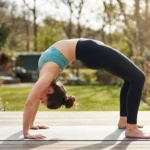
4. Bridge pose (Setu Bandhasana):
Bridge pose is the yoga posture to get relief from stress and anxiety. In this pose, when you lift your hips and expand your chest, the lungs get more space to breathe deeply, which calms the nervous system.

- Lie on your back on the mat, and gently bend your knees.
- Keep your feet hip-width apart with your heels firmly resting on the floor.
- Place your hands by the sides of your body.
- Keep your feet on the mat and slowly lift your hips upward.
- Hold for 10-15 seconds and take deep breaths and exhale.
- Slowly lower your hips down.
5. Legs up the wall pose (Viparita karani):
This yoga posture is best for anxiety and stress relief. This pose is especially beneficial for those who feel physically tired.

- Sit straight in front of the wall.
- Swing your legs up and lie do.
- Adjust your hips near the wall.
- Rest arms by your sides.
- Stay for 3–5 minutes.
6. Cobra Pose (Bhujangasana):
Cobra Pose is a heart-opening yoga pose that is very good for stress relief and energy boosts. In this pose, we lie on our stomach with our hands placed under the shoulders and inhale while lifting the chest upward.

- Stand straight with both feet close together.
- After that, while exhaling, bend forward from the hips.
- Keep hands on the ground.
- Leave your neck loose and take a deep breath.
7. Seated Forward Bend (Paschimottanasana):
Paschimottanasana is the best calming yoga pose that is very effective for stress relief and relaxation.

- First, sit with your legs straight.
- After that, while exhaling slowly, bend forward and hold the toes of the feet.
- Try to bring the stomach and chest closer to the thighs.
- Then pause for a few breaths and slowly move upward.
8. Easy pose with forward bend (Sukhasana variation):
The ‘sukhasana variation’ is a simple and the best calming pose that is perfect for stress relief. This posture gently calms the mind.

- Sit cross-legged.
- Keep your spine straight.
- Gently fold forward while keeping your back long.
- Relax your neck and shoulders.
- Stay for 10–15 breaths.
9. Corpse pose:
Corpse pose is the most effective and relaxing pose for stress relief. In this pose, we lie on our back, keep our legs slightly apart, and relax our arms by the sides of the body. We close our eyes, breathe naturally, and completely relax every part of the body. This pose calms the nervous system.

- Lie flat on your back.
- Spread legs slightly apart.
- Keep your arms relaxed.
- Close your eyes and breathe naturally.
- Stay for 5–10 minutes.
10. Butterfly pose (Bandha Konasana):

- Sitting straight, bring the soles of both feet together.
- Then hold your feet with your hands and bring the radio closer to your body.
- Then gently flutter your knees up and down like a butterfly.
- Keep your back straight and continue this process for 20 to 30 seconds.
How Yoga Philosophy Helps in Stress Reduction:
Yoga philosophy is not just physical exercise, but it helps in maintaining balance between body and soul. Yoga philosophy teaches us that stress is not only caused by external problems but is also amplified by mental instability and negative thoughts.
In the Yoga Sutras, Patanjali said, “योगः चित्तवृत्ति निरोधः,” which means “Yoga is the art of controlling the restless tendencies of the mind.” When the mind is constantly entangled with negative thoughts, yoga philosophy helps us break free from those thoughts, allowing our minds to become calm and stress-free.