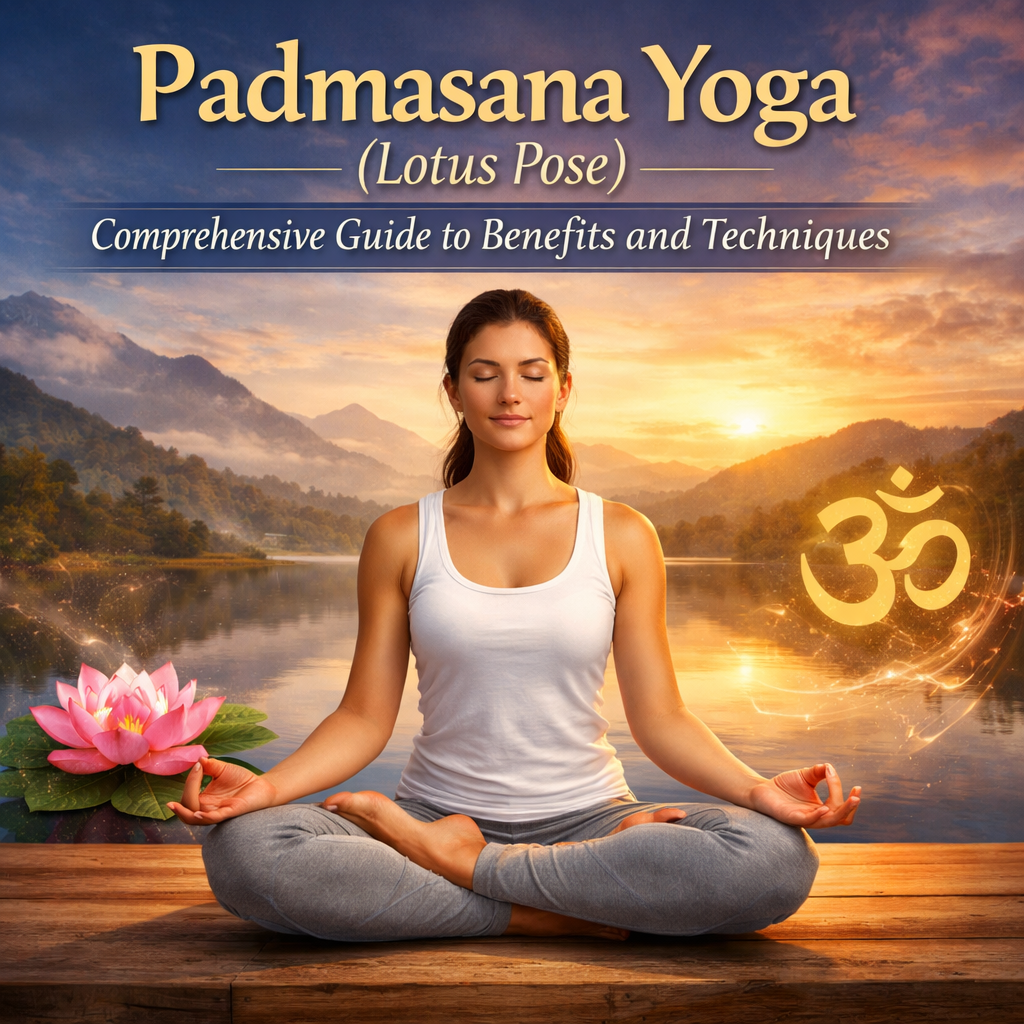
Padmasana, or Lotus Pose, is a traditional seated yoga posture mostly used for meditation and breathing exercises. The name comes from Sanskrit: “Padma” means lotus, and “Asana” means posture. In this pose, you place each foot on the opposite thigh with the soles facing up, keep your spine straight, and rest your hands on your knees in a meditative pose.
Padmasana helps you feel more stable and calm, which makes it a good choice for longer meditation sessions. It keeps your spine, neck, and head in line and helps with deeper breathing by opening your chest. Practising padmasana regularly can make your hips, knees, and ankles stronger and more flexible. It may also help with digestion and relax your nervous system.
On a mental and energetic level, Padmasana can help improve focus and inner awareness. This posture helps activate the chakras, supporting a more balanced flow of prana (life energy) along the spine.
Padmasana becomes a more powerful posture for developing balance, mindfulness, and spiritual growth.
How to Practice Padmasana (Lotus Pose) –
Padmasana, or Lotus Pose, is a seated posture used for meditation and pranayama.
Step-by-Step guide, how to do Padmasana:-
Prepare your Body-
Start by sitting on a yoga mat in a silent and comfortable space. Warm up your body, hips, knees, and ankles with gentle stretches like Butterfly Pose or Easy Pose (Sukhasana).
Sit in Dandasana-
Both legs are straight in front of you while sitting upright. Keep your spine straight, shoulders relaxed, and hands resting beside the hips. Take a deep breath to calm yourself and bring awareness to your posture.
Place the First Foot-
Bend your right knee and gently lift the right foot. Using your hands, place the right foot on the left thigh as high as possible, with the sole facing upward and the heel close to the waist.
Place the Second Foot-
Now bend the left knee and carefully place the left foot on the right thigh in the same way. Both knees should ideally rest on the floor. If this is difficult, avoid forcing the posture.
Align the Spine and Head–
Sit with the spine straight and chest open. Keep the head, neck, and spine aligned in one line. Relax the shoulders.
Position your Hands-
Put your hands on your knees in Chin Mudra or Gyan Mudra, or rest them in your lap. Keep the arms relaxed.
Focus on the Breathing-
Close your eyes gently and take slow, deep breaths. Observe the natural rhythm of your breath or practice pranayama like Anulom-Vilom.
Release the Posture Safely-
Come out of the pose by slowly releasing your legs one by one at a time and returning to Dandasana. Slowly shake both your legs to improve blood circulation in the lower body.
The benefits of Padmasana-
Padmasana, also known as the Lotus Pose, is one of the most important seated asanas in yoga. It is mostly used for meditation and pranayama. Practising Padmasana regularly offers multiple physical and mental benefits.
One of the most physical benefits of Padmasana is the improved flexibility of the hips, knees, and ankles. Aligning the spine while sitting in Padmasana helps to strengthen the back muscles and improve blood circulation in the lower body.
On a mental level, Padmasana promotes mental clarity and inner awareness. Regular practice of Padmasana can improve focus, patience, and emotional balance.
In a spiritual way, padmasana improves inner awareness and self-discipline. It will also improve breath control and support mental clarity.
Here are more tips:-
Physically-
- Improves spinal alignment
- Improve blood circulation
- Maintain proper digestion
- Increases flexibility in the hips, knees, and ankles
Mental & Emotionally:-
- Relax the nervous system
- Reduces stress and anxiety
- Improves concentration
- Improv self-awareness
Therapeutically:-
- Helpful in managing insomnia
- Control depression
- Control breath control during pranayama
- Supports the overall mind and body
Mudras of Padmasana-
Padmasana (Lotus Pose) is a yogic posture that is generally accompanied by the utilisation of particular hand signs or mudras, which help in the better circulation of prana (life energy) and deepen the meditation and pranayama. Each mudra, when combined with Padmasana, brings a different effect on the body’s and mind’s physiological processes.
 Gyan Mudra:
One of the most commonly used mudras in Padmasana is Gyana Mudra. Gyana Mudra symbolises improved memory and mental clarity.
How to do:-
The tip of the index finger touches the thumb
Other fingers are straight

Chin Mudra:
Another important mudra is Chin Mudra, which is similar to Gyana. This mudra represents the connection between individual consciousness and universal energy. Chin Mudra is also practised in Padmasana.
How to do:-
Palm faces upward
Both Hands rest on the knees

Anjali Mudra:
Performed by bringing the palms together at the heart centre, may be used at the beginning or end of a Padmasana practice.
How to do:-
Palms joined at the heart center (make namaste)

Dhyan Mudra:
Advanced practitioners may practice Dhyana Mudra. This mudra supports deep meditation and the stability of the mind.
How to do:-
Right hand placed over left thigh
Thumbs gently touching
Padmasana: Mind and Body Connection-
Padmasana creates a strong and harmonious connection between the mind and the body. From a physical perspective, Padmasana promotes a balanced and symmetrical posture.
Mentally, Padmasana promotes inner calm and heightened awareness, which reduces mental distractions. The breath becomes slow and rhythmic, calming the nervous system. This calm breathing pattern helps quiet the mind, improve concentration, and develop emotional balance.
The body–mind connection of Padmasana. The body–mind connection in padmasana lives in its simplicity. When your body is calm and unmoving. This makes Padmasana one of the most powerful postures for meditation. Allowing practitioners to experience inner peace.
Mira yogashala:- Yoga School In Rishikesh, India-
- 100-hour Yoga TTC in Rishikesh
- 200-hour Yoga TTC in Rishikesh
- 300-hour Yoga TTC in Rishikesh
- 500-hour yoga TTC in Rishikesh
Conclusion-
Padmasana (Lotus Pose) stands as a yogic posture that beautifully integrates physical stability, mental clarity, and spiritual awareness. Padmasana is more than a seated pose—it is a base for meditation, pranayama, and inner transformation. Regular practice of padmasana improves posture, flexibility of the hips and lower limbs, supports healthy digestion, and calms the nervous system. On a deeper level, Padmasana strengthens the mind and body connection by developing stillness, awareness, and emotional balance. Whether practised by beginners or advanced practitioners, this asana encourages consistency, discipline, and self-awareness.